


How Jeff Dodds is Re-Defining Sustainable Sport
How Jeff Dodds is Re-Defining Sustainable Sport
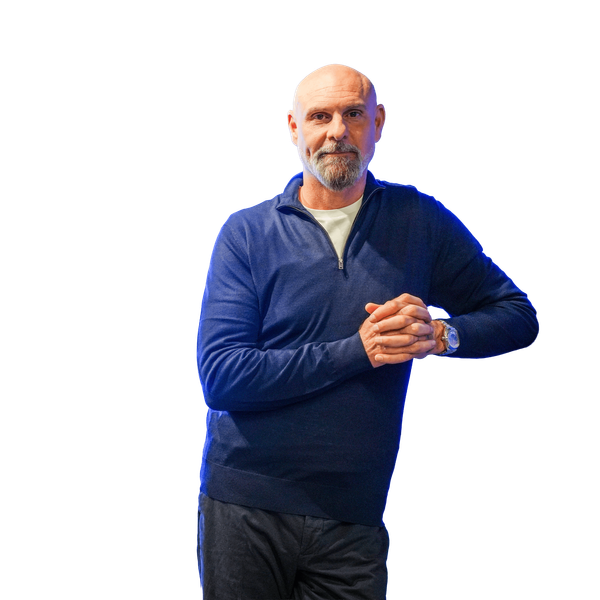
In a sport built on speed, Jeff Dodds is playing a long game.
The Chief Executive of the world's only all-electric motorsport championship brings a career spanning automotive, media and telecoms, having worked with Volvo, Honda and Virgin Media.
In 2023, he took on the sport's top job.
"I had an itch to do something different," Jeff explains.
"I wanted to do something really purposeful that I felt passionate about, and I have a passion for motorsport. You put those three things together and this would be it."
Sustainability in Formula E
Now in its 12th season, Formula E races across 10 countries and is backed by manufacturers including Porsche, Jaguar and Nissan.
It is the only motorsport championship to have held a net zero carbon footprint since its inaugural season. For Jeff, that headline achievement is just a starting point.
"When I arrived here three years ago, the business was very proud of its number one ranking in the Global Sustainability Sports Index," he explains.
"My challenge back to them was: that is amazing, congrats – very low bar."
His response was to shift the benchmark entirely, pursuing B Corp certification and pitching Formula E against the 10,000 other companies worldwide meeting rigorous standards of social and environmental performance.
The series has also committed to science-based targets requiring a 45% reduction in carbon footprint between season five and season fifteen, even as the championship continues to grow.
Sustainability is not a compromise
The main misconception, Jeff believes, is that sustainability means paying more for less.
"When people hear the word sustainability, what they really hear is compromise," he says.
Formula E tells a different story. Flights transporting cars and equipment to race destinations were cut from three planes to two, saving both emissions and money.
A shift towards centralised remote broadcast operations in the UK has reduced travel, lowered costs and improved staff retention.
AI is accelerating this process further, helping reroute logistics and reshape broadcast decisions.
"Whether you think AI is a force for good or a force for evil, in our world, trying to make us more efficient and more sustainable, it has to be a force for good," Jeff says.
The electrification tailwind
Formula E was founded on the premise that motorsport could be a laboratory for EV technology.
Jeff believes the timing has never been better.
The battery electric vehicle is only around 15 years old, yet in the EU in December, more electric vehicles were sold than petrol vehicles.
China sold nearly as many new energy vehicles in 2025 as the total number of cars sold across all of North America.
Formula E's fan base is younger than traditional motorsport and roughly equal between men and women.
Jeff says: "If my job is to go to my kids, who are 17 and 14 and will probably only ever drive an electric vehicle, and say to them, 'Watch this — these cars are driving with the technology that's going to be in your car', that's what we focus on."
Formula E is also using AI, in partnership with Google Cloud, to tackle motorsport's longstanding access problem.
Simulator coaching is used to help aspiring drivers who cannot afford years of karting reach elite level.
Unlike most competitors, the championship publishes its operational playbook openly.
"If we could help other people to be better tomorrow than they are today by doing some of the things we've done, we will share that with everyone," Jeff says.
Performance and sustainability, he argues, are not opposing forces. "It's an 'and' not an 'or' — but in this world, people love an 'or'."
Company portals

Executives
Jeff Dodds
Chief Executive Officer