
What are The Challenges Australia Faces Decarbonising Coal?
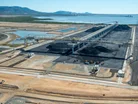
Coal mining is widely known for its heavy greenhouse gas emissions, contributing to the climate change the world is undergoing.
Globally it has been suggested that coal emissions need to be reduced five times faster to achieve net zero as coal is the greatest global contributor to carbon emissions, according to the World Economic Forum.
Australia's path to achieving its net zero targets faces significant hurdles, as its coal sector has yet to adapt adequately to the pressing climate change requirements.
The sector's inefficiencies in emissions management and port utilisation are key factors in the country's sustainability journey.

What are the country's operational inefficiencies?
Australia's fragmented coal logistics present a considerable barrier to broader sustainability ambitions.
The nation is currently exporting roughly 352 million tonnes of coal annually, facilitated by nine terminals strategically placed along the New South Wales and Queensland coastlines and supported by nine rail logistics providers.
Yet these ports are only functioning at a 65% capacity utilisation.
Without using the facility to its full capacity it leads to excessive financial and infrastructure wastage and heightened emissions, suggesting systemic inefficiencies within Australia's coal supply framework.
Port Kembla Coal Terminal (PKCT) supports the Southern and Western New South Wales coalfields but has lost two out of five of its service mines since 2024.
Consequently, the remaining mines are burdened with elevated costs, an unsustainable condition in the long-term.
Queensland Bulk Handling (QBH) recently faced a reduction to two shippers after bankruptcies, meaning the company needs to redirect coal or accept a 50% rail tariff increase.
The challenge of sustaining operations
With miners vacating networks, ports compensate for lost revenue by passing costs onto remaining players, elevating per-tonne charges significantly.
This scenario pushes mining companies to explore more financially viable alternatives, including re-evaluating mine sites or seeking new export venues.
Yancoal has publicly acknowledged that increased operational costs could justify a mine shutdown.
As cost burdens rise, some mines are redistributing exports to competitive terminals like Newcastle, which offers better pricing.
The Institute for Energy Economics and Financial Analysis (IEEFA) suggests the closure of struggling ports is a possibility.
Andrew Gorringe, Energy Finance Analyst for Australian Coal at IEEFA, says: "If the three most vulnerable ports – PKCT, QBH and WICET – were to close, overall system utilisation would increase from 65% to about 70%, with the removal of 55Mt of redundant export capacity, depending on whether mines shut or redirect coal elsewhere."
What are the challenges in the sustainable transition?
Beyond operational efficiency, Australia's coal sector faces challenges in transitioning to green initiatives such as hydrogen exports.
Although environmental, social and governance (ESG) agendas drove preliminary diversification strategies, financial hurdles led to the cancellation of several green hydrogen ventures.
Inefficiencies continue as technical overhauls, essential for reducing emissions within the coal supply chain, remain pending.
Rail freight operations, inherently emission-heavy, demand a concerted effort to transition to lower-emission alternatives.
The current financial landscape limits access to required technology, although the urgency is evident.
Financial disincentives further impact full-scale supply chain decarbonisation.
Government subsidies including the Diesel Fuel Rebate Scheme support significant diesel usage by heavy mining equipment and coal transportation rail services, preserving fossil fuel dependencies.
Without adequate incentives and regulatory frameworks facilitating eco-friendly shifts, the mining industry continues to face challenges in fostering sustainable supply chains while it contributes to ongoing carbon emissions.