Top 10: Sustainable Material Suppliers
Sustainable material suppliers are playing a growing role in helping industries cut carbon, reduce waste and build more resilient supply chains.
From low-carbon cement and recycled steel to bio-based fabrics and renewable alternatives, these companies are reshaping how products are designed, sourced and manufactured.
As pressure mounts from regulators, customers and investors, demand for greener materials continues to accelerate across construction, manufacturing and consumer goods.
This list highlights 10 suppliers leading the way with innovative, scalable and more sustainable solutions.
10. Norsk Hydro
HQ: Oslo, Norway
CEO: Eivind Kallevik
Head of Sustainability: Bjørn Mauritzen
Norsk Hydro leads the transition to low-carbon aluminium and renewable energy solutions. Its focus on decarbonising production and promoting transparency across supply chains has cemented its standing as a sustainability pioneer.
With operations that balance technological advancement and social responsibility, Hydro proves that industrial progress can coexist with profound environmental stewardship.
9. Ball Corporation
HQ: Westminster, Colorado, US
CEO: Ronald J. Lewis
Chief Sustainability Officer: Ramon Arratia
Ball Corporation is setting high standards for sustainable packaging, particularly through infinitely recyclable aluminium cans. Its commitment to lightweighting and closed-loop systems supports both environmental efficiency and consumer convenience.
Ball’s continuous investment in sustainability makes it a cornerstone of circular materials innovation — demonstrating that scalable impact begins with design foresight and accountability.
8. Interface, Inc.
HQ: Atlanta, Georgia, US
CEO: Laurel Hurd
Head of Global Sustainability Strategy: Liz Minné
Interface, Inc. has built its reputation on designing carbon-negative flooring and a fully circular supply model. Its innovation-driven approach aligns design excellence with climate action, helping redefine sustainability within interior materials.
With decades of leadership in carbon reduction and transparency, Interface continues to show that business success can be rooted in regenerative design.
7. Lenzing AG
HQ: Lenzing, Austria
Chief Operations Officer: Georg Kasperkovitz
Chief Financial Officer: Mathias Breuer
Chief Pulp and Chief Technology Officer: Christian Skilich
Lenzing AG advances sustainable fibres that power fashion’s move towards circularity. Through its REFIBRA and TENCEL technologies, the company repurposes wood pulp and textile waste into low-impact fabrics.
By combining ecological responsibility with commercial scalability, Lenzing offers a solution to one of the fashion industry’s most pressing challenges — sustainability without compromise.
6. ELYSIS
HQ: Montreal, Canada
CEO: François Perras
Director, Technology Development: Andrew Schnitgen
ELYSIS is revolutionising aluminium production by eliminating direct greenhouse gas emissions from smelting.
Its breakthrough inert anode technology, born from a partnership between Rio Tinto and Alcoa, promises a zero-carbon future for one of the world’s most resource-intensive materials.
ELYSIS stands as proof that transformational innovation can reshape an entire industry while accelerating climate goals.
5. Linde
HQ: Woking, United Kingdom
CEO: Sanjiv Lamba
Senior Vice President, Chief Accounting Officer, FP&A and Sustainability: Kelcey Hoyt
Linde’s contribution to sustainable materials lies in its green gases and hydrogen technologies that enable cleaner industrial processes.
Its focus on capturing and reusing carbon, paired with innovation in energy-efficient production, makes it pivotal for industries striving to decarbonise.
Linde embodies how advanced chemical engineering can translate into global climate impact through practical, scalable solutions.
4. Holcim
HQ: Zug, Switzerland
CEO: Miljan Gutovic
Chief People and Sustainability Officer: Carmen Diaz
Holcim’s global scale and sustainability ambition make it an essential player in low-carbon building solutions.
The company’s drive towards eco-efficient cement and circular construction reflects a deep overhaul of traditional materials. By embedding climate targets throughout its business, Holcim is not only reducing emissions but setting new industry benchmarks for the infrastructure sector’s sustainable evolution.
3. Stegra
HQ: Gothenburg, Sweden
CEO: Henrik Henriksson
Head of Group Sustainability: Malin Baltzar
Stegra is carving out a strong position in bio-based construction materials and composites. Focused on scaling renewable alternatives to plastic and concrete, the Swedish firm blends engineering precision with ecological innovation.
With a deep commitment to sustainability integrated across its operations, Stegra exemplifies how small-to-mid scale manufacturers can lead the green transition through design ingenuity and science-backed production.
2. Umicore
HQ: Brussels, Belgium
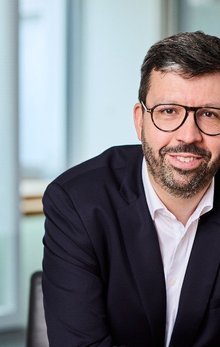
CEO: Bart Sap
Executive Vice-President Specialty Materials: Veerle Slenders
Umicore is reimagining materials through advanced recycling and responsible sourcing.
A global leader in clean technologies, the company champions closed-loop systems that reclaim metals critical to the energy transition. Its sustainable approach to battery materials and catalysts elevates it as a model for ethical supply and environmental excellence, supporting industries that aim to minimise waste while maximising resource efficiency.
1. Neste
HQ: Espoo, Finland
CEO: Heikki Malinen
Senior Vice President, Renewable Products Feedstock Sourcing and Trading: Artturi Mikkola
Neste leads the way in renewable materials, pioneering sustainable fuels and polymers derived from waste and residue sources.
Its focus on circular carbon solutions underpins its reputation as a frontrunner in decarbonising transport and industry.
By investing heavily in innovation and partnerships, Neste is transforming fossil-based supply chains into renewable ones – proving that strategic vision and scientific precision can power a cleaner, more sustainable world.







Executives
Bart Sap
Chief Executive Officer