Q&A: Schneider Electric’s John Bamford on Scope 3 Reductions
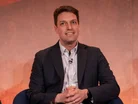
Schneider Electric is consistently ranked amongst the world’s most sustainable businesses.
As a company focused on energy management, automation and climate technology, Schneider is at the very centre of the transition to sustainability.
Increasingly, Schneider is providing services to its corporate clients who are looking to decarbonise.
At Sustainability LIVE: Net Zero, John Bamford, Head of Sustainability for the UK and Ireland at Schneider Electric’s Global Sustainability Practice, told us all about the work he and his team are doing to help drive corporate sustainability.
A huge part of that work is in addressing the big picture: supply chain sustainability. Because if companies fail to consider the emissions up and down their value chains, then net zero will be unachievable.
In this Q&A, John lifts the lid on how supply chain sustainability can be achieved in an equitable and efficient manner.

Please introduce yourself, your role and tell us how you first got into sustainability.
I'm John Bamford and I’m the Head of Sustainability for the UK&I at Schneider Electric.
I've been in the industry for pretty much 20 years. My background was originally in energy efficiency and that predominantly was in the built environment, looking at how commercial buildings could reduce energy.
Gradually that became more of a corporate focus, which is where I operate now with Schneider Electric.
You've just come off stage and you were on a panel talking about the energy transition. How was that discussion for you?
It was really exciting. We spoke about the energy transition challenges and drivers, as well as the corporate demand for the energy transition.
There were some really interesting thoughts from the team and I think that was wrapped up by some really interesting questions from the audience as well.
You do a lot to help clients with their own sustainability journeys. Could you tell us a little bit about that?
At Schneider Electric we have a division called Sustainability Business, where we work with about 30% of the FTSE 100.
In the last couple of years we've seen a huge trend towards Scope 3 and supply chain, both of which are key aspects of the sustainability journey.
But what we're also seeing at the moment is a transitional point of perspective to create transformation plans, to prepare businesses, to prepare corporates for a low-carbon economy.
We’re working with them to understand the impact of what the future might bring, looking at the double materiality.
Double materiality is all about looking at the impact that a corporate has on the environment, but also what the environment has on that corporate itself, given the changing climate.
We’re looking at the supply chains, we're looking at how they source their commodities that they use in manufacturing, but also as they transition towards sustainability, how they can replace some of their energy consumption with low-carbon fuels or renewable energy as well.
How would you say companies are coping with the demands for Scope 3 emissions reductions at the moment?
There is a challenge out there to essentially understand really where the biggest impact is across their value chain.
Obviously Scope 3 looks at the entirety of the value chain, but I would say that the biggest challenge is within their supply chain.
So we're looking at Scope 1 and 2 as well and understanding where the impact lies within their supply chain.
Quantifying that can be quite a challenge.
Beyond that measurement, there is a need to engage and to essentially support the supply chain in decarbonisation as well.
So within Schneider Electric we have some aggregated PPAs (power purchase agreements) for entire supply chains, for cases when the suppliers alone are perhaps too small to go out there and source their own PPA.
Often the corporates that we're working with are looking for solutions where they can bring together specific suppliers in their supply chain and offer them a PPA that will allow them to convert their fuel to renewables.
If you had to give one piece of sustainability advice, what would it be?
Net zero is not linear. We don’t see ourselves reaching net zero and then turning the taps off and switching away from it. We need to look at it as a cyclical process.
There will be points in time where you look at your strategy from the short- and medium-term, but you will need to renew that strategy on a cyclical basis.
Coming back to your sustainability strategy, exploring it, reassessing it, and then making a further strategy towards a low-carbon economy, I think is really critical for the future.
Explore the latest edition of Sustainability Magazine and be part of the conversation at our global conference series, Sustainability LIVE.
Discover all our upcoming events and secure your tickets today.
Sustainability Magazine is a BizClik brand