How does Enel Embed Sustainability Throughout Operations?

Enel, the multinational clean energy producer, embeds sustainability across every stage of its procurement operations.
From sourcing materials to collaborating with suppliers, the company ensures that each decision aligns with its environmental and social values.
Based in Italy and operating worldwide, Enel continues to grow as a leader in renewable energy, shaping a more sustainable and circular economy.

Embedding sustainability in procurement
Enel supplies clean energy to around 54 million homes and businesses and reaches 69 million end users. This vast network operates through a value chain designed to promote environmental, social and economic sustainability.
By linking procurement with its environmental, social and governance (ESG) commitments, Enel builds a transparent system where sustainability guides every purchasing decision.
The company’s global procurement team ensures that products and services come from suppliers who share its environmental aims. This approach prioritises circularity - keeping materials and resources in use for as long as possible - and innovation.
Circular procurement supports a system in which waste is minimised and reused, ensuring materials have longer lifecycles and reduced environmental impact.
Through its Circular Economy Initiative for Suppliers Engagement, Enel helps suppliers embed sustainable practices into their operations. The project aims to improve collaboration, reduce emissions and strengthen trust. Suppliers are encouraged to track their CO2 emissions to increase transparency and report measurable progress.
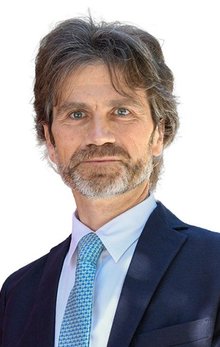
Enrico Zampone, Head of Global Procurement at Enel, explains: “Caring for our suppliers and developing innovative tools to support them in navigating the complexities of ever-evolving markets are now essential elements of a modern and forward-looking business model, both for Enel and for the entire national system.”
This highlights the company’s focus on mutual growth and sustainability. By offering data and technology support, Enel assists its suppliers in monitoring and reducing their emissions.
By applying circular economy principles, Enel creates competitiveness through sustainability. Procurement teams actively source goods and services that support resource efficiency. The outcome is a network where value creation aligns with environmental preservation.
This circular procurement framework helps Enel strengthen its supplier partnerships. The engagement initiative ensures that all suppliers have access to guidance, digital tools and measurable criteria for improvement.
Through this collaboration, Enel achieves its wider sustainability targets while helping suppliers grow in a more responsible way.
The collaborative approach helps Enel and its partners to measure, report and ultimately lower their carbon footprints. Each procurement choice reinforces the company’s goal of building a sustainable global supply chain.
Supporting the energy transition
Enel combines technology and human expertise to advance clean energy innovation. Its procurement strategies include collaborations with startups, small and medium enterprises (SMEs), research institutions, investors and major companies.
This ecosystem of cooperation supports what Enel calls “innovability”—the integration of innovation and sustainability.
A strong example of this approach is Enel’s desedimentation project in the Italian region of Piedmont. The initiative integrates a Venaus floating photovoltaic system to combine solar energy generation with water preservation.
Nicola Rossi, Head of Innovation at Enel, says: “Thanks to plant hybridisation, we have already achieved greater energy availability with better use of water resources, in order to protect the territory and local communities.
"With the innovative desedimentation plant presented today, Venaus becomes even more efficient and sustainable.”
This demonstrates how innovation supports both environmental goals and community welfare. By hybridising clean energy technologies, Enel reduces resource use and enhances energy efficiency.
Through continually assessing its environmental impact and fostering transparency with suppliers, Enel ensures that sustainability is not a separate initiative but an essential part of how it operates.
Company portals

Executives
Enrico Zampone
Chief Procurement Officer
Nicola Rossi
Head of Innovation Enel Group