Solar, Wind & Geothermal: What is Renewable Energy?
The International Renewable Energy Agency (IRENA) defines renewable energy as derived from natural processes that are replenished at a faster rate than they are consumed.
Unlike fossil fuels, which take millions of years to replenish, renewable energy sources have very low operational emissions and can support long-term decarbonisation.
IRENA Director-General Francesco La Camera describes renewables as “the only technology available to rapidly scale up the energy transition aligned with the goals of the Paris Agreement”.
The renewable energy landscape
According to the International Energy Agency’s (IEA) Renewables 2024 report, renewable electricity generation is forecast to increase by nearly 90% between 2023 and 2030, reaching more than 17,000 TWh.
However, the report says that total wind, solar photovoltaic and hydropower capacity in advanced development stages waiting for grid connections increased to 1,650 GW by July 2024.
“Renewables are moving faster than national governments can set targets for,” said IEA Executive Director Fatih Birol.
“This is mainly driven not just by efforts to lower emissions or boost energy security – it’s increasingly because renewables today offer the cheapest option to add new power plants in almost all countries around the world.”
Sources of renewable energy include solar, wind, hydroelectric, geothermal, biomass and ocean energy.
Biomass, despite being renewable by definition, is not included in the United Nations’ definition of “modern renewables” due to its reliance on burning organic matter.
What is solar energy?
Solar energy is power from the sun’s radiation converted into usable energy.
Solar photovoltaic (PV) systems capture light in cells and convert it directly into electricity.
Solar thermal panels capture heat from the sun for hot water and space heating in homes and industry.

Concentrating solar power uses mirrors to focus sunlight to create heat that drives a turbine, often combined with molten salt storage.
Once installed, solar energy solutions usually have very low lifecycle emissions and can scale from just a few panels on a home to utility-scale plants.
Canadian Solar was founded in 2001 and has shipped more than 165 GW of solar modules.
It manufactures solar PV modules alongside providing solar energy and battery energy storage solutions.
What is wind energy?
Wind energy is electricity generated by extracting kinetic energy from moving air with turbines.
Lift on turbine blades turns a rotor which drives a generator via a gearbox or direct drive.
Onshore wind, where turbines are on land, generally have shorter build times and lower costs.
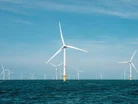
Offshore wind has larger turbines at sea where winds are often stronger and more steady.
Ørsted was once one of the most coal-intensive energy companies in Europe and is now a global leader in wind energy.
In 2017, it decided to phase-out the use of coal for power generation and sold its oil and gas business to Ineos.
By 2025 the company says it will have reduced emissions from its operations and energy production by 98% from 2006 levels.
What is geothermal energy?
Geothermal energy is the heat stored beneath the surface of the Earth.
It can be harnessed as a source of renewable energy for heating, cooling and electricity generation.
Geothermal energy is most easily harnessed where geothermal gradients are highest, such as near volcanic regions and tectonic plate boundaries.
It is extracted by drilling wells into underground reservoirs of hot water or steam and can either be used directly for heating or used to produce electricity in geothermal power plants.
Ground source heat pumps also use geothermal energy from shallow depths for residential and district heating purposes.
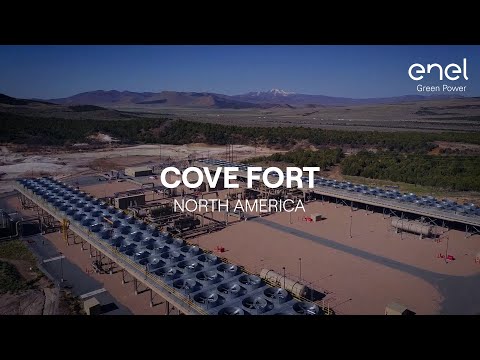
Enel Green Power’s Cove Fort facility in Utah, US combines geothermal with hydropower through the installation of a fully submersible downhole hydro generator in an injection well.
The geothermal plant began operations in 2013 and later received the hydro upgrade to produce extra electricity.