The LEGO Group: Building Impact Through Creativity & Play
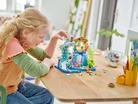
The LEGO Group’s consumer sales grew 16% in 2025, with more children than ever before receiving a LEGO product during the year.
Its financial growth is accompanied by its increased focus on sustainability, in its products, packaging and operations.
The LEGO Group has released its 2025 Annual Results, which includes its sustainability progress for the year.

LEGO’s environmental performance
In 2020, The LEGO Group set a science-based target to reduce its total greenhouse gas emissions by 37% by 2032, compared to its 2019 baseline.
This is a step on its journey to reach net zero by 2050.
In terms of Scope 1 emissions, it is aiming to lower its use of natural gas entirely over the next few years.
In 2025, 9% of its total energy consumption came from natural gas, which is mostly used to heat factories.
Other Scope 1 emissions came from the company’s vehicle use, with its company car policy introduced in 2024 leading to nearly 50% of its company car fleet being electric.
The LEGO Group’s strong 2025 sales contributed to an increase in Scope 3 emissions from purchased goods and services, increasing 12% compared to 2024 levels.
Niels B Christiansen, CEO of The LEGO Group, says: “We are very pleased with our record performance in 2025, building on last year’s success.
“Our innovative and extensive portfolio, combined with the strength of the LEGO brand and an effective operating model, drove high demand.
“We delivered these results by being both creative in product innovation and efficient in operations, bringing LEGO play experiences to more kids than ever before.
“As we continued to invest in future growth, we brought multi-year strategic investments to life and reached more than half renewable and recycled content in the materials we buy to make LEGO bricks.”
In 2025, The LEGO Group conducted an assessment of its risk profile as its global supply chain is at risk from weather events caused by climate change.
It has found that it faces a high risk of disruption from heatwave, drought and water scarcity, due to the geographical location of its factories.
Embedding circularity into manufacturing
The LEGO Group continued to make progress towards its sustainable materials goals in 2025.
In particular, it is focused on circularity within its products and packaging.
It aims to use packaging that is made from renewable materials, reduces single-use plastic and is recyclable.
The company has introduced paper packs inside LEGO boxes, which are made of at least 95% paper and a thin plastic coating to help seal the bags and allow safe transportation of bricks.
These bags have been verified as technically recyclable in LEGO’s European Union, US and Canadian markets.
More than 95% of The LEGO Group’s sold packaging by weight is now made from paper, cardboard and other paper-based materials.
Niels says: “We are deeply committed to having a positive impact on the world and the communities we are part of.
“We do this by aiming to reduce our environmental footprint and improving access to play for kids who need it most, and we will continue to invest significantly to deliver on that ambition.”
Positive social impact
As well as its focus on environmental stewardship, The LEGO Group aims to make an impact on children’s lives around the world.
Its social responsibility programmes aim to help increase access to learning through play, build children’s sense of agency and support their wellbeing in digital spaces.
For example, it has created a LEGO MRI scanner, which helps hospital staff explain the medical procedure in a playful and engaging way, making the process easier for children to understand.
Since the programme launched, more than one million children globally have benefited from the project, with 96% of healthcare professionals saying that the LEGO set reduced children’s anxiety.
Through its global initiatives, The LEGO Group has impacted 11.7 million children in 27 countries.
This exceeds the company’s target of reaching 10.2 million children.