

In recent years, ESG considerations have become paramount for businesses worldwide. As organisations strive to demonstrate their commitment to sustainability and responsible practices, a plethora of ESG frameworks have emerged to guide reporting and assessment.
These frameworks provide structured approaches for companies to measure, manage and communicate their ESG performance to stakeholders, including investors, customers, and regulatory bodies.
- Environmental
- Social
- Governance
Amid this landscape, certain ESG frameworks have risen to prominence, offering comprehensive guidelines and standardised metrics.
Understanding these key frameworks is crucial for businesses of all sizes – whether you're a multinational corporation or a growing enterprise, navigating the complex world of ESG reporting is essential for long-term success and resilience in today's business environment.
We’ve highlighted the most influential and widely adopted frameworks that are shaping corporate sustainability reporting.
10. The World Economic Forum (WEF) Stakeholder Capitalism Metrics
Focus: Global reporting metrics

The World Economic Forum (WEF) Stakeholder Capitalism Metrics are a set of universal, comparable disclosures focused on people, planet, prosperity and governance that companies can report on, regardless of industry or region.
These metrics are designed to align mainstream reporting on performance against ESG indicators and track contributions towards the SDGs on a consistent basis.
Companies adopting these metrics have reported benefits such as improved comparability of ESG performance across industries and enhanced stakeholder communication.
The WEF metrics are also designed to complement and integrate with other reporting frameworks, making them a valuable tool for companies looking to streamline their sustainability reporting processes.
9. The UN Principles for Responsible Investment
Focus: Investment implications
The UN Principles for Responsible Investment (PRI) is the world's leading proponent of responsible investment.
It works to understand the investment implications of environmental, social and governance (ESG) factors and to support its international network of investor signatories in incorporating these factors into their investment and ownership decisions.
As of 2023, the PRI has more than 5,000 signatories, representing in excess of US$121tn in assets under management.
Signatories have reported benefits such as improved investment decision-making and better alignment with beneficiaries' interests.
8. The Task Force on Climate-related Financial Disclosures
Focus: Financial information
The Task Force on Climate-related Financial Disclosures (TCFD) was created by the Financial Stability Board to improve and increase reporting of climate-related financial information.
The TCFD recommendations have become widely adopted, with more than 3,800 organisations supporting them as of 2023.
Companies implementing TCFD recommendations have reported benefits such as improved risk management and strategic planning.
7. The Sustainability Accounting Standards Board
Focus: Industry-specific standards
The Sustainability Accounting Standards Board (SASB) develops and maintains sustainability accounting standards that help public corporations disclose material, decision-useful information to investors.
SASB standards are industry-specific and focused on financially material issues and support investors in their decision-making.
Companies using SASB standards have reported improved communication with investors and a better understanding of their material sustainability risks and opportunities.
6. The Science Based Targets initiative
Focus: Approval of sustainability targets
The Science Based Targets initiative (SBTi) is a collaboration between CDP, the United Nations Global Compact, World Resources Institute (WRI) and the World Wide Fund for Nature (WWF).
It provides companies with a clearly defined path to reduce emissions in line with the Paris Agreement goals.
As of 2023, more than 4,000 companies have committed to the SBTi, with more than 2,000 having approved science-based targets.
Companies with approved SBTi targets have reported an average emissions reduction of 25% between 2015 and 2019, compared to a 3.4% increase in global emissions over the same period.
5. The Global Reporting Initiative
Focus: Sustainability impact reporting
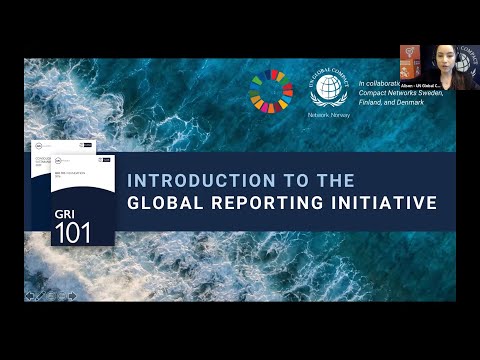
The Global Reporting Initiative (GRI) is an independent, international organisation that helps businesses and other organisations take responsibility for their impacts by providing them with the global common language to communicate those impacts.
GRI's standards are the world's most widely used for sustainability reporting, with 73% of the world's largest 250 companies reporting with GRI in 2020.
Companies using GRI Standards have reported benefits such as improved stakeholder engagement and better risk management.
4. The Climate Disclosure Standards Board
Focus: Aligning global mainstream corporate reporting models
The Climate Disclosure Standards Board (CDSB) is an international consortium of business and environmental NGOs committed to advancing and aligning global mainstream corporate reporting models to equate natural capital with financial capital.
The CDSB Framework helps companies to provide investors with decision-useful environmental information via mainstream corporate reports.
3. ESGR
Focus: Combining ESG and resilience
ESGR stands for Environmental, Social, Governance and Resilience. It is an expanded framework that builds upon the traditional ESG criteria used to evaluate a company's sustainability and ethical impact.
The addition of resilience focuses on a company's ability to adapt and thrive in the face of environmental and social challenges.
ESGR is becoming increasingly important in investment decisions, with studies showing that companies with strong ESGR performance tend to outperform their peers financially.
2. The UN Sustainable Development Goals
Focus: Global sustainability framework

The UN Sustainable Development Goals (SDGs) are a set of 17 interconnected global objectives designed to achieve a more sustainable future for all by 2030.
These goals address various challenges, including poverty, inequality, climate change, environmental degradation, peace and justice.
The SDGs provide a shared blueprint for peace and prosperity for people and the planet, now and into the future.
They are increasingly being adopted by businesses as a framework for sustainability strategies and reporting.
Moreover, companies that align with the SDGs have reported benefits such as improved stakeholder trust, with 87% of consumers stating they have a more positive image of companies that support the SDGs.
1. CDP
Focus: Climate change, water security, and deforestation
CDP, formerly known as the Carbon Disclosure Project, is a global environmental disclosure system that enables companies, cities, states and regions to measure and manage their environmental impacts.
CDP has become the gold standard for environmental reporting, with more than 18,700 companies representing half of global market capitalisation disclosing through the platform.
The benefits of CDP reporting are substantial – 69% of companies report identifying new business opportunities through the disclosure process.
CDP disclosure can lead to improved brand reputation, with 98% of reporting companies stating that protecting and improving their organisation's reputation is an important benefit.
CDP also helps companies get ahead of regulations, as environmental legislation is increasingly being implemented worldwide.
******
Make sure you check out the latest edition of Sustainability Magazine and also sign up to our global conference series - Sustainability LIVE 2024
******
Sustainability Magazine is a BizClik brand
******