Deutsche Telekom Decouples Data Demand From Energy Footprint
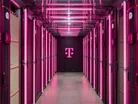
Deutsche Telekom (DT) has modernised its digital infrastructure to separate exponential data growth from environmental impact.
Despite rapidly increasing data traffic, the company achieved a 16% reduction in energy intensity in 2025, lowering consumption to 48kWh per terabyte. This efficiency came from investing in modern infrastructure, intelligent control systems, and targeted measures.
Artificial intelligence is a key tool for infrastructure management under DT’s Green AI Principles. Within core operations, AI dynamically controls networks and buildings, enabling up to 20% in carbon emissions savings.
This transformation is especially visible in data centre operations where AI-based cooling management has improved efficiency by up to 33%. As a result, the average Power Usage Effectiveness (PUE) ratio for data centres globally reached 1.53, while DT’s new AI factory in Munich achieved a value below 1.2.
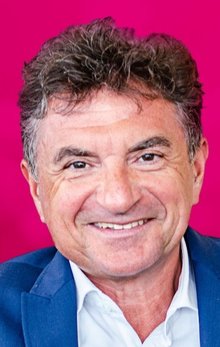
“Europe needs AI solutions for industry,” says Ferri Abolhassan, CEO of T‑Systems, the IT service provider subsidiary of DT.
“AI has the greatest impact in mechanical engineering, manufacturing, logistics and robotics. What was missing so far was an infrastructure – open, safe and sovereign.
“Our AI factory is deliberately designed to be sustainable: Instead of a new building, we renovated an existing building. And thanks to high capacity utilisation and modern architecture, we achieve maximum energy efficiency per computing unit.”
Technology infrastructure investment also enables significant downstream savings. In 2025, customer-deployed digital products offset more than six times the company's internal emissions. This reduced external climate impacts by approximately 23.5 million metric tons of CO₂e.
Millions of devices handed back
As well as infrastructure efficiency, DT is accelerating its transition to a circular economy, aiming for near-total circularity across all IT, network technology, and customer devices by 2030.
To support this, the company introduced the Telco Circularity Score, a tool that measures and manages circularity across the equipment lifecycle, from design to end-of-life.

The amount of reclaimed hardware confirms the scale of this resource model. During 2025, approximately 700,000 mobile devices and 4.9 million fixed-network devices were successfully taken back across Germany and Europe, with a large proportion refurbished and reused.
Globally, including T-Mobile US, take-back schemes processed around 10.5 million devices. The recovery efforts extended to legacy network infrastructure in Germany, where engineering teams harvested roughly 1,200 metric tons of copper, securing valuable secondary raw materials directly from the existing network footprint.
Sustainability leaders won’t want to miss Sustainability LIVE: The Leadership Summit at London Climate Action Week, taking place at Code Node on 25 June 2026.
Register now for this exclusive invite-only event.
Carbon reduction
Deutsche Telekom achieved net-zero carbon emissions for its own operations by the end of 2025. The company reduced its Scope 1 and Scope 2 emissions by more than 94% compared to 2017 levels, offsetting the remaining 6% through carbon removal projects.
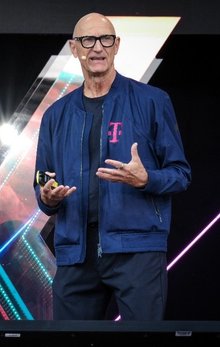
“We exceeded our forecasts and set new records. More than 300 million customers worldwide rely on us. This trust does not come from promises. It comes from reliability,” says Tim Höttges, CEO at Deutsche Telekom.
“This reliability is becoming increasingly rare. Rules are becoming less stable, competition is getting tougher, the tone is getting rougher. Technologies are shifting markets in ever shorter cycles.”
Operational resilience is further supported by the company's energy procurement strategy.
Since 2021, DT has sourced 100% green electricity. By the end of 2025, it contracted 31.7% of this power through long-term agreements with energy suppliers — providing stable pricing — and funding new solar and wind capacity.
The company also expanded internal renewable generation to 13.9GWh and invested in 16MW of battery storage, helping to stabilise grids and ensuring supply during variations in renewable generation.
Company portals

Executives
Ferri Abolhassan
CEO T-Systems, Board Member of Deutsche Telekom AG
Timotheus Höttges
CEO