
How Deutsche Telekom Achieves 65% Core Energy Savings

Deutsche Telekom is delivering a major leap forward in network sustainability, achieving energy savings of up to 65% in its mobile core through an innovative, demand-driven approach to resource management and hardware optimisation.
The initiative, grounded in the principle “Zero Bits, Zero Watts,” aims to ensure that when no data is being transmitted, minimal energy is consumed — all while maintaining high reliability and service quality.
“In initial live tests, we achieved up to a 65% reduction in energy consumption within the core network,” says Abdu Mudesir, Board Member Product & Technology at Deutsche Telekom.
“Efficiency is no longer driven solely by new hardware but also by intelligent, software-based management,”
The project reflects Telekom’s broader ambition to continually improve network efficiency and lower CO₂ emissions, following its milestone achievement of full carbon neutrality in operations in 2025.
Partnering for innovation
Central to this achievement is a strategic collaboration with four leading technology companies. Lenovo provides optimised server hardware; HPE delivers energy-efficient network components; AMD contributes high-performance, energy-saving EPYC processors and supporting software; and Mavenir supplies pioneering 5G software features being deployed for the first time.
Together, these partners have helped Telekom design and test a scalable concept that reduces energy use across all layers of the 5G core.
Following successful live network trials, Telekom is now preparing for a wider rollout and refining the system with AI capabilities to predict traffic patterns and dynamically activate or power down components as needed.
Full stack energy efficiency
At the heart of Telekom’s breakthrough lies its “Full Stack Energy Efficiency” model — a holistic approach that treats the 5G core as a multi-layered ecosystem.
Rather than optimising components in isolation, this model evaluates interdependencies between hardware, software and network layers. It systematically maps every element, from processors and cloud infrastructure to operating systems and the 5G core service itself, enabling targeted interventions that maximise energy efficiency across the entire stack.
“In the 5G core network, we continuously monitor utilisation, detect patterns in data traffic and dynamically allocate computing and network resources as required,” Abdu explains.
“Components no longer operate continuously but only when needed. This lays the foundation for a new approach to energy management, where every single service and component is optimised to save energy.”
The Horizontal Telco Cloud
Supporting this transformation is Telekom’s new “Horizontal Telco Cloud,” a unified architecture replacing fragmented legacy systems with a standardised, shared platform.
Developed with Amdocs, HPE, Mavenir, and Nokia, this cloud foundation enables simplified operations, faster innovation and seamless scaling of energy optimisations. Based on open standards and open-source components, the Horizontal Telco Cloud also supports AI-driven, dynamically managed networks — where energy use adjusts automatically to real-time demand.
“Automation and AI are not add-ons for us, but an integral part of our infrastructure,” Abdu says.
“The Horizontal Telco Cloud, developed in-house by our teams, has been expanded into a highly automated and scalable core network with the support of our partners. By consistently leveraging open standards and open-source components, we are establishing a blueprint for the industry.”
Net Zero Telco Strategies
Sustainability in telecommunications takes the stage at Sustainability LIVE: Net Zero Summit on 4 and 5 March in London.

The Net Zero Telco Strategies panel brings together industry leaders from BT Group and Nokia to explore how telcos are advancing toward net zero through energy-efficient networks, renewable power adoption and circular technology strategies.
- Tiffany Chow, Head of Responsible Business - Strategy and Governance, BT Group
- Clare McCarthy, Senior Principal Sustainability Solutions, Nokia
Panellists will discuss innovations in sustainable infrastructure, the role of regulation and consumer expectations, and collaborative approaches to drive decarbonisation across the telecom ecosystem, offering insights into the path toward a greener, more resilient digital future.
Company portals

Executives
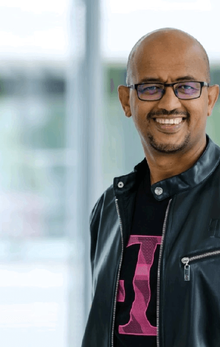
Abdu Mudesir
Board Member for Product and Technology