
How SBTi CEO David Kennedy Turns Climate Ambition to Action
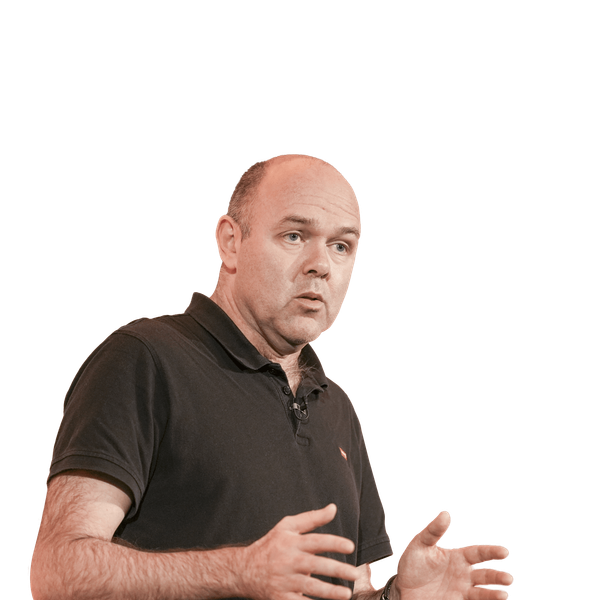
How SBTi CEO David Kennedy Turns Climate Ambition to Action
The Science Based Targets initiative (SBTi) has been instrumental in changing how global corporations respond to the climate crisis. But for David Kennedy, SBTi’s CEO, it’s about transforming those targets into tangible, real-world action.
“The SBTi helps companies translate climate ambition into credible action,” David says. “Our focus is on evolving into a more pragmatic, action-orientated organisation – one focused on what works in the real economy.”
The journey to SBTi
David’s career spans more than three decades across the public and private sectors. Before joining the SBTi as CEO in March 2025, he was a partner at professional services firm EY, leading net zero strategy and planning for major companies in food, infrastructure and banking. Earlier, he served as the founding CEO of the UK’s Committee on Climate Change, guiding the country’s early carbon budgets and low-carbon reforms.
He also spent a decade in the UK Civil Service, overseeing food strategy, biosecurity and trade at the Department for Environment, Food and Rural Affairs during Brexit and the Covid-19 pandemic. That experience gave him, as he puts it, “a front-row view of how sustainability, food systems and climate policy intersect”.
A practical framework for real economies
The Science Based Targets initiative – founded in 2015 by CDP, the United Nations Global Compact, World Resources Institute and WWF – helps companies align their decarbonisation plans with what climate science demands. It provides frameworks and validation for corporate net zero targets consistent with the Paris Agreement.
David’s vision is to build on that foundation with stronger ties to modern business realities. “We’re translating our standards for better alignment with a diverse range of corporate contexts,” he explains. This approach aims to help companies “navigate the complex road from ambition to action.”
For many companies, the process begins with understanding their emissions across operations and value chains. David says this itself drives transformation: “Developing a science-based target forces companies to properly understand their emissions, set ambitious targets and translate these into concrete actions. That drives real change – in business models, capital allocations and procurement practices.”
SBTi research shows the business case is more and more compelling. Companies with science-based targets often see stronger investor confidence, improved access to finance and faster progress on decarbonisation. “Targets must work in practice,” David notes, “so we’re evolving our standards to make them clearer, more practical and better suited to real-economy decision-making.”
Strengthening scientific integrity in action
A core focus for David’s leadership of the SBTi is the development of the Corporate Net-Zero Standard Version 2. The revision builds on the original 2021 framework that defined what credible corporate net zero pledges look like.
“Our overarching priority is driving credible climate action at scale,” David says. The new version, he explains, “will strengthen the foundation for credible science-based corporate climate action while improving clarity, usability and practical application”.
That means reinforcing scientific integrity, clarifying what credible action looks like now – not just in the far future – and supporting companies in prioritising emissions cuts across operations and supply chains.
“It’s designed to support companies in prioritising decarbonisation,” David reveals, “while providing a menu of science-based options that reflect different business contexts.” The new standard also aims to work more fluidly alongside other global frameworks, helping firms meet wider compliance obligations efficiently.
Another key emphasis is accountability. “The next iteration will introduce a stronger focus on tracking progress and accountability,” David explains. “It’s not just about setting targets, but delivering against them.”
Consistency, transparency and rigour
Consistency matters deeply for credibility. David describes a validation process built with transparency at every step: “Our standards are built directly from the latest climate science, giving companies a clear and consistent framework for aligning with global goals.”
Each SBTi standard undergoes multiple rounds of public consultation, pilot testing by companies around the world, and review by independent technical and governance bodies. This, David insists, ensures standards remain robust and practical.
“We apply this approach across all our standards – from the Corporate Net-Zero Standard to our Financial Institution Standards – so companies can act with confidence,” he continues. “Consistency in expectations, combined with transparency in how those expectations are set, enables credible action.”
From ambition to implementation
As climate discourse has matured, so too has the SBTi itself. David says the organisation has evolved from a post-Paris Agreement catalyst for ambition into a partner for implementation.
“In the decade since we launched, SBTi has mobilised corporate ambition around science-aligned climate action,” he says. “But ambition alone doesn’t reduce emissions.”
Today, the focus is on standards and tools that make delivery possible.
“We’re creating practical tools that simplify complexity and guidance that helps businesses navigate from ambition to action,” David explains. “That way, companies worldwide can turn science-based climate action into a key strategic advantage.”
Five years to deliver
For David, the next five years will be decisive. “We’re well into the ‘decisive decade’ for climate action,” he says. “Climate risk now threatens core business value drivers – from operational efficiency to supply chain stability and financial performance.”
Despite tough economic conditions, corporate momentum is growing: more than 10,000 companies have set science-based targets. “That scale matters,” David says. “It signals that science-based action is no longer niche – it’s becoming core to how companies do business.”
He adds that SBTi’s legacy will depend on its impact across high-emitting sectors and regions: “Our success will be judged by how effectively we help companies drive emissions reductions.”
David sees cause for optimism. “While the external environment may be challenging, companies are not stepping back – they’re leaning in,” he stresses. “The focus is now on execution.”
And for the SBTi’s CEO, that’s exactly where attention must remain. “The next five years will be defined not by what companies promise, but by what they deliver.”