
Nuclear Power: Why the UK Government is Funding Sizewell C
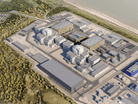
The UK Government has committed £14.2bn (US$16.4bn) to a new nuclear power station in Suffolk, England.
Sizewell C has been given the go-ahead and is set to be a 3,200 MWe power station with two reactors.
By 2030, the government aims to meet Britain’s electricity demands with energy from clean sources including nuclear power.
Energy Secretary Ed Miliband said: “We will not accept the status quo of failing to invest in the future and energy insecurity for our country.
“We need new nuclear to deliver a golden age of clean energy abundance, because that is the only way to protect family finances, take back control of our energy and tackle the climate crisis.
“This is the government’s clean energy mission in action – investing in lower bills and good jobs for energy security.”
About Sizewell C
Sizewell C’s roots go back to 2008 when the government decided new nuclear sites should be constructed, but the project failed to gain much traction until 2020.
EDF Energy first put forward proposals for the site in 2012 and remains a shareholder alongside the government.
Construction of the site began on 15 January 2024 and it is expected to cost a total of up to £30bn (US$40.5bn).
Julia Pyke and Nigel Cann, Joint-Managing Directors of Sizewell C, said that the government’s investment “marks the start of an exciting new chapter for Sizewell C, the UK’s first British-owned nuclear power plant in more than 30 years.
“It’s a privilege to be leading a project that will create over 10,000 jobs, secure Britain’s energy future and revitalise the UK’s nuclear industry.
“We aim to showcase British infrastructure at its best – delivering a cleaner, more secure energy future for generations to come.”
Chancellor of the Exchequer, Rachel Reeves, said: “We are once again investing in Britain's renewal, with the biggest nuclear building programme in a generation. This landmark decision is our Plan for Change in action.
“We are creating thousands of jobs, kickstarting economic growth and putting more money in people’s pockets.”
The sustainability impact of nuclear energy
The UK aims to reach net zero by 2050 in line with the Paris Agreement, and part of this change will be made through decarbonising the country’s energy by 2030.
Jeremy Stain, Nuclear Business Leader at Arup, said: “More than ever, the UK must focus on achieving energy security and resilience across the energy mix and match that ambition with action.
“Nuclear has an important role to play as part of a low carbon energy mix.
“Other countries are moving quickly, and many are already actively pursuing advanced nuclear technologies as part of their decarbonisation strategy, so it is positive to see the UK aiming to match that ambition.”
Nuclear power produces electricity with virtually zero direct carbon emissions and can provide steady, uninterrupted power more consistently than most renewables.
Compared to wind and solar power, nuclear power requires significantly less land to produce the same amount of energy and up to 90% of nuclear waste can be recycled.
However, nuclear energy is not renewable.
It relies on finite uranium resources which will eventually be depleted and generates highly radioactive waste that must be stored securely.
Mining for this uranium can release toxic substances like arsenic and radon, and cooling nuclear plants requires large amounts of water.
Nuclear power in the UK
The UK was home to the world’s first commercial nuclear power station, Calder Hall, that opened in 1956.
Despite this initial leadership, no new nuclear power plants have opened in the UK since 1995.

All of the UK’s current nuclear fleet, except Sizewell B, are likely to be phased out by the early 2030s.
Alongside this investment in Sizewell C, the government says it is supporting other nuclear solutions.
Great British Nuclear is set to announce the outcome of its small modular reactor (SMR) competition with the aim of driving down costs and unlocking private finance for one of the first SMR fleets in Europe.
In February 2025, the Prime Minister announced reforms to planning rules to make it easier to build nuclear across the UK.
It also says it is looking to provide a route for private sector-led advanced nuclear projects to be deployed in the country alongside investing £300m (US$405m) in developing the world’s first non-Russian supply of nuclear fuels.
Tom Greatrex, Chief Executive of the Nuclear Industry Association, said: “This new nuclear programme will give the country the jobs, the economic growth and the energy security we need to ensure a secure and reliable power supply for the future.
“This announcement shows the government is serious about new nuclear, and realising the economic benefits that come with it, and will be welcomed in communities the length and breadth of Britain.”
Nuclear fusion is also in the government’s sights, with £2.5bn (US$3.3bn) set to be invested in R&D over five years.
This includes progressing the Spherical Tokamak for Energy Production (STEP) programme based in Nottinghamshire.
Explore the latest edition of Sustainability Magazine and be part of the conversation at our global conference series, Sustainability LIVE.
Discover all our upcoming events and secure your tickets today.
Sustainability Magazine is a BizClik brand