Deloitte: How Technology can Revolutionise Battery Recycling
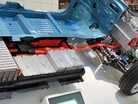
In 2024, more than 17 million electric vehicles were sold around the world – a 25% increase from 2023.
Each of these contains a lithium ion battery (LIB), but these have a significant environmental impact.
The extraction of lithium and other materials used in their creation can lead to deforestation, soil erosion and water contamination.
The disposal of LIBs can also release toxic chemicals into soil, water and landfills and risk fires in landfill sites.
The Institute for Energy Research found that 98.3% of LIBs end up in landfills.
A report from CAS, a division of the American Chemical Society, and Deloitte shows that recycling could be the answer to a lot of these challenges.
"This in-depth report showcases the powerful synergy of Deloitte's market insights and CAS unmatched scientific data and technical expertise,” said Manuel Guzman, President of CAS.
“Through this collaboration, together we aim to accelerate breakthroughs on critical global challenges, such as sustainable energy, and enable innovators across industries to make more confident business decisions."
Policy and regulations
The report says that tightening environmental regulations are a primary driver of the global battery recycling market.
Governments worldwide are implementing stricter rules, such as Extended Producer Responsibility (EPR), hazardous waste management protocols and end-of-life requirements for batteries.

These policies aim to reduce safety concerns and ensure the recovery of valuable materials, supporting a circular economy.
The European Union’s comprehensive "cradle-to-grave" regulations set ambitious targets for lithium recovery and mandate digital product passports for batteries to improve transparency and traceability.
China has also been proactive, implementing policies covering the entire LIB lifecycle.
The impact on LIB supply chains
Beyond regulatory pressure, the automotive industry itself is a major force behind the push for battery recycling.
Automakers are under increasing scrutiny from regulators, investors and stakeholders to reduce their carbon footprints.
Since the production of LIBs accounts for a significant portion of an EV's total manufacturing emissions, recycling is becoming essential for supply chain decarbonisation.
Leading auto OEMs are incorporating recycled materials into their batteries and investing in closed-loop recycling systems to minimise their environmental impact.
What needs to change?
The report identifies technological innovation as a key element in transforming the battery recycling industry.
"We are pleased to develop and provide industry insights and solutions based on CAS scientific data,” says Kevin Guo, Deloitte China National Industry Programme Leader.
“Science and technology innovations have made remarkable progress in multiple fields, and Deloitte China looks forward to continuing to work with CAS to make a significant impact on the industry."
It says that established facilities currently have a combined capacity of approximately 1.6 million tonnes per year, and this figure is expected to exceed 3 million tonnes with the addition of planned facilities.
Hydrometallurgy and pyrometallurgy remain the dominant recycling methods, but digital solutions like digital twins, blockchain and AI are changing the industry.
These technologies enable better tracking of materials, optimisation of recycling processes and improved efficiency.
Collaboration is also crucial, with materials suppliers, EV producers and recycling companies working together to develop closed-loop systems and advance recycling technologies.
The report says that strategic pathways to profitability in battery recycling involve aligning technologies with material value, optimising costs through automation and leveraging economies of scale.
Explore the latest edition of Sustainability Magazine and be part of the conversation at our global conference series, Sustainability LIVE.
Discover all our upcoming events and secure your tickets today.
Sustainability Magazine is a BizClik brand