
Google & CIP Partner on Taiwan Offshore Wind Power Deal
Asia is rapidly transitioning to renewable energy, with clean sources generating 34% of the region's electricity, a share below the global average of 41%.
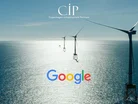
Google has taken a significant step towards its 2030 carbon-free energy ambition by signing its first offshore wind power purchase agreement (PPA) in the Asia-Pacific region.
The agreement is with the 495MW Fengmiao I offshore wind project in Taiwan, developed by Copenhagen Infrastructure Partners (CIP).

A first for Taiwan’s offshore wind sector
Once operational in 2027, the project will supply clean electricity to power Google’s data centre, cloud region and offices in Taiwan.
The move supports Google's global goal to operate entirely on carbon-free energy, every hour of every day, across all locations by the end of the decade.
Fengmiao I is the first project from Taiwan’s Round 3.1 offshore wind auction to reach financial close.
This milestone is expected to catalyse further growth in Taiwan’s renewable energy market as the country works to meet rising energy demand while phasing out fossil fuels.
“Offshore wind is facing headwinds in several markets and therefore reaching financial close for Fengmiao I demonstrates our commitment to delivering offshore wind even in uncertain times,” says Jesper Krarup Holst, Partner and Head of APAC at CIP.
“Our collaboration with CIP and the supportive landscape in Taiwan – in both the legislature and the community – reinforce our belief in the massive potential for offshore wind development in the region.”
Carbon-free energy in Taiwan
Google’s collaboration with CIP complements its broader energy strategy in Taiwan, where it already has agreements in place for solar and geothermal energy.
These efforts form part of its commitment to 24/7 carbon-free energy (CFE), a model that focuses not just on annual renewable matching but on ensuring clean power is available every hour.
In 2024, Google joined forces with BlackRock to invest in a portfolio of solar projects developed by New Green Power.
The company also signed a deal with Baseload Capital for geothermal energy, diversifying its local energy mix.
“As we embark on the construction phase, we do so proudly in the knowledge that we are accelerating Taiwan’s energy transition, advancing toward its goal to install 15 GW of additional offshore wind capacity between 2026 and 2035, and revitalising the communities in which we operate,” comments Mark Wainwright, CEO of Fengmiao I.
Since 2007, Google has operated as a carbon-neutral company, and since 2017, it has matched 100% of its global electricity use with renewable energy annually.
Recognising that annual matching does not eliminate emissions, Google adopted its 24/7 CFE goal to better align supply with real-time demand.
By early 2024, Google had reached 66% hourly CFE across its global operations.
Its clean energy portfolio now includes over 80 agreements worldwide, adding more than 10GW of clean power to the global grid.
However, emissions rose by 48% in 2024 compared with 2023, highlighting the urgent need for continued innovation and investment in sustainable energy technologies.
Meeting climate goals with offshore wind
Offshore wind offers a powerful solution to decarbonise electricity systems, particularly in regions with limited land availability.
Thanks to higher and more consistent ocean wind speeds, offshore turbines typically generate more energy than their onshore counterparts.
Globally, offshore wind capacity stood at 83.2 GW by the end of 2024, following the addition of 8 GW during the year.
Despite a 26% drop from 2023, this still marked the fourth-strongest year for offshore wind growth on record – according to the Global Wind Energy Council.
Taiwan remains a regional leader, targeting 15 GW of offshore wind capacity by 2035.
Google’s involvement in Fengmiao I sets a powerful example for the tech sector and international investors, signalling that large-scale offshore wind development is both viable and valuable in the Asia-Pacific region.
Google’s first offshore wind deal in Asia Pacific marks a strategic milestone in its clean energy journey and offers a blueprint for how global companies can help scale renewable infrastructure in emerging markets.
Explore the latest edition of Sustainability Magazine and be part of the conversation at our global conference series, Sustainability LIVE.
Discover all our upcoming events and secure your tickets today.
Sustainability Magazine is a BizClik brand
