
How Sustainable is Canada’s New Prime Minister Mark Carney?
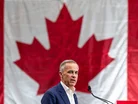
Canada’s 2025 federal election could change the way its government approaches sustainability.
Mark Carney, a former central banker and global advocate for climate action, has become Canada’s new Prime Minister, promising to steer the country through complex economic and environmental challenges.
As the world watches, Carney’s leadership could redefine Canada’s role in the global sustainability movement.
Canada’s legacy of sustainability
Canada has long positioned itself as a steward of vast natural resources and a leader in environmental innovation.
The country’s environmental history is a tapestry of progress and challenge – while Canada has made significant investments in renewable energy and implemented policies like carbon pricing, it remains among the world’s top ten greenhouse gas emitters.
Over the past decade, Canada’s sustainability efforts have included:
- Ambitious targets to reduce greenhouse gas emissions by 40-45% below 2005 levels by 2030
- Heavy investments in wind and solar power
- Implementation of zero-emission vehicles in government fleets and the phasing out of coal-fired power plants
- Improvements in air and water quality due to stricter regulations and green infrastructure investments.
These initiatives have not only reduced emissions but also spurred economic growth and job creation, reinforcing Canada’s reputation as a global leader in sustainable development.
Mark Carney and sustainability
Newly-elected Canadian Prime Minister Mark Carney’s ascent is rooted in a distinguished career at the intersection of finance and climate action.
With leadership roles at Goldman Sachs, the Bank of Canada and the Bank of England, Carney has consistently championed the alignment of financial markets with climate goals.
“Climate change is the tragedy of the horizon,” he said in 2015 as the Governor of the Bank of England.
“We don’t need an army of actuaries to tell us that the catastrophic impacts of climate change will be felt beyond the traditional horizons of most actors – imposing a cost on future generations that the current generation has no direct incentive to fix.”
As the United Nations Special Envoy for Climate Action and Finance and a key figure at COP26, Carney argued that private finance is a crucial lever in the fight against climate change.
“On financing adaptation in developing countries, what’s happened thus far is not good enough,” he said in January 2021 ahead of COP26 later that year.
“We need to scale up quite dramatically the ambition within the multilateral development banks and bilateral donors. And we need to work on blended finance, where some public finance leverages private finance, and there is a proper sharing of risks between the private and public sectors.
“The requirements unfortunately but realistically are huge, given what’s already happening to our climate and even if we manage a transition to net zero consistent with 1.5 degrees.”
He has advocated for:
- Mandatory measurement and disclosure of emissions, including Scope 3 emissions across supply chains
- Investment in technologies and business models that accelerate the transition to net zero emissions
- The view that companies embracing sustainability will thrive, while those that resist will be left behind.
Carney’s mantra, “what gets measured gets managed,” underscores his belief in transparent, data-driven action.
Mark Carney’s sustainability promises on the campaign trail
During his campaign, Carney positioned himself as a pragmatist, balancing economic growth with environmental responsibility.
“This campaign has been about Canada,” he said as the polls opened.
“Standing up for the country we love, and celebrating it every chance we get.
Key promises from the campaign included:
- Eliminating the consumer carbon tax and replacing it with incentive-based systems to reward greener choices
- Transforming Canada into a “clean and conventional” energy superpower by expediting approvals for major projects, including critical minerals for electric vehicles and batteries
- Building an energy corridor to facilitate the movement of natural resources and reduce reliance on US trade
- Supporting infrastructure and extraction projects, particularly in the Arctic and the Ring of Fire, while pledging not to override Indigenous rights and consultation
- Expanding disaster response capabilities and resilience to extreme weather, including support for farmers and new national parks and conservation areas.

Carney’s platform seeks to reconcile the urgency of climate action with the realities of Canada’s resource-based economy, promising both environmental stewardship and economic security.
DEI in Canada
The campaign trail also featured a commitment to equality.
“We have made significant progress to advance equal opportunities in Canada, but we cannot take that progress for granted,” the Liberal party says.
“As we are seeing around the world, diversity is being threatened at a time when it should be protected and celebrated, and the very foundation of our rights – the Canadian Charter of Rights and Freedoms – is being treated as if our rights are negotiable.”
This is a stark contrast to the changes being made by the Trump administration in the US, which nearly all Canadians live less than 100 miles away from, and is a key trade partner for Canada.
“We will terminate every diversity, equity and inclusion program across the entire federal government,” said US President Donald Trump.
Carney promises to use an “intersectional lens” to support all Canadians, believing that “progress on diversity will be at the forefront of our goals, because our ability to recognise the value of all Canadians is what makes Canada strong.”
Canada’s environmental policies and international implications
Canada reaffirmed its commitment to the Paris Agreement by submitting a 2035 nationally determined contribution (NDC) to the United Nations. The new target aims to cut emissions by up to 50% below 2005 levels by 2035.
Canada’s climate plan includes:
- Ongoing investments in renewable energy and green infrastructure
- Support for developing countries to transition to low-carbon economies, reflecting Canada’s role as a global partner in climate resilience
- Policies that balance emissions reduction with economic prosperity, aiming to make Canada’s economy more resilient and competitive in a decarbonising world.
These policies position Canada as a leader in international climate negotiations, with the potential to influence global standards for emissions reduction and sustainable development.
The future of sustainability in Canada
The outlook for sustainability in Canada under Carney’s leadership is both promising and complex.
The government’s priorities are broad, spanning the environment, energy and partnerships – with businesses, Indigenous nations and local communities to ensure that sustainability initiatives are inclusive and effective. Carney also emphasised a desire to make sustainability cost-effective and accessible for all Canadians, with programmes designed to encourage widespread participation.
Canada’s energy mix is complicated, so Carney will accelerate the transition to clean energy while supporting conventional energy sectors during the transition. Environmentally, the government plans on expanding conservation efforts to protect forests, freshwater resources and biodiversity.
Carney’s challenge will be to deliver on ambitious climate goals while addressing immediate economic concerns, such as affordability and trade disruptions. His background in finance and climate policy may equip him to navigate these intersecting priorities, but success will depend on his ability to unite diverse stakeholders and maintain public trust.
“One of the biggest issues is you cannot self-isolate from climate,” Carney says.
“That is not an option.
“We cannot retreat in and wait out climate change, it will just get worse.”
Explore the latest edition of Sustainability Magazine and be part of the conversation at our global conference series, Sustainability LIVE.
Discover all our upcoming events and secure your tickets today.
Sustainability Magazine is a BizClik brand