How the Airbus Foundation Supports the Planet and People
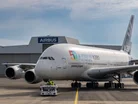
From forest restoration in Brazil to emergency airlifts in Sudan, the Airbus Foundation is proving that cutting-edge aerospace technology can be a catalyst for global sustainability and humanitarian impact.
In 2024, the Foundation expanded its reach through strategic partnerships, satellite innovation and local empowerment to help mitigate some of the planet’s most urgent challenges.

Aerospace for environmental intelligence
The Airbus Foundation’s environmental initiatives in 2024 focussed on the use of high-resolution satellite imagery to support biodiversity conservation and forest regeneration.
By working with leading organisations such as the International Union for Conservation of Nature (IUCN) and the Connected Conservation Foundation (CCF), Airbus provided detailed imagery to 15 organisations in 13 countries, covering more than 16,500 km² of land.
In São Paulo, Brazil, Airbus satellites helped IUCN track forest restoration across 248,000 km² of the Atlantic Forest, one of the most endangered ecosystems in the world.
Using AI algorithms, the partnership achieved more than 90% accuracy in identifying regeneration, enabling more informed policy-making and conservation strategy.
The impact extended to Costa Rica, where similar methodologies helped identify and verify 1,065 km² of regenerated forest.
These insights are not only vital for monitoring environmental progress but also serve to support indigenous rights and community-led conservation in high-biodiversity regions.
“Aerospace technologies allow us to unlock information about our planet that we cannot access from the ground,” says Julie Kitcher, Chief Sustainability Officer and Chair of the Airbus Foundation.
“Using Airbus’ expertise in satellites and helicopters, we’re committed to empowering innovators and researchers to develop solutions that address pressing environmental and social challenges.”
Airbus’ wildlife protection
The Airbus Foundation partners with organisations like the Connected Conservation Foundation (CCF) and the Northern Rangelands Trust (NRT) to deliver satellite data and technical support to local teams in Africa, Asia and beyond.
These collaborations empower local conservationists to manage natural resources, monitor threatened species and plan ecosystem restoration.
Airbus’ support includes the donation of thousands of square kilometres of high-resolution imagery for conservation projects.
This includes mapping the Lorian Swamp Ecosystem in Kenya to support habitat management and long-term planning efforts.
Through the Satellites for Biodiversity Award, the Foundation backs projects tackling habitat degradation and species decline.
The foundation supports monitoring and conserving:
- Rhino corridors in Nepal
- Andean bear habitats in Peru
- Ethiopian wolves
- Endangered chimpanzees in conflict zones like South Sudan and the Republic of the Congo.
Airbus and its partners have also launched initiatives such as the Ecosystem Insight Hub, which fosters open collaboration and global sharing of geospatial methodologies.
By enabling conservationists to adopt best practices and replicate effective approaches, this initiative helps scale up data-informed decision-making across landscapes.
“This is the first time we have used such high-res satellite imagery and have undergone such an in-depth analysis of elephant movements,” says Christin Winter, Conservation Programme Manager at Elephant-Human Relations Aid (EHRA).
“This kind of technology greatly enhances our work and liaisons with stakeholders on the ground.”
Beyond these global collaborations, Airbus is also advancing conservation at the local level.
At its Filton site in the UK, employees have taken initiative to boost local biodiversity through micro-forests and pollinator support, reflecting a commitment to sustainability both within and beyond corporate operations.
Responding to crises
As humanitarian crises intensified across Africa and the Middle East, Airbus Foundation delivered 227 tonnes of aid via 17 helicopter and cargo missions, reaching communities in Sudan, Chad, Burkina Faso and the Central African Republic.
In partnership with Airlink, World Food Programme’s Global Logistics Cluster and Hulo, the Foundation provided logistics and air support to transport medical kits, food and sanitation supplies across inaccessible terrains.
For instance, in Sudan and Chad, where conflict displaced nearly 13 million people, Airbus airlifts delivered maternal health items, medical equipment and 7.6 tonnes of therapeutic food for malnourished children.
These interventions, often the only lifeline due to blocked or flooded roads, saved lives and alleviated pressure on overwhelmed local systems.
"The Airbus Foundation’s support in 2024 was nothing short of transformative,” says Mailin Fauchon, Global Logistics Cluster Coordinator at United Nations World Food Programme.
“Their airlift of 89 metric tons of life-saving supplies to Sudan, delivery of critical aid to remote communities in Burkina Faso and provision of essential satellite imagery for flood response in Nigeria were game-changers."
Power in partnerships
In parallel with its humanitarian and environmental efforts, the Airbus Foundation also focused on youth empowerment through STEAM education (Science, Technology, Engineering, Arts and Mathematics).
More than 20,000 young people engaged with Airbus content in 2024, including 6,680 students from 39 countries who participated in the Moon Camp project in collaboration with the European Space Agency.
New tools like the FAIR ENOUGH interactive app enabled teenagers to critically explore the role of AI in society, touching on themes such as deepfakes, health tech and autonomous vehicles.
“The Airbus Foundation’s commitment to youth development is about more than just fostering an interest in STEAM,” comments Dr Claudie Haigneré, Board Member and former ESA astronaut.
“It’s about equipping young people with the critical thinking and social-emotional skills they need to navigate an increasingly complex world.”
The Airbus Foundation also launched a seed funding initiative to support science engagement projects in underprivileged European communities.
This enabled nine organisations to roll out new workshops, science shows and educational programmes, reaching 2,000 students in disadvantaged areas across seven countries.
“The Solar Impulse Foundation has a high level of expertise in supporting climate projects and through this partnership, we are aiming to create new pathways for innovative projects to increase climate resilience and support local communities,” adds Julie Kitcher.
Explore the latest edition of Sustainability Magazine and be part of the conversation at our global conference series, Sustainability LIVE.
Discover all our upcoming events and secure your tickets today.
Sustainability Magazine is a BizClik brand