IKEA’s Circularity: Sustainable Sofas from Old Mattresses
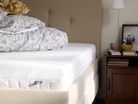
As discarded mattresses pile up in landfills and incinerators globally, companies are finding new ways to recycle them.
In the Netherlands, roughly half of all old mattresses now avoid incineration, with some materials repurposed for new furniture.
RetourMatras, a Dutch recycling company, is paving the way by using automated systems to dismantle mattresses and recover materials.

Upscaling mattress recycling
RetourMatras is pioneering a process to recycle polyurethane foam, latex foam and metal spring (key components in mattresses), back into their original chemical forms.
Previously, shredded foam could only be “downcycled” into lower-grade material for carpet backing.
Now, more than 80% of a standard mattress can be recycled, a figure set to rise as innovations continue.
Thanks to RetourMatras, this foam can be used in new mattresses and furniture, including IKEA’s Extorp sofas and Poäng chairs in Europe.
IKEA’s investment group, Ingka Group, first backed RetourMatras in 2019, aiming to support its own sustainability goals.
Alberic Pater, Business Development Manager at Ingka Investments, explains: “We would like to recycle as many mattresses as IKEA puts on the market globally.”
IKEA sold more than 11 million mattresses in 2024, and the company now wants to close the loop by ensuring these products are recycled rather than sent to landfill or incineration.
RetourMatras operates three facilities in the Netherlands, three in the UK and one in France, with a total capacity of 2.5 million mattresses per year.
In 2023, the company processed a total of 1.6 million mattresses and only the Amsterdam facility currently uses the latest foam-to-foam recycling technology.
However, a new investment from IKEA which is part of the company's US$1bn commitment to recycling infrastructure, is sent to expand RetourMatras' capabilities.
A circular design
To enhance its circularity, IKEA is redesigning its products to make mattress recycling easier.
Many of the company's mattresses now feature covers made from 100% recycled polyester, which can be recycled again – a prime example of circularity.
As well as aiding recyclability, washable and removable covers encourage customers to keep mattresses longer, reducing their overall environmental footprint.
The company is also exploring ways to simplify the separation of materials inside mattresses with other brands adopting similar approaches.
Dutch mattress maker Royal Auping, developed a fully circular mattress in 2020 called Evolve, made entirely from PET (the plastic used in water bottles) and steel springs.
A specially designed adhesive allows these materials to be separated with heat instead of energy-intensive shredding.
With fewer than half the components of a conventional mattress, Evolve maintains comfort while offering better ventilation than foam-based designs – PET is also easier to recycle than traditional mattress foams.
RetourMatras encourages manufacturers to visit its facilities to understand how design choices affect recyclability.
Although the sustainability improvements are being made now, it will take years to show results
Chico Van Hemert, managing director at RetourMatras, explains: “We’re dismantling mattresses from 10 years ago, If we change something now, we’ll benefit in 10 years.”
For mattress recycling to scale further, better collection systems are needed.
While IKEA collects old mattresses at its stores, broader government policies are necessary to recover them at scale.
Some European countries have extended producer responsibility laws, requiring mattress retailers to ensure old products are returned for recycling.
Explore the latest edition of Sustainability Magazine and be part of the conversation at our global conference series, Sustainability LIVE.
Discover all our upcoming events and secure your tickets today.
Sustainability Magazine is a BizClik brand