Mumbai’s Flamingo Refuge: Amazon’s Conservation in Action
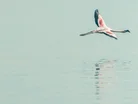
Each year, Mumbai’s famous seasonal visitors flock to Thane Creek in vast numbers – flamingoes
These wetlands, a crucial stop on the Central Asian Flyway, provide a habitat for nearly one million migratory birds, including around 180,000 flamingoes.
However, this vital ecosystem is under threat from climate change, urban development and plastic pollution.
A new initiative, backed by Amazon’s US$1.2m investment, is working to reverse the damage humans have created.

Mangroves, mudflats and a million dollar mission
Funded by Amazon’s Right Now Climate Fund, the project is a collaboration with Hasten Regeneration, a social enterprise focused on ecosystem restoration.
"We are proposing US$1.2m in funding over a 3-year period from Amazon’s Right Now Climate Fund (RNCF)," says Abhinav Singh, Vice President of Operations, Amazon India.
"The Mumbai Mangrove Restoration Project has three key objectives—cleaning up bird habitats, restoring mangroves and supporting local communities. We’re working to clear plastic and waste from areas that support 180 bird species, including Mumbai’s iconic flamingoes.
“Then, we’re replanting 150 hectares of mangroves—about 375,000 trees—along the coastline. And finally, we’re making sure the local fishing communities benefit too, by creating jobs and empowering women through this effort."
The Thane Creek is home to two distinct species,the Greater Flamingoes (Phoenicopterus roseus) which are taller and paler and the Lesser Flamingoes (Phoeniconaias minor), smaller and more vibrantly pink.
Both species rely on Thane Creek’s mudflats, where they feed on algae and crustaceans, their diet giving them their striking colour.
Threats to a fragile ecosystem
Despite the annual spectacle of flamingoes, Thane Creek is facing serious environmental challenges.
Urban development, pollution and plastic waste threaten the habitat that sustains these birds and many other species.
“The biggest threat to the flamingo's habitat is the rampant development happening along the coast,” says Dr Girish Jathar, Deputy Director of Research at the Srushti Conservation Foundation.
“This is a major threat to birds worldwide, and Mumbai is no exception. Plastic from smaller creeks flows into Thane Creek, where it accumulates and settles on the mudflats during low tide.
“This not only reduces habitat for birds that depend on these feeding grounds but also impacts the benthic fauna—tiny organisms that are a crucial food source. As plastic breaks down into microplastics, it enters the environment and affects all species.”
For Akash Dinanath Patil, a local fisherman from the Koli community, the annual arrival of flamingoes has become an unexpected source of income.
"People come to see the flamingoes, and we take them out on our boats.It's nice to have the flamingoes around. We don't need to sing—they keep singing, and we just listen," comments Akash
However, there was a time when Thane Creek was far more abundant in marine life.
“When my grandfather was here, we used to lay traps for sharks right here. I've caught pomfret myself, but now, there's nothing left,” explains Akash.
Cleaning up the creek
To combat pollution, a major component of the project is removing plastic waste before it reaches Thane Creek.
At the Usha Nagar Nala in Bhandup, a bright yellow trash boom stretches across the drain, preventing waste from flowing further into the wetland.
“The levels of pollution here are off the roof—a heavy combination of solid waste, untreated sewage, and industrial effluents,” says Sheeba Sen, Co-Founder of Hasten Regeneration.
“This is not a safe habitat. And that's one of the big goals of this project. Through the catalytic philanthropy grant from the Right Now Climate Fund, we’re asking: how do we go about making this a safer habitat for the birds?”
The project focuses on three key areas: preventing plastic waste from entering the sanctuary, expanding the habitat by restoring 150 hectares of mangroves and influencing policy to recognise mudflats as critical bird habitats.
Sheeba explains: “The project has three components. One is addressing plastic waste draining into the Thane Creek sanctuary.
“Two is expanding the habitat by 150 hectares along the flamingo’s stopover sites on the way to Kutch.
“The third component is policy where we take the learnings of this project and speak to industries, speak to government stakeholders, community stakeholders to shed light on mudflats as an important habitat.”
The trash boom has already begun making an impact with up to 150 kg of solid waste being pulled from the water daily.
The goal is to remove 150 tons of plastic waste from the mangroves and bird habitats.
Once collected, the waste is transported to a Material Recovery Facility, where it is sorted, compressed and sent for recycling.
The project’s impact is expected to be both immediate through plastics removal and habitat restoration and long-lasting.
Through governance or policy guidelines and the provision of strategic research, catalytic conservation can support the region.
Amazon’s conservation efforts
Amazon’s investment in the Mumbai Mangrove Restoration Project is part of its broader environmental commitment through the Right Now Climate Fund, a global initiative aimed at supporting nature-based solutions to combat climate change.
By allocating US$1.2m over three years, Amazon is funding large-scale plastic waste removal, mangrove reforestation and community-driven conservation efforts.
The initiative not only restores critical bird habitats but also creates economic opportunities for local fishing communities, particularly women, by integrating them into conservation work.
This project aligns with Amazon’s goal to achieve net zero carbon emissions and promote ecological resilience in urban environments like Mumbai.
Explore the latest edition of Sustainability Magazine and be part of the conversation at our global conference series, Sustainability LIVE.
Discover all our upcoming events and secure your tickets today.
Sustainability Magazine is a BizClik brand