
New Boats, Teams and Locations: E1’s Growth Plan
The FIFA World Cup in the US, Canada and Mexico has reignited the debate about sustainability and sport.
However, while FIFA fields the awkward questions about its 48-team, three-nation competition, another global competition is planning to expand to new locations.
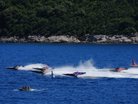
UIM E1 World Championship, the electric boat racing series that features owners including gridiron GOAT Tom Brady and tennis titan Rafa Nadal, currently has eight races and 10 teams. But that could soon be 12 locations and 15 teams.
At a time when entertainment is under growing pressure to align with environmental stewardship, the championship combines zero-emission marine engineering with rigorous environmental governance. But how does it achieve this?
Ambitious global growth plans
The vision for the championship extends far beyond its current eight-meeting season, which includes:
- Jeddah, Saudi Arabia
- Lake Como, Italy
- Dubrovnik, Croatia
- Monaco
- Luanda, Angola
- Lagos, Nigeria
- Miami, Florida
- Bahamas.
At the time of the Dubrovnik leg of the tour, Jamie Copas had been CEO for four months. He says the aim is to build a strong, year-round narrative that captures global attention and that the goal is to scale up operations to establish a highly competitive grid backed by more international events.
"We want 12 teams and 15 races," he says. "We're speaking to a multitude of different cities around the world and it starts with a beautiful iconic location on a waterway that works for us.
“It has to be long enough, wide enough, deep enough and calm enough, but we also look at where we can best tell our stories. The next two, three, five years is about growth to more races."
Next-generation fleet engineering
The strategic growth plan aims to expand the championship's reach, with a target to grow the global fanbase by five to 10 times. To support this, the technical division is already drawing up blueprints for advanced marine transport solutions that will influence the broader maritime sector.
"We're looking potentially at a second fleet," Jamie says. "All of the learnings that we've had for the first three seasons will be built into that. So we'll have smaller, lighter, more powerful batteries.
“We'll work even more on the architecture of the boats so that they have less impact, go faster, do all of the things you like, but then we take that technology and we'll pass it on to other people. And then other people will go: 'Well, we can do that with our waterborne mobility'."
Driving local environmental action
While technical innovation provides the framework, E1 drives its environmental agenda by collaborating closely with local municipalities in every host destination it visits. Before the electric RaceBirds arrive at the water, the championship requires local authorities to commit to tangible ecological changes.
These milestones are established during regional Blue Economy Summits, ensuring that the sporting event acts as a catalyst for policy reform. This methodology has attracted high-level political support, exemplified by recent coastal agreements in the Adriatic region.
"We work with the host city to embrace a number of commitments before we arrive," Carlos Duarte, E1 Series Chief Scientist says. "Those commitments are announced at the Blue Economy Summits. And then we identify entrepreneurship, agencies and organisations within the local ecosystem that are doing innovative things that we like to promote, highlight and create opportunities for them to scale up."
Educating future leaders
The impact of these host city partnerships is increased by institutional integration, ensuring that national governments and local communities actively participate. In historic racing hubs like Dubrovnik, this collaborative framework creates educational pathways for local citizens. The championship integrates community outreach directly into its race weekend schedules to ensure a lasting legacy.
"In Dubrovnik, we have had such a warm welcome, not just from the hosts, but from local government, national government and the prime minister, which shows their commitment to what we're doing," Jamie says.
A core component of this community strategy is the Blue Impact Programme, which delivers direct field education to local young people. "The Blue Impact Programme took about 40 or 50 children between the age of 10 and 15 out on the water to educate them about sustainability,” Jamie explains. “They dredged old fishing nets out of the water, brought them up and learned about how they can be recycled."
Measurable Blue Impact successes
By explaining how these recovered nets can be reused, the series instils circular economy principles locally while embedding sustainable business models within its own supply chain.
E1 actively incorporates local green innovators into its technical operations, such as using eco-friendly cleaning agents from Washdown. On the water, this focus on measurable ecological outcomes is driven by a competitive framework called the Blue Impact Championship.
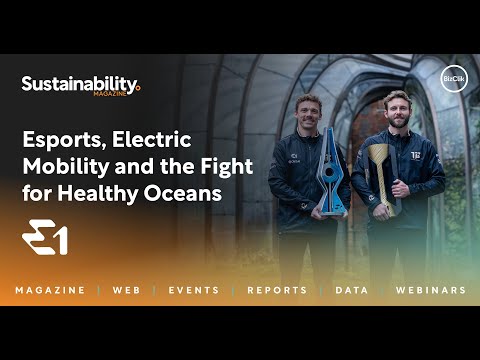
This parallel tournament tracks the specific conservation milestones achieved by individual racing franchises. The system incentivises teams to deliver real results, such as Team Brady's massive plastic retrieval initiative.
Driven by their performance on the water, the franchise committed to retrieving plastic for every championship point scored. "They ended up recycling something like 12 tons of marine plastic that was then converted into their uniforms," Carlos says.
Restoring vital coastal ecosystems
These circular outcomes are matched by large-scale habitat restoration campaigns across the expanding global race calendar. During the championship's events in West Africa, the series launched extensive coastal protection projects to address regional environmental vulnerabilities.
It is a powerful example of how sports platforms can mobilise corporate capital and public interest to restore threatened ecosystems. Team Drogba’s flagship project focuses on rebuilding vital mangrove networks along the African coast. These essential ecosystems protect millions of coastal residents from severe flooding and seasonal storms, proving the value of the series' conservation model.
"It really emphasised the power of sports to mobilise society," Carlos says. He adds that the work provides concrete proof that carbon-mitigation initiatives can be integrated into high-profile brand operations without sacrificing consumer engagement or commercial viability.
Clean aquatic mobility solutions
The structural foundation for these conservation victories is the advanced electric propulsion technology engineered into the RaceBird vessels. By designing high-performance hydrofoils, E1 provides an active testing ground for clean maritime technologies, fast-tracking solutions for an industry that historically lags behind land-based electric vehicle sectors.
These vessels reduce environmental disruption compared to traditional combustion craft. Carlos says that the boats completely eliminate fossil fuels, relying on batteries charged by renewable energy or sustainably sourced biofuels.
The specialised hydrofoil design minimises wake generation, preventing the shoreline erosion that threatens fragile coastal habitats. "We also avoid chemical pollution and noise pollution, which is reduced by 50 times relative to the same power combustion engine," Carlos says.
To raise awareness and spread the use of these technical and environmental achievements, E1 has its high-profile celebrity team owners. Rather than relying on standard endorsement models, the championship integrates its stars into a comprehensive communication ecosystem.
Jamie explains that this approach unifies 20 pilots, 10 teams and 10 celebrity owners into 40 powerful voices capable of building a continuous narrative across the year. The series structures this strategy around steady narrative "bonfires" punctuated by major race "fireworks" to maintain constant corporate and consumer engagement.
Celebrities actively champion the sustainability message, using their profile to speak directly to entrepreneurs, scientists and policymakers. "We don't force people to tell our messages," Jamie says. "They tell them because they want to.”
Decarbonising global sports logistics
This integrated storytelling method ensures that the championship's fundamental messages regarding sustainability and gender parity reach non-traditional audiences worldwide. To preserve its organisational credibility, E1 strictly audits its commercial associations, turning away partners that fail to meet rigorous ESG criteria.
"Our reputation is really important to us and we want to work with partners that are like-minded," Jamie says.
This structural integrity extends to event logistics and sustainable sports tourism. By using advanced broadcasting technologies, the series loops all production feeds back to a centralised hub in London, meaning commentators and technical production staff do not travel to the venues.
Carlos says that this operational choice slashes event-related travel emissions by approximately 50% compared to traditional international sports formatting.
The aim is to provide a clear framework for corporate sustainability leaders who face intense scrutiny of their supply chain emissions and travel management. By embedding circular economies directly into team operations, such as mandating recycled fabrics for team apparel, E1 targets major sources of pollution.
Carlos says that clothing is the second largest source of ocean pollution, making fabric circularity a priority for the teams.
Jamie and Carlos believe that the corporate transition toward sustainability must prioritise real progress over institutional fear. Carlos urges boardroom leaders to resist the paralysis caused by hyper-critical public narratives.
"Greenwashing has become a witch hunt that really paralyses people," he says. "We will never be perfect. But it's a journey that will never end. Tell me what you're doing today and tell me how you'll improve tomorrow."
Company portals

Executives

Carlos Duarte
Chief Scientist