
Google's Expanded AI Solution to Traffic Light Emissions
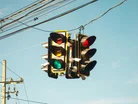
It is estimated that drivers spend about eight minutes each day waiting at red lights.
At city intersections, pollution can be 29 times higher than on open roads — about half of these emissions come from traffic accelerating after stopping.
A less obvious yet impactful application of AI for sustainability is in traffic optimisation.
This approach merges machine learning capabilities with existing municipal systems, enabling immediate implementation through software-driven interventions.
Google’s research division has demonstrated this approach through Project Green Light, expanding its AI-powered traffic optimisation programme to 70 intersections across 17 cities on four continents.
It leverages a decade of global traffic data from Google Maps and employs machine learning algorithms to analyse traffic patterns, offering recommendations for optimising signal timing to city traffic engineers.
What is Google’s Project Green Light?
The project came about in 2020 through Google Research while exploring climate mitigation technologies.
Initially, the programme examined various applications from cultivated meat to energy systems.
The focus shifted to traffic management due to the scale of the problem and Google’s unique data advantage in understanding global road networks.
“The goal is to reduce frustrating stop-and-go events, thereby cutting fuel waste and lowering emissions at intersections,” explains Yossi Matias, Vice President and Head of Google Research.
Google Software Engineer Dotan Emanuel explained the ideas behind the project’s launch: “My wife said, ‘Why don't you do something about traffic lights? We stand at them for no good reason.’”
Road transportation contributes significantly to global greenhouse gas emissions, with transportation accounting for 15% of total emissions.
Intersections exacerbate the problem as vehicles frequently accelerate from stationary positions.
“Initially, I thought we couldn’t do anything about traffic lights,” Dotan said.
“But in research, the most fascinating challenges lie in the unknown.”
How does Project Green Light work?
Google Research identified traditional traffic light optimisation as requiring expensive hardware or labour-intensive manual vehicle counts, both failing to provide comprehensive traffic data necessary for effective signal timing.
“We quickly understood we have a strong advantage that cities could benefit from — over a decade of Google Maps driving trends from across the globe,” Dotan said.
The system creates an AI model measuring traffic flow through intersections, including start-stop patterns, average waiting times and coordination between adjacent signals.
The model identifies improvements such as reducing red light duration during off-peak hours or synchronising previously uncoordinated intersections.
Green Light Programme Manager Alon Harris says: “In order to achieve a positive climate impact, we want to be able to deploy high-quality Green Light recommendations to many cities globally and scale fast.
“So we purposely set up everything to be simple and lightweight — cities don't need to invest in any dedicated software or hardware integrations.”
City engineers can implement the recommendations within five minutes using existing infrastructure and policies.
The system provides a dashboard with city-specific recommendations, traffic trend data, and impact analysis reports post-implementation.
Project Green Light's global expansion
Since pilot testing began in 2021, Google has deployed Green Light in cities like Rio de Janeiro, Seattle, Bengaluru, Boston, Haifa, Hamburg and Kolkata.
The programme currently processes up to 30 million car rides monthly through its optimised intersections.
Preliminary results suggest potential reductions of up to 30% in vehicle stops and up to 10% in emissions at treated intersections.
The system also coordinates multiple adjacent intersections to create green light sequences, further reducing stop-and-go traffic.

Vineet Kumar Goyal, Commissioner of Police in Kolkata, India, said: “Green Light has become an essential component of Kolkata Traffic Police.
“It serves several valuable purposes which contribute to safer, more efficient and organised traffic flow and has helped us to reduce gridlock at busy intersections.
In Manchester, England, the system provides insights for a network of 2,400 traffic signals.
David Atkin, Analysis and Reporting Manager at Transport for Greater Manchester in England, added: “Green Light identified opportunities where we previously had no visibility and directed engineers to where there were potential benefits in changing signal timings.”
Now, Boston – ranked eighth globally for traffic delays in 2023 – has implemented Green Light recommendations at more than 10% of its signalised intersections.
Alon says: “We offer each city dedicated reports with tangible impact metrics, such as how many stops drivers saved at an intersection over time.
“We think that's going to be a real incentive to not just implement the first recommendations, but also bring Green Light to more intersections.”
Explore the latest edition of Sustainability Magazine and be part of the conversation at our global conference series, Sustainability LIVE.
Discover all our upcoming events and secure your tickets today.
Sustainability Magazine is a BizClik brand
