How Classic Mercedes-Benz Cars are Becoming Electric
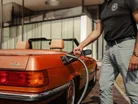
There can be a particular joy in combining old-world aesthetics with modern technology.
That's exactly what Monceau Automobiles, a Belgian startup, is accomplishing by converting iconic Mercedes-Benz models from the 1960s to the 1980s into electric vehicles (EVs).
Vintage meets innovation
Monceau Automobiles focuses on converting models like the W107-series eSL/eSLC and the W111 eSE coupes and convertibles.
Its goal is to retain the vehicle’s original charm while upgrading the powertrain to an environmentally friendly, electric model.
Converting these beloved classics into full EVs allows them to navigate the future without leaving the past behind.
Roel Pollen, Co-founder and Managing Director of Monceau Automobiles, says: "We specialise in converting classic Mercedes into 100% electric cars.
"Our highly skilled professionals enable us to complete the end-to-end restoration process in-house."
Cutting-edge technology
Turning a vintage car into an electric model is an intricate process.
Monceau Automobiles excels integrates advanced design and engineering tools in its process, including CATIA and ENOVIA on the Dassault Systèmes 3DEXPERIENCE platform.
Nicolas Ollivier, CAD engineer at Monceau Automobiles, explains: "We model the car using a 3D scan.
"We integrate all the electronic components that we want for the motorisation, all of that in CATIA, which also allows us to see the adjustments directly, to see the positioning of each part."
Every component used in the conversions is new and high-end, sourced from top-tier suppliers across Switzerland, Germany, Belgium, the Netherlands and the USA.
Performance and sustainability
The cars that emerge from Monceau's workshop are powerful and swift, capable of accelerating from 0 to 100km/h in less than 7 seconds, with a range of nearly 300km.
These features make the vehicles perfect for enthusiasts who desire the vintage look without the traditional environmental impact or ongoing maintenance costs associated with conventional classic cars.
Roel says: "As an entrepreneur, I have never had this many challenges in one company.
"Because, on one side, you operate in a luxury market, which demands a lot from you from a marketing perspective.
"Then the development is a big challenge as these cars were never intended to have an electrical drive."
The demand for such vehicles is on the rise, as Tom Van de Cruys, Co-Founder of Monceau Automobiles and former CEO of green energy supplier Lampiris, explains.
He says: "Our customers want to drive in an environmentally conscious way, without emissions that harm the environment.

"On the other hand, they love the charm and experience of a classic car."
With environmental regulations and low-emissions zones becoming more common around the world, these cars could be a solution for classic car enthusiasts to get around in city centres.
"With a Monceau, you can drive into any city centre or nature preserve, without worrying about the restrictions of environmental zones," Roel says.
Explore the latest edition of Sustainability Magazine and be part of the conversation at our global conference series, Sustainability LIVE.
Discover all our upcoming events and secure your tickets today.
Sustainability Magazine is a BizClik brand