
How Archaeology Indicates A Sustainable Future for Concrete
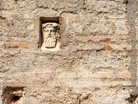
The building and construction sector is one of the largest emitting sectors, responsible for nearly 40% of global energy-related CO₂ emissions but it could be nearing a major transformation in how concrete is specified, procured and maintained.
Recent archaeological discoveries at Pompeii, together with new research from North American universities, indicate that self-healing concrete and engineered living materials may soon transition from experimental concepts to mainstream project specifications within the next decade.
For contractors, asset managers, and materials suppliers, these advances present both commercial opportunities and challenges to current business models.

When Mount Vesuvius erupted in AD 79, builders in Pompeii were midway through repairing a house.
The site, uncovered by international researchers in 2023, preserved newly completed walls, unfinished structures, and raw materials in what Admir Masic, associate professor of civil and environmental engineering at the Massachusetts Institute of Technology, calls “literally a time capsule.”
Findings published in Nature Communications in December reveal the clearest evidence yet of the mixing methods used by ancient Romans to create concrete that has endured for over 2,000 years.
For an industry wrestling with asset degradation and mounting maintenance costs, the implications could be profound.
Autonomous healing technologies
Modern self-healing concrete research has advanced considerably since American scientist Carolyn M. Dry introduced the idea in the early 1990s.
Conventional concrete can mend minor cracks through autogenous healing, when residual cement reacts with water—but this slow process only works on very small fissures.
To overcome these limitations, researchers have turned to autonomous healing systems that directly address the costly issue of concrete deterioration.
At McMaster University, postdoctoral fellow Mouna Reda and civil engineering professor Samir Chidiac are studying the optimal shape and mechanical strength of capsules that can blend seamlessly into concrete.
"In winter, Canada's roads, bridges, sidewalks and buildings face a familiar problem: cracks caused by large temperature swings," Mouna and Samir say.
"These cracks weaken infrastructure and cost millions to repair every year."
Their research explores both biological and chemical healing mechanisms. In 2006, Dutch microbiologist Hendrik M. Jonkers created a bacterial concrete that repairs itself when spores are triggered by moisture.
The spores generate calcium carbonate through microbiologically induced calcite precipitation, effectively resealing cracks up to one millimetre wide.
Chemical-based options use healing agents such as sodium silicate stored within tiny capsules or vascular networks, providing faster repair and the capacity to mend wider cracks than bacteria-based systems.
Living materials challenge traditional specifications
At Montana State University, researchers have created an engineered living material that merges mycelium – the root-like network of fungi – with bacteria capable of turning chemicals into stone.
Their study, published in April 2025, shows that the material remains alive for at least a month and could one day replace portions of traditional concrete in buildings and infrastructure.
Using the fungus species Neurospora crassa, the team guided the mycelium to grow into moulds, forming porous, bone-like blocks. These structures were then soaked in a solution containing urea, calcium, and the soil bacterium Sporosarcina pasteurii.
The bacteria break down urea to form calcium carbonate, solidifying the framework into a stronger material while both the fungus and bacteria remain alive for at least four weeks.
What construction leaders need to know
Cement production accounts for an estimated 7–8% of global carbon dioxide emissions, placing the industry under mounting regulatory and client sustainability pressures.
For designers and project managers, materials that can be manufactured locally, regrown for repairs, or recycled could dramatically reshape carbon accounting and lifecycle costing.
Asset managers contending with repetitive repair budgets, especially in extreme climates, may view autonomous healing systems as particularly valuable. The McMaster team’s capsules must withstand the intense conditions of concrete mixing while breaking open when cracks form – a technical challenge demanding close collaboration between suppliers and contractors for on-site validation.
For engineers and specifiers, these innovations suggest a move toward performance-based specifications that prioritize long-term material behaviour over initial strength alone.
Contractors may need new handling and quality control procedures, and suppliers could find themselves developing entirely new product categories.
As clients intensify efforts to cut carbon and reduce whole-life costs, the construction industry’s engagement with these emerging materials is likely to accelerate.
Company portals
Executives

Samir Chidiac
Professor