
Shifting Gears: Increasing Gender Parity in Motorsports
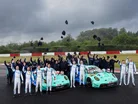
Women and girls represent around 10% of participation in motorsports across all levels according to More Than Equal, an organisation founded by former F1 driver David Coulthard and entrepreneur Karel Komarek. This is across all levels, from karting at the weekend to elite series around the world. It’s not just drivers — in 2018, women made up just 28% of all staff in F1.
“Growing up in a motorsport family, I have been acutely aware of the lack of women in the sport, and I think a big part of that is the lack of role models for young women to aspire to,” says Daniel Bailey, CEO of Veloce Media Group and E.ON Next Racing.
Things are starting to change. In 2023, the percentage of women in F1 jobs grew to 37%. Initiatives around the world have been founded to support women and provide role models like F1 Academy and Girls on Track. Extreme E has taken it to the next level, mandating that all teams racing in the series must have one male and one female driver.
Daniel says: “It is well known that all organisations benefit from diverse perspectives and debate. This is no different in a racing team and the impact is tangible both in the ‘garage’ — a desert tent in Extreme E — as well as the general office floor where our work force successfully works together across all segments of the Veloce business.
“Given that motorsport has come from an environment of unusual levels of male dominance, it should act as a beacon for change and what is possible in industries that were previously thought to be impossible for women to meaningfully participate in.”
When the driver gender initiative was announced in 2020, Alejandro Agag, Extreme E and Formula E Founder and CEO, said: “This is a first in motor racing. We are ensuring with our sporting format that drivers of all backgrounds will be able to compete with the same tools at their disposal at every event on the calendar.
“We are striving for equality, and this sporting format is the truest reflection of that goal. Everybody will race together and the most effective combination of drivers, team, engineer and car will rise to the top.”
“As a business, Veloce was built in the new media sectors of motorsport, reaching out to vast digital audiences with a significant portion of our demographic coming from the next generation,” Daniel says.
“When looking at real world rights to invest in, there was little that felt relevant enough to our positioning as a new media and sports rightsholder across esports, gaming and purpose driven sport. However, Extreme E ticked all those boxes with its commitment to sustainability, driving future automotive solutions — as we now see with Extreme H — and, of course, gender equality.
“Since its inception, Veloce has always advocated the need for more female representation across the board in motorsport — both behind the wheel and in the various paddocks.
“Whether it’s managing the rise of Jamie Chadwick’s career or championing female participation in Extreme E through Molly Taylor and the Racing for All initiative, which allowed our junior engineer Amanda Kangai increased access to the sport, equality feeds into everything we do at Veloce.”
Challenges for women in motorsport
More than half a billion people around the world regularly tune in to watch motor racing events. The industry can certainly have a prestigious feel, with events shown on screens around the world and luxury vehicle brands competing for titles. This, however, often makes racing prohibitively expensive.
Most professional racing drivers will have begun racing by the age of 12. Young drivers can be asked to fork out hundreds or even thousands of dollars for a weekend in the drivers seat. Without sponsorship, pursuing a career as a motorsport driver can be effectively impossible. A set of tyres for low-level karting often last just one race weekend and can cost more than US$200. Licenses, vehicle maintenance, club membership and race fees are just a few of the costs young drivers face.
Investors can be less willing to take risks on women early in their racing careers, according to More Than Equal. Without investment, it is extremely difficult to get on the track — but without proving you’re worthy of a sponsorship, investors have to take chances.
Swedish racing driver Mikaela Åhlin-Kottulinsky drove for Rosberg X Racing in Extreme E and took home the championship title with her teammate Johan Kristoffersson in 2023.
“As a female driver in a male-dominated field, I've often encountered skepticism and been overlooked, even when my performance matched or exceeded my male peers,” she says.
“Early in my career, I sometimes had to fight for the same opportunities, which required persistence and proving my abilities repeatedly.
“We need equal access to resources and training from a young age, as well as targeted programmes that identify and nurture female talent. Visibility and mentorship are also key alongside sponsorships. When girls see others breaking barriers, they’re more likely to pursue their own dreams in motorsport.
“Sports has a unique platform and I think that it’s the responsibility of racing series, sports teams and sports personalities to do their bit to make a difference and bring about positive change.”
Molly Taylor is an Australian driver who won the inaugural Extreme E championship in 2021 with Rosberg X Racing and teammate Johan Kristoffersson. She went on to join Veloce Racing in 2022 and remained with the team throughout the 2024 season.
“Motorsport is extremely challenging for anyone who wants to pursue it as a career, so I think a lot of experiences are due to the nature of how difficult the sport is,” she explains.
“There have definitely been times where I have felt I needed to work twice as hard, the feedback that I have given wasn’t taken as seriously as others, or support that has only been surface deep. But all that does is make me more determined, so maybe in a way it’s helped shape the competitor I am today.”
British racing driver Catie Munnings drove for Andretti Altawkilat XE. She joined the team in its inaugural season and drove with Swedish driver Timmy Hansen.
“I think it's very hard to find opportunities in motorsport regardless of your gender for any young driver,” Catie explains. “It's very expensive and it's not a straightforward route to the top, but I think it's definitely harder because you're a girl.
“I think the field is more used to seeing male drivers and there's less women starting out in motorsports, so you have to have quite a strong backbone to see it through.”
Daniel says: “As a young boy, it was easy for me to want to be Michael Schumacher, David Coulthard, Mikka Häkkinen or even Adrian Newey, but young girls of the same age didn’t have those relatable characters to engage them in our wonderful sport.
“Through increased and successful female participation and promotion of that participation, you can see a tangible shift in the next generation. A prime example? My niece’s hero is Jamie Chadwick.”
Women outside of the drivers’ seat
While driving is the most visible role in motorsports, it is not the only one. Mechanics, engineers, designers, managers and garage technicians are just some of the roles that help cars get on track.
Stefanie Olbertz is Motorsports Manager for Falken Tyre Europe. She is responsible for managing its motorsport team which includes a range of jobs including writing up contracts with drivers and arranging tyre logistics.
She started working at Falken Tyre in 2001 through its advertising agency.
“At this time, Falken’s presence in Europe was different,” she explains. “Then, it was a team of mechanics, engineers and drivers from Japan coming over to compete in the 24-hour race with a Nissan GT-R34.
“That first year, my job quickly turned into organising everything for the team — definitely not usual marketing tasks. I was translating the race directors’ instructions, filling in the entry forms, sorting licences et cetera plus dipping my toe into the technical stuff surrounding the event and our tyres. I loved it and I soon became part of Falken full time.”
In 2017, Falken started running two GT3 cars for the first time, the Porsche 911 GT3 R and the BMW M6 GT3, alongside selling tyres.
While women have not yet driven for Falken in the 24-hour Nürburgring endurance race, Stefanie is far from the only woman on the team.
“There’s myself, our team manager, our physio, the PR manager and the social media manager,” she says. “We’re all women. We’ve also benefitted from having women race engineers and women tyre fitters be part of our team too.
“There’s a camaraderie between us, particularly at events where we have a shared experience — there are plenty of high and lows at the 24-hour race as you can imagine, racing through the day and night in all weathers.
“There have been a few times where girls or young women have come into the Falken team area and have had their eyes opened as to what job opportunities are out there. Stuff they never imagined or expected.
“Once, a friend of mine came with her kids to a race weekend. Her daughter was really into mathematics and after a quick garage tour, then chatting to our female engineer and seeing the data traces from the car, she said to me ‘Oh, that's really cool. This is something I could do with maths. I never realised there was this side to motorsports.’
“I’m extremely fortunate that I really haven’t had to face major challenges here at Falken. The way I transitioned into the role and the way everyone around me looked to me to help them from the outset. Whether that was translating, telling them what to do at a drivers’ briefing or sorting where the tyres were, they looked to me to solve the issues and I think that led to me being immediately respected.
“At that time, I was the only woman in the team meetings, but it really wasn’t an issue. I know that’s not always the case in motorsports, but the only thing I’ve ever really experienced is people assuming my role isn’t as senior as it is. That’s happened a few times.”
How to break down barriers for women
While the industry is still not equal in gender representation, women are making progress.
“As an industry, we’ve got to start attracting and finding talent earlier and highlight what’s possible here,” Stefanie explains.
“We can all play a part in that, us as the race teams, but also schools and parents to highlight what motorsports offer beyond the driving. From my perspective, there are a lot of women who just don't know what it offers and how to get into it.”
Mikaela says that her success “comes down to a combination of hard work, resilience, and having a strong support network”.
Her advice? “Never let stereotypes or doubts stop you,” she says. “Hard work, passion and persistence are your greatest tools. Surround yourself with people who believe in you and push you to succeed. Most importantly, trust in your abilities and never be afraid to dream big.”
Molly says: “I think the power of visibility cannot be underestimated and this is where Extreme E has had a huge impact. The more young girls who see women competing successfully at an international level, the healthier grassroots participation will be. That’s where it starts.
“Visibility is a huge component along with accessibility and financial support.
“However, alongside that, we all know how crucial financial support and resources are to track time and development. The commercial benefits of supporting more talented women in a meaningful way I don’t think are fully appreciated.
“Whenever this support is done properly, like in Extreme E, I think we have shown what it can do.”
Catie adds: “I think when you add a competitive element to a message you want to get across — whether it's environmental or equality or anything else — teams know how to be competitive and they know what they need to do to succeed and to make it happen.
“That's why Extreme E was successful. It wasn't just having a token woman in the team as a media stunt. It was a case of every team needing to find a competitive woman or needed to train a woman to be competitive. Race teams are smart. They know how to be competitive, so it was a massive success from that side.
“I think there needs to be more sporting objectives for teams and to incentivise having women in motorsport. There needs to be an opportunity for the women to train, have testing days, work with the engineers and the team to develop female drivers the same as they would men.
“You have to pave your own way at the minute. Be confident, be brave and have a very thick skin is my top advice.”
Daniel says: “Equality isn’t possible without equal participation from everyone. Given how out of balance the industry has been and where the power sits, it is necessary for men to engage more to ensure that equality in motorsport is achieved.
“There is a lot of benefit to the stakeholders who do invest in female talent.”
To read the full article in the magazine, click HERE.
Explore the latest edition of Sustainability Magazine and be part of the conversation at our global conference series, Sustainability LIVE.
Discover all our upcoming events and secure your tickets today.
Sustainability Magazine is a BizClik brand