
SOS Synergy: Charging Electric Cars and Flying Vehicles
Personal flight has long been limited to pilots and virtual simulations, but new developments are making it more accessible.
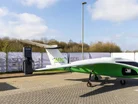
A demonstration in Oxfordshire, UK, has tested an innovative charging system capable of powering both electric vehicles (EVs) and flying aircraft.
Taking place at Bicester's Park and Ride facility, the test highlights the potential for land and air transport to share infrastructure.
This test offers a glimpse into a future where transport systems are more interconnected, bringing ideas from science fiction closer to practical use.
Testing cutting-edge charging technology
The project is led by SOS Synergy, a Borehamwood-based infrastructure specialist, which developed a temporary electricity supply using existing grid capacity.

This flexible system is designed to provide scalable solutions for future mobility needs.
In a demonstration, Petalite's prototype DC charge post and power hub charged an EV and a drone simultaneously.
ARC Aerosystems' electric Short Take-Off and Landing (eSTOL) aircraft was fully charged in 12 minutes while an electric car was also charging.
This success suggests that 600kW fast-charging technology could enable the continuous operation of both road and air vehicles.
Collaboration shaping the future of transport
The trial is part of the Future Flight and Land Infrastructure Programme (FFLIP), an initiative under the UK Research and Innovation (UKRI) Future Flight Challenge.
FFLIP is led by Petalite and includes partners such as Oxfordshire County Council, Midlands Aerospace Alliance and ARC Aerosystems.
The programme's goal is to explore how charging infrastructure can support electric transport across different modes.
Omer Atuf, Managing Director of SOS Synergy, says: "To have been selected to participate in such an interesting and ground breaking project with Petalite, Oxfordshire County Council, ARC Aerosystems and the FFLIP project team has been a real pleasure.
"We look forward to being involved in future related developments as the technology evolves."
ARC Aerosystems played a key role in the demonstration, known for its advanced aviation solutions.
It has already received Civil Aviation Authority (CAA) certification for its Avian Pegasus gyroplane, a hybrid-electric aircraft.
Unlike traditional aircraft, the gyroplane does not need runways or designated charging stations.
Preparing infrastructure for electric air and land travel
The FFLIP initiative builds on previous research and funding from the Future Flight Challenge, which aims to establish the UK as a leader in advanced air mobility.
By creating a scalable charging network that supports both EVs and electric vertical take-off and landing (eVTOL) aircraft, the project addresses key challenges in electrified transport.
The demonstration at Bicester shows that high-power charging can be integrated into existing grid networks while preparing for increased demand.
Petalite's role has been essential, with its patent-pending SDC technology providing a robust and scalable charging platform.
The company’s work aligns with FFLIP’s objectives, ensuring that charging solutions for future transport systems are both reliable and efficient.
This test also fits within Oxfordshire's broader strategy to expand EV infrastructure.
The county has led projects such as OXLEVI, which aims to triple the number of public EV chargers by 2025.
These efforts support the UK’s national push to encourage EV adoption while addressing accessibility challenges for drivers without home charging options.
Councillor Pete Sudbury, Deputy Leader of Oxfordshire County Council and Cabinet Member for Climate Change and Environment, says: "This funding will provide a huge boost to Oxfordshire's growing EV charging network... ensuring that nobody will be left behind in the transition to driving electric."
Explore the latest edition of Sustainability Magazine and be part of the conversation at our global conference series, Sustainability LIVE.
Discover all our upcoming events and secure your tickets today.
Sustainability Magazine is a BizClik brand