
The US Summit: Jodi Susman, Budderfly

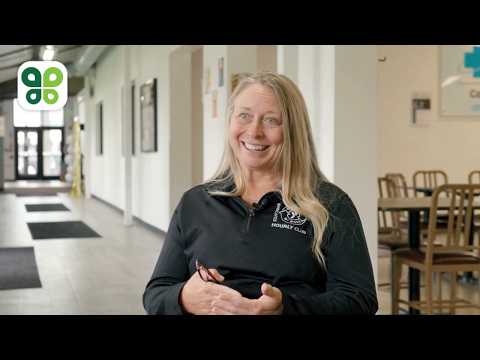
At Sustainability LIVE: The US Summit, we spoke to Jodi Susman, Chief Marketing Officer at Budderfly, a powerhouse in the cleantech sector. Named one of Fast Company’s Most Innovative Companies in 2025, Budderfly is redefining sustainability through a unique model that slashes energy costs and carbon footprints for businesses.
With more than 25 years’ experience scaling global brands and technology startups, Jodi brings a wealth of expertise in revenue growth and product market expansion. From building high-performing teams to mastering the full marketing funnel, she discusses how the company translates complex energy data into compelling stories and why transparency is the key to driving real environmental change in the mid-market.
How do you translate Budderfly’s promise to make energy efficiency easy and accessible into a market message that resonates with business leaders?
Business leaders today are under intense pressure to reduce costs, manage risk and show progress on sustainability all at the same time. The challenge is that energy has historically been complex, fragmented, siloed and capital-intensive to address.
When we talk about making energy efficiency “easy and accessible”, we mean removing those barriers entirely, so businesses don’t have to choose between operational performance and sustainability.
It becomes something that can be implemented, scaled, and measured like any other core business initiative.
"For most operators, sustainability only moves when the economics make sense, and upfront cost is often the biggest barrier, especially when there are competing priorities in the business."
Your model removes upfront capital barriers for customers. Why is that financial framing so critical?
It’s absolutely critical.
For most operators, sustainability only moves when the economics make sense, and upfront cost is often the biggest barrier, especially when there are competing priorities in the business.
What we do is remove that constraint. We take on 100% of the upfront investment and execution risk, so customers don’t have to pull capital or attention away from running and growing their business.
And we’re not asking them to choose between growth and sustainability. That shifts the conversation from “Why should we do this?” to “Why wouldn’t we?” It reframes sustainability as a business decision, grounded in cost savings, performance, and operational impact.

Is the lack of capital more of a restriction for smaller companies, or are you seeing this across the board?
We are seeing it across the board.
We focus on the mid-market, small and mid-sized businesses, which represents 99% of US companies that spend an estimated US$55bn annually on electricity. These are businesses operating on razor thin margins: QSR franchise owners, fitness centers, retail operators and manufacturers. They are dealing with many pressures: rising labor costs, escalating utility bills, and limited internal expertise to manage increasingly complex energy systems.
But we’re also seeing larger organisations become increasingly focused on profitability and EBITDA discipline. Our model supports that focus by enabling companies to access our capital rather than deploying their own, improving cash flow while still delivering operational and sustainability outcomes.
What role does storytelling play in helping customers see energy efficiency as more than just a cost reduction?
That's probably my favorite part of my job, the storytelling.
I love getting to know our customers, hearing their stories and helping bring them to life. You really gain an appreciation for how much their business means to them – whether it’s a franchise owner who started with one location and is now running hundreds of restaurants, or a family manufacturer carrying forward a legacy where innovation is core to who they are. Every business has a story.
And I think energy efficiency becomes much more powerful when you tell it through that lens. Yes, there’s the economic savings – but there’s also better systems and environments that improve the experience for employees and customers, and meaningful reductions in carbon emissions. It shows up in very real, tangible ways inside their operations.
Our model also reinforces that story. Because it’s outcomes-based – we only succeed when we reduce energy usage. We’re in it with them, not just as a vendor, but over the course of a long term partnership constantly bringing new innovative technology solutions to our customers.
And one story that always sticks with me is a Dunkin’ customer who told us his donuts never tasted better after we overhauled his HVAC system, we improved humidity and the air quality in his locations. That’s when it really clicks – it’s not just about energy data or utility bills. It’s the personal stories.
"Trust is shifting to the voice of operators and customers. Engineers, facility managers, and brands are becoming the most credible voices. The role of marketing is to surface those stories and amplify them."
Budderfly is often praised for transparency. How does your customer portal change the conversation around ESG reporting?
Transparency is foundational to trust. Our customer relationships span more than 10 years, and during that time we’re actively monitoring, maintaining and optimising their infrastructure.
We have a customer portal that gives customers real‑time visibility into their impact – hour by hour. They can see energy consumption, kilowatt‑hour reductions. We also translate that data into real‑world outcomes like cars taken off the road or miles not driven. They can also get alerts when doors are left open, lights are left on and more. It transforms reporting from periodic, backward‑looking statements into a living, operational dashboard.
As CMO, how do you align your marketing with these operational proof points?
For me, it really starts with the data. We have a facility-smart grid that’s capturing billions of data points across our customer base every day, so we have a very real understanding of what’s actually happening by site, by brand and by region.
That’s what drives our marketing. We focus on real outcomes, energy reduction, cost avoided, operational impact and carbon emissions reduced. That’s what shapes our messaging, content and thought leadership.
Credibility also matters. We’ve been at this for 10 years. We’re growing 50% year over year, we’ve raised overUS $1bn in capital and we’ve been on the Inc. 5000 for five consecutive years. That reinforces that this isn’t just a story, it’s working at scale.
At the end of the day, marketing’s role is to translate all of that into something simple and credible that customers and stakeholders can actually trust.
How do you see the role of marketing evolving in climate-tech companies?
I think the role of marketing in climate-tech is evolving in a few clear ways.
First is measurable impact over big ideas. Emissions reduced, energy saved, costs optimized, numbers matter. In this space, if you can’t show what actually changed, it doesn’t land.
Second is business value alongside environmental value. Climate tech moves faster when it clearly highlights economic impact, how it improves margins, operations, and decision-making, not just sustainability outcomes.
Third is simplification of complexity. Climate tech is inherently technical and system-level, but marketing has to make it understandable and easy to digest. Simplicity builds trust.
Fourth is progress over perfection. The most credible stories are human — what’s working, what’s still evolving, and what we’ve learned along the way. Not polished narratives where we have it all figured out, but real ones.
And finally, trust is shifting to the voice of operators and customers. Engineers, facility managers, and Brands are becoming the most credible voices. The role of marketing is to surface those stories and amplify them. In many ways, we are just an actor in something larger that is already happening.
Company portals

Executives

Jodi Susman
Chief Marketing Officer