
Did Renewable Energy Cause Spain & Portugal's Power Cut?

Spain and Portugal’s loss of power on 28 April caused chaos.
It sent ripples through transportation, traffic systems and major events like the Madrid Open.
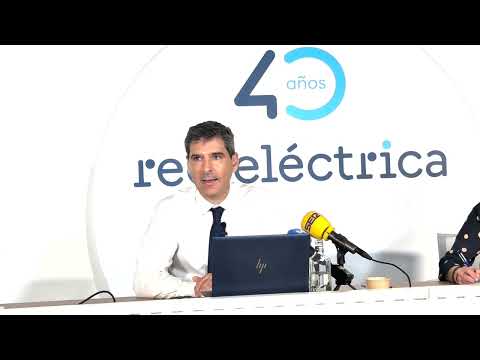
Spain’s electricity network Red Eléctrica de España (REE) called it “el cero” – the zero – and said: “Red Eléctrica and industry companies are working in a coordinated manner to restore power supply throughout the country as quickly as possible.
“The peninsular electricity system suffered a power outage this morning in mainland Spain and Portugal.
“We have activated the procedures planned for restoring power; in this phase of the work, the goal is to power the generating sets so they can start up and spread power to the grid and other sets.”
As of 7am local time on the 29th of April, it said 99.95% of demand had been restored.
Why did this happen?
The exact reasons behind the power loss remain uncertain.
Spanish Prime Minister Pedro Sánchez urged caution against misinformation.
Juanma Moreno, President of the Regional Government of Andalusia, said a cyberattack could be the cause, but this was quickly dismissed by officials close to the government.
Portugal's electricity network, Redes Energéticas Nacionais (REN), cited a significant voltage fluctuation in the Spanish grid as a contributing factor, which affected Portugal while it was importing Spanish energy.
Such fluctuations could be triggered by rapid changes in temperature or wind speeds, but rarely have such a huge impact.
Could intermittent renewables be to blame?
Renewable energy sources, like wind and solar, are inherently intermittent due to their dependence on weather conditions.
The power failure began at 12:33pm local time according to Spanish Prime Minister Pedro Sánchez.
In the hour before the outage, 60.24% of available electricity was coming from solar and 10.6% from wind according to ElectricityMaps.
Some of the country’s energy was being exported or stored – 8.65% was going to hydro storage, 7.5% to Portugal, 2.57% to France, 2.09% to Morocco and 0.36% to Mallorca.
Some areas of France experienced power cuts at the same time.
When looking at non-intermittent power sources, 10.11% was hydro, 9.69% nuclear, 6.76% natural gas and 1.61% from biomass – a total of 28.17%.
While the reliance on renewable energy can cause challenges if simultaneous weather changes affect large areas, the diversity and geographical distribution of these resources across Spain make it unlikely for such an incident to simultaneously impact all renewable outputs.
In the hours after the outage, solar power covered around 60% of available electricity and around 12% was imported from France.
How are the countries recovering?
Post-outage, Spain's energy mix saw natural gas covering more than 50% of electricity needs at 6am on 29 April.
The blackout significantly disrupted various sectors, including rail networks, automotive production and businesses lacking adequate backup power.
Major manufacturing industries and supply chains in Spain include motor vehicles, food production and chemicals.
Andrew Gordon, Managing Director UK&I at Eaton, said that the outage “is a reminder that energy resilience must be a strategic priority for businesses.
“Not only is it about prevention, but also how quickly and safely businesses can restore power when disruption strikes.
“Right now, organisations across Spain and Portugal will be working to get back up and running again to ensure financial and reputational damage is kept to a minimum.
“Even for those unaffected, this should be a wake-up call to make sure they are investing in the right technologies that can safeguard them from such costly and disruptive situations.”
Explore the latest edition of Sustainability Magazine and be part of the conversation at our global conference series, Sustainability LIVE.
Discover all our upcoming events and secure your tickets today.
Sustainability Magazine is a BizClik brand