
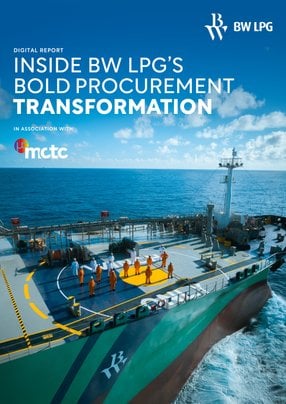
In the world of maritime logistics, where vessels traverse global waters carrying essential energy supplies, procurement often operates quietly behind the scenes. But at BW LPG, Ricardo Ackermann, Head of Procurement, is changing that narrative.
Since joining the company in 2019, Ricardo has been on a mission to reposition procurement from a purely operational function to a strategic business partner. His approach combines traditional procurement rigour with forward-thinking digital innovation and sustainability commitments.
BW LPG is part of the broader BW Group, which comprises 16 affiliates across the energy sector. BW LPG is the world’s leading owner and operator of Very Large Gas Carriers (VLGCs), operating 51 vessels worldwide, transporting liquefied petroleum gas across global markets.
What sets BW LPG apart is its dual fuel capability. Approximately half the fleet can sail on conventional fuel and LPG, using deck tanks to store the cleaner-burning alternative.
The company describes its core mission as delivering energy for a better world.
"That sounds very up in the clouds, but it's not," says Ricardo. “I've seen over the years that BW LPG makes conscious decisions on cleaner energy."
He emphasises that the business remains commercially viable while pursuing sustainability.
BW LPG has transformed significantly in recent years, converting 22 vessels to dual fuel solutions and becoming the first company in the world to implement LGIP technology. It is listed on the Oslo and New York Stock Exchange and has achieved SOX compliance.
Last year, BW LPG grew its fleet substantially by acquiring 12 vessels from a major competitor. In 2022, the company acquired the LPG trading operations of Vilma Oil to further grow its product services trading arm.
Ricardo reflects on the pace of change: "This is not a company that sits still and just enjoys the view.”
From backroom to boardroom
When Ricardo arrived at BW LPG, procurement was primarily focused on purchasing and operations. He saw an opportunity to expand its scope and strategic influence.
"Procurement consists of six process steps and the first three are the tactical and strategic parts," Ricardo explains. "So we're talking about the specifying phase (sourcing), the selection phase and the contracting phase. I added that to procurement."
Having integrated these upstream activities into procurement's remit, the next challenge was internal communication. Many stakeholders did not understand procurement's full potential beyond negotiating prices and ensuring timely delivery.
Ricardo calls this step “inside selling”, adding: “It’s one of the reasons why, at a lot of companies, procurement is still in the backroom and not in the boardroom: we are not trained to sell.
“Procurement managers know how to negotiate, how to position themselves towards suppliers, but internally it’s a completely different story.”
By expanding responsibilities to include surfaces, dry docking and future new builds, Ricardo has ensured the procurement department at BW LPG touches every significant expenditure. Communication has been central to this transformation.
“It's not just what you do – it's how you tell people," Rick emphasises. "Communication is key.”
Digital tools powering performance
BW LPG has embraced digital transformation to drive real-time visibility and decision-making. The company uses an ERP system alongside e-commerce platforms including Procureship, ShipServ and others.
Ricardo has developed a comprehensive KPI dashboard that provides instant visibility across the procurement operation.
"I can drill down from any number that I get in my dashboard to a supplier level, to a buyer level, to a vessel level, and find out what the root causes are when something goes wrong," he outlines.
This granular visibility enables rapid root cause analysis when issues arise. The dashboard consolidates data from standardised platforms, with Procureship serving as the primary e-commerce solution.
What is more, the organisation is developing an in-house AI workforce, expected to launch mid-2026. This will handle repetitive administrative tasks, freeing procurement professionals for more strategic work.
Ricardo acknowledges some team members feel apprehensive about these changes. "There's a lot of scepticism and also some fear within the teams about what this means for their jobs," he admits. "But the only thing I can explain to them is it'll make your job more interesting.”
Embedding ESG without compromise
For Ricardo, environmental, social and governance (ESG) considerations are not about box-ticking. In fact, he personally developed BW LPG's supplier code of conduct, making it integral to all contracts and purchase orders.
"ESG is in my blood," he states. "I don't sugarcoat things, but I also don't do window dressing."
Any supplier committing to work with BW LPG must also commit to these ESG standards.
In 2023, the company partnered with Achilles, placing its top 100 suppliers on the compliance platform. Suppliers must answer hundreds of questions covering governance, CO2 emissions and financial health.
Currently, BW LPG is in an awareness phase, allowing suppliers to understand expectations, but Ricardo says the approach will evolve: "It's okay to have a bad score and we ask questions, but moving towards 2030, we will change that."
This year, the business will establish a baseline for supplier CO2 emissions based on spend, anchoring a reduction plan running through 2030.
Ricardo is direct with suppliers: acting now provides competitive advantage, but delaying means eventual obsolescence. He draws parallels with ISO certification's early days, when resistant suppliers eventually disappeared.
"It will be conditional to have all your ducks in a row on ESG," Ricardo asserts. "That's my take on it. It's not a matter of choice; it simply needs to happen."
Building strategic partnerships
BW LPG does not treat all suppliers equally. Ricardo employs the 1983 Kraljic Matrix, plotting suppliers according to supply risk and profitability impact.
Routine suppliers require efficient logistics management; leverage suppliers offer negotiation opportunities; and bottleneck suppliers need careful risk management. But it is the strategic suppliers that receive the deepest engagement.
"We've started setting up key account management with them," continues Ricardo. "So, from our side and from their side, we concentrate on much more than just price, quality and products."
These relationships explore mutual efficiency gains. Ricardo calls these "spirit teams" – collaborative groups focused on creating value for both organisations. Success requires transparency, which, in turn, requires trust.
"That's the thing that has been lacking in a lot of cases in the past," he observes. “It still lacks in a lot of companies, where, if you fail to carry out criticality analysis and plot suppliers in different quadrants, you will treat all suppliers as if they are the same – and they are not.”
BW LPG’s partnership with MCTC, a maritime catering company, serves as a prime example of a strategic partnership.
With 22 sailors aboard each vessel, quality food is essential – and Ricardo is in no doubt that MCTC meets this brief.
“It’s my job to sign a contract with a good company,” says Ricardo. “In this case, MCTC does not only come up with the ingredients, in the right place, at the right time; they provide recipes, nutrition plans and cooking classes.
"They go one step above and beyond.”
Navigating geopolitical turbulence
BW LPG operates in an increasingly volatile world. COVID-19 demonstrated the risks of supply chain concentration, particularly dependence on China, and the company has since diversified strategic suppliers and routes.
Current tariff uncertainties pose particular challenges. With 15 dry dockings scheduled in China, ever-changing tariff rules create cost uncertainty.
Ricardo ensures BW LPG maintains flexibility to shift between shipyards rapidly: “We try to look at the geopolitical developments and, wherever we are in a position to act on it, we will do it.”
The company has hired consultants to advise on climate change through 2050. This forward-looking analysis examines temperature rises, sea level changes and regional variations.
"We are already looking into what that means for BW LPG and how we should anticipate," Ricardo adds. "We are capable of making shifts really fast.”
This responsiveness has helped navigate tariff disruptions, which Ricardo identifies as having the biggest recent impact.
Developing future-ready teams
Ricardo rejects passive career development, instead requiring each buyer in his team to create a personal development plan defining their one-year, two-year and five-year goals.
"I'm not doing anything for you – you cannot expect anything from me,” he tells his team, with what he calls classic Dutch directness.
“I ask, ‘what do you want? Where do you want to be? What’s that going to require?’ Then I discuss it with them on a regular basis and support them to develop.”
For the aforementioned AI workforce project, Ricardo has appointed two buyers as AI ambassadors, who are developing new working methods and building enthusiasm for change.
"I like to empower as much as possible the people on my team," Ricardo says. "That’s a very Dutch way of doing things as well. We’re not like the Germans, for instance, who are very hierarchically driven."
Moreover, Ricardo encourages his Manila-based team to speak up and question decisions: "They don't have to agree with me. It's in their DNA to follow, but I don't want that."
A vision for the future
The next couple of years are set to bring significant challenges and opportunities for Ricardo, his procurement team and BW LPG as a whole.
Half the fleet will undergo dry docking, with each representing a complex project requiring extensive contracts and resources.
The AI workforce development remains a top priority, with Ricardo framing it to management as opportunity versus risk.
"If we do not embrace AI, it will be a risk or a threat," he argues. "If one of our competitors is able to scale up really fast because of AI, it multiplies on a weekly basis, so not embracing it could hurt us.”
The company is also digitising its technical stores and consumables procurement.
Working with platform partners, BW LPG is developing an Amazon-style ordering system for vessels. Ships will browse standardised parts with pictures, ordering directly through intuitive interfaces – streamlining procurement while maintaining quality and compliance standards.
Ricardo’s vision for procurement at BW LPG extends far beyond traditional buying functions. By positioning procurement as a strategic partner, embracing digital innovation and embedding sustainability throughout the supply chain, he is demonstrating what modern procurement leadership looks like.
"A partner adds value to what we’re doing,” concludes Ricardo. “They do something for us that they will not do for anybody else.”
It is a philosophy that applies equally to BW LPG's approach to procurement – delivering distinctive value through strategic thinking, technological capability and unwavering commitment to sustainable operations.
Company portals

Executives
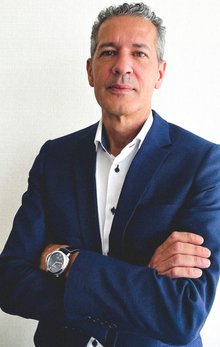
Ricardo Ackermann
Head of Procurement at BW LPG