
PwC’s Decarbonization Blueprint: From Strategy to Action
For decades, PwC has supported clients in navigating complex challenges and, today, that legacy translates into a focus on helping businesses achieve their climate goals while securing enduring value. From measuring emissions to embedding sustainability into operations, the firm supports clients across sectors and maturity levels with a combination of strategic consulting, operational support and digital tools.
David Linich leads PwC’s Decarbonisation and Sustainable Operations offerings in the US. With more than three years as partner, he guides companies through the process of measuring greenhouse gas emissions, forecasting future impacts and setting ambitious, yet achievable, reduction targets. David also helps to develop roadmaps and guides organisations through execution, drawing on practical experience and a collaborative mindset to turn climate ambition into real-world action.
Prior to joining PwC, he developed expertise in operational excellence and strategy, working with a range of industries to translate business challenges into sustainable solutions. Now, he brings that multi-sector perspective to one of the world’s most influential professional services firms.
PwC’s services span the full spectrum of sustainability needs. These include net zero strategy development, GHG emissions baselining across all three scopes and digital tools like the Emissions Tracker and Decarbonisation Compass. The firm also supports regulatory compliance and provides independent assurance over reported data.
Alongside its external offerings, PwC has cut its own Scope 1 and 2 emissions by 87% since 2019, sourcing renewable electricity across offices and targeting net zero by 2050.
The evolving landscape of decarbonisation
PwC’s 2025 State of Decarbonisation report reveals a strong, ongoing commitment to sustainability as a source of business value. While some companies may be talking less about their climate pledges, many are focused on addressing rising energy demands, protecting value at risk, responding to evolving customer expectations and designing operations for long-term growth and resilience.
“The report aims to understand the current global state of companies regarding climate, decarbonisation and sustainability,” explains David.
PwC analysed more than 4,000 companies and more than a million data points. To make sense of it all, the team turned to gen AI algorithms, trawling through dense qualitative material, sustainability reports, 10-K filings and CDP responses. PwC’s goal is to uncover what truly works in decarbonisation and which choices set companies up for lasting sustainability success.
“The challenge,” David says “was to harness this information to uncover which practices matter most for decarbonisation and what variables lead to success.
“We found some surprising insights,” he adds. “Contrary to expectations and media headlines, 37% of companies analysed were increasing their climate ambitions, while only 16% were decreasing them. Over five years, there was a ninefold increase in companies making commitments.”
The report explains that the main drivers include business value as customers demand sustainability and carbon intensity information. There’s also a revenue upside; products marketed with sustainability attributes see a 6-25% revenue uplift compared to those that are not.
“Cost savings are another driver, from reduced fuel, electricity and waste, leading to improved margins, especially across the value chain and in Scope 3 emissions,” David adds.
Sector-specific approaches to emissions
Tailoring decarbonisation strategies to the realities of each sector is essential, as emissions sources and operational structures vary widely across industries. While some practices apply universally, PwC’s analysis shows that sector-specific nuances shape both the challenges and the opportunities for emissions reduction.
In food and beverage, for example, the bulk of emissions typically sits upstream in the supply chain—often at the farm level. As a result, effective strategies in this sector depend on engaging suppliers and promoting agricultural methods such as regenerative farming. By contrast, the automotive industry faces a different picture. Most emissions occur downstream, during the use phase of vehicles. This shifts the focus to enabling consumer adoption through supportive policy and overcoming concerns like range anxiety.
David explains that PwC’s findings reflect this: “It's very much a sector-by-sector story. While some findings apply across sectors, emissions profiles are often very different,” he says.
He points to PwC’s analysis across 12 sectors, which identifies the relevant actions, capital and operational expenditures, and revenue percentages aligned with climate transition for each one.
Collaboration across the value chain emerges as another key theme, especially for tackling Scope 3 emissions. David recalls a past example from his time at a textile firm, where a customer’s sustainability request sparked a rethink in product design.
“A customer’s sustainability request led to a major innovation in towel design, resulting in cost savings, a lighter product and a stronger customer relationship.” That outcome, he says, shows how supplier engagement can drive both environmental and commercial gains.
As different sectors face distinct pressures and pathways to decarbonisation, a tailored approach will be essential to delivering impact at scale.
Technological innovation shapes sustainable business
Crucial to scaling that impact is technology.
The words on everyone’s lips right now are AI, digital twins and robotics to name a few, but David explains that transitioning to smart facilities could reduce energy use by 31% according to PwC’s research with the World Economic Forum.
He explains: “Connecting systems like HVAC, lighting and occupancy sensors can significantly improve energy efficiency.”
He also agrees “there are many use cases for AI. In utilities, AI can optimise grid orchestration, reducing transmission losses and the need for new fossil fuel power sources, especially as grids become more distributed with renewables.
“There are energy savings to be had,” David goes on. “There are also resilience benefits. When you think about operating as a responsible company and having the license to operate in a certain area, or as you drive down your energy use within a particular area, that can make you more resilient against price volatility of your utilities or the cost of certain materials to operate your business.”
Findings like this indicate the business case for both technological transformation and decarbonisation has never been stronger, but balancing investment and performance can be tricky.
David outlines some key questions to ask when striking this balance, noting that “it is really important to get down to a detailed plan” and to understand whether decarbonisation is to reach a specific target or if there are any initiatives the business wants to focus on.
Then, he asks: “What are each of those initiatives going to cost? How much carbon does each remove so that I can now map out how much CapEx do I need each year? How much incremental opex might we be looking at to understand how much to finance? But importantly, as you're building that plan, what's the full business case around that?”
With so many questions it's easy to get overwhelmed, but David argues “it's not enough to just lay out the cost” as it can come across as “just a burden on the organisation” and instead it's important to take the time to “identify and quantify the business value around decarbonisation.”
Towards a circular future
Despite this clear business value, David has seen a lot of “distraction” in recent months, as geopolitical risk rises and the tariff landscape forces businesses to rethink their supply chains.
“A lot of our clients have been really focused on how the tariffs impact their business. There’s still a large focus on understanding how we best optimise our business and our value chain based on potentially significant increases in costs to the input of the business.”
Looking ahead though, David “fully expects clients to focus on sustainability and decarbonisation,” adding that “many of them are still moving forward irrespective of the distraction that tariffs might impose.”
“I am expecting to see more of our clients focus on collaboration outside their four walls,” he explains. “I think there's an increased realisation that there's only so much we can do on our own.” This collaborative mindset is critical for achieving meaningful progress on sustainability. By working with suppliers, customers and even competitors, companies can share best practices, pool resources and drive systemic change.
David highlights the multifaceted nature of the current business environment: “Tariffs increase the costs of inputs into your business. You're seeing consumer demand and customer expectations around lower carbon products and more responsible products increase. You also have AI and robotics that are helping companies better sort, identify and reuse a waste stream.”
As companies navigate this complex landscape, the challenge will be to balance short-term financial pressures with the need to invest in sustainable and circular business models.
“When you take those variables into account, the business case for circularity becomes much more attractive. I hope and expect to see more and more companies picking up on circularity in the months ahead and really trying to tap into some of the revenue growth potential of a circular business model,” David concludes.
While tariffs and geopolitical risks may continue to create distractions, the long-term imperative for sustainability is becoming increasingly clear. Companies that can successfully integrate these priorities by leveraging technology and fostering collaboration will thrive in the years ahead.
To read the full story in the magazine, click HERE.
Company portals

Executives
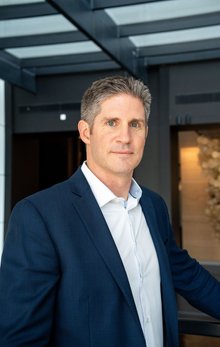
David Linich
Decarbonisation and Sustainable Operations Lead