

The data centre and digital infrastructure industry in Israel has transformed over the last decade, driven both by a local push for migration of data to secure, domestic cloud networks and a global repositioning of the region as a vital digital bridge between Europe and Asia.
The 2021 launch of Project Nimbus – a government initiative to deliver a single unified cloud infrastructure in collaboration with Amazon Web Services (AWS) and Google – has required a radical departure from standard data centre design, calling for innovation in high-density computing, security and future-proofed capabilities that can support advanced technologies and modern energy-intensive AI workloads.
Bynet Data Centers, a subsidiary of Israeli tech conglomerate the Rad Bynet Group, is one of the companies spearheading the state's digital infrastructure revolution. The business, founded in 2023, is strategically focused on delivering pioneering next-generation technologies including advanced cooling and power management in order to provide scalable and sustainable future infrastructure for local and global customers.
In line with this market shift, Bynet has seen significant growth in recent years. Under CEO Eli Moshe, the company has quickly expanded its portfolio of data centres from five to seven and is in the progress of building key new facilities in Jerusalem and Soham.
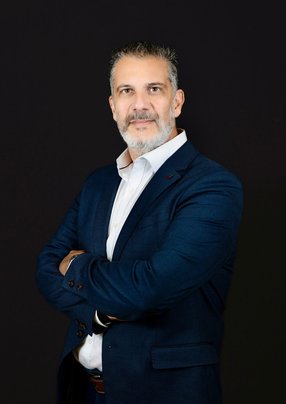
Eli has been CEO since the company was spun off from the Bynet Group, where he gained 12 years’ experience in data centres and infrastructure. He was Bynet Data Centers’ first employee and has been instrumental in driving its vision, mission and strategy from the outset. This is underpinned by more than 25 years of experience in technology and data in Silicon Valley for companies including AWS, Hitachi Data Systems and NetApp – a period in which he has seen the industry transform at pace.
"I’ve touched every part of that data, cloud and infrastructure journey during my career, and I really understand the data environment and decision making that companies and our customers have to take,” he says. “When I was at NetApp, I never believed you would put data on a cloud, but that has changed so quickly, with most companies now taking a hybrid approach to their data – it’s transformed our strategic approach at Bynet.”
AI-led industry evolution
For years, growth in data centres was driven by a relatively linear approach based around storage requirements: disks got bigger, data volumes increased and organisations needed more space. The global pace of AI innovation and adoption has forced a shift to this legacy strategy.
“It’s been a revolution,” says Eli, “but we are now at the point where storage is not a challenge, compute is. And with that comes more difficult requirements around energy management, finding the land for large-scale projects, cooling and sustainability.”
Bynet's strategic response has been to design its next generation of facilities specifically for AI readiness. The company is developing two flagship sites in Jerusalem and Soham, both engineered to handle the power densities and variable loads that characterise modern AI workloads.
The company’s Jerusalem of Gold site acts as an AI innovation lab, designed specifically for testing and developing customer-led AI solutions. Typically this work includes stress testing extreme AI and GPU driven workloads and developing cooling technologies.
"A key part of the shift in my strategic approach was that we have to have a lab like to ensure Bynet can meet customer demands and make the next generation of data centres we build AI ready,” says Eli. “It has to work that way. You cannot build a data centre and then retrofit it to be future-ready
Company portals
Executives

Eli Moshe
Chief Executive Officer