About Rolls-Royce Power Systems AG’s mtu Technologies
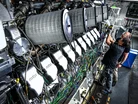
As global industries accelerate toward a low-carbon future, Rolls-Royce Power Systems AG is delivering sustainable and innovative power solutions through its flagship mtu brand.
Headquartered in Friedrichshafen, Germany, mtu technologies are becoming synonymous with smart, clean energy systems for transport, industry and critical infrastructure. Nowhere is this transformation more visible than at the Port of Duisburg, where mtu’s next-generation systems are powering the world’s largest inland port toward full CO₂-neutrality.
“As the need for energy continues to grow, so does the need to produce it in a responsible manner,” says Tobias Ostermaier, President Business Unit, Stationary Power Solutions.
“With our mtu technologies, we are empowering our customers to meet their energy needs with resilience and sustainability in mind. We recently launched our first 100% hydrogen fueled gas gensets. They are an integral part to enable a completely CO₂-neutral port terminal.
“With this example and many others we are one of the driving forces to actively shape the energy transition with innovative ideas, a high level of expertise, and, above all, a great deal of passion.”
The mtu technology portfolio: powering decarbonisation
mtu, a Rolls-Royce solution, is a global leader in high-speed engines and propulsion systems used in ships, trains, heavy vehicles and distributed power generation. Its technology stack includes:
- Diesel and gas engines: For marine, rail, and industrial use, built to new efficiency and emissions standards.
- Hybrid systems: Integrating batteries and electrified drivetrains to reduce fossil fuel reliance, especially in ships and trains.
- Fuel cell and hydrogen engines: mtu’s development of hydrogen-powered plants and fuel cells offers climate-neutral alternatives for stationary and mobile applications. Hydrogen infrastructure is a strategic focus, with plans to implement fuel cell systems in energy supply from 2025 onward.
- Microgrids and battery storage: mtu’s EnergyPack battery containers and microgrid solutions enable facilities to balance loads, maximise renewable energy use and ensure reliable, decarbonised operations.
To meet urgent climate goals, mtu technologies are engineered for compatibility with sustainable fuels and the use of digital solutions to optimize lifecycle environmental impacts.
Rolls-Royce Power Systems AG is committed to cutting the greenhouse gas emissions of its new products by 35% by 2030 (from a 2019 baseline).
How the Port of Duisburg is becoming CO₂-neutral
The Port of Duisburg, once Europe’s key coal logistics hub, is now a showcase for climate-neutral transformation.
The Duisburg Gateway Terminal (DGT)—built on the site of the former “Coal Island”—has become a blueprint for CO₂-neutral port operations thanks to a unique collaboration between Rolls-Royce’s mtu division and port authorities.
The heart of the transformation is an intelligent, decentralised energy system, combining:
- Hydrogen Fuel Cells: mtu fuel cell systems supply peak-load electricity using hydrogen, a renewable and zero-emission resource.
- mtu Hydrogen Cogeneration Plants: Provide both heat and electricity for terminal operations.
- Photovoltaic Solar Arrays: Generate a significant share of onsite electricity.
- mtu EnergyPack Battery Storage: Balances supply and demand, storing surplus renewable energy and delivering it during periods of low generation.
- Smart Microgrid Control: An advanced control system optimises the interaction between different technologies, ensuring the terminal operates efficiently with minimal carbon footprint.
All systems are digitally managed, with real-time monitoring and predictive algorithms crafted for peak efficiency and environmental performance.
“As soon as sufficient green hydrogen is available, MTU gas engines, such as those in Duisburg, can also make a significant contribution to reducing CO₂ emissions by running on 100% hydrogen or a hydrogen blend,” explains Michael Stipa, Vice President Business Development and Product Management for Stationary Energy Solutions at Rolls-Royce.
One of the most direct climate benefits is that ships can now receive zero-emission shore power, eliminating the need to run diesel generators while in port, thereby cutting local air pollution and further reducing CO₂ emissions.
The project, called enerPort II, is supported by the German Federal Ministry for Economic Affairs and Climate Protection and is positioned as a model for ports worldwide.
Beyond Duisburg: mtu’s role in global sustainability
Rolls-Royce Power Systems AG is contributing to sectors’ broader net zero transition.

The company is aligned with major UN Sustainable Development Goals, focusing on:
- Climate action: Pioneering sustainable fuels and energy solutions in all operational sectors.
- Responsible production: Advanced remanufacturing of engines within a circular economy approach.
- Innovation in new markets: Developing systems for regional and urban air mobility, decentralised energy and advanced microgrids.
The company has also pledged that all new commercial aero engines and the majority of diesel engines will be compatible with sustainable fuels, and are ramping up investment in net zero technologies.