Air France: Behind Airbus’ First SAF A220 Delivery
In 2023, aviation accounted for 2.5% of global energy-related CO₂ emissions according to the International Energy Agency.
IATA says that replacing jet kerosene with Sustainable Aviation Fuel (SAF) can reduce these emissions by up to 80%.
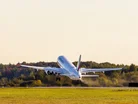
For the first time, An Air France Airbus A220 has completed a delivery flight to Paris using SAF and Airbus issued official sustainability credentials for SAF to a customer.
The companies are both working to support the growth of SAF in their own operations and its wider development.

Airbus says this ferry flight represented more than 25 tonnes of reduction in lifecycle greenhouse gas emissions compared to fossil fuels.
Blaise Brigaud, SVP Group Sustainability at Air France-KLM, says: “Fleet renewal and the use of sustainable aviation fuel are the two main levers of the decarbonisation of aviation.
“Combining the two is only logical and Air France-KLM is proud to participate in this Airbus milestone with the delivery flight of one of our A220s.
“Air France-KLM is among the world’s largest buyers of SAF. Directly receiving SAF at delivery is a game-changer, increasing transparency and driving industry progress.”
How Airbus aircraft use SAF
The A220, and all Airbus aircraft, are capable of operating with 50% SAF.
By 2030, all Airbus aircraft and helicopters will be capable of flying with up to 100% SAF.
The A220 delivered to Air France came from Airbus’ Mirabel site in Canada where SAF management is done using mass balance.
"In 2025 alone, we project cutting CO₂ emissions by approximately 400 metric tonnes at our Mirabel site thanks to the 170,000 litres of pure SAF we will integrate to our activities," said Benoît Schultz, CEO of Airbus Canada.
"And we're pushing our ambition further with this ferry flight with PoS credits for 50% SAF – a significant step that comes just ahead of Air France’s 50th A220 delivery later this year.
“On a global scale, 78% of Airbus aircraft were delivered with SAF blend for the first half of the year, underscoring the importance our customers place on decarbonisation."
Air France’s first A220-300s are part of a total firm order of 60 aircraft and began flying in its network in October 2021.
Alongside the capability to use SAF, these aircraft can deliver up to 25% lower fuel burn and CO₂ emissions per seat compared to previous generation aircraft.
Airbus has been using SAF in its operations for nearly a decade and has committed to increasing the share of SAF used to power its internal operations to at least 30% by 2030.
As of 2025, all five Airbus delivery centres around the world can offer aircraft deliveries with SAF to its customers.
SAF at Air France
Air France says that it applies the sustainability criteria for SAF produced and used in the European Union to all of the SAF it selects.
It uses certification from internationally recognised organisations, like the ISCC and RSB, to ensure fuels meet its criteria.
In 2025, fuel suppliers’ deliveries to European airports must contain at least 2% SAF.
Air France says that to encourage increased production, it is committed to using as much SAF as possible ahead of regulatory requirements.
A SAF contribution is included in the price of all of its flights alongside the option to make a voluntary contribution allocated entirely to the purchase of SAF.
By 2030, Air France aims to incorporate at least 10% SAF globally and in 2024 it used 43,953 tonnes.