Allianz: Is The Future of Mining Sustainable?
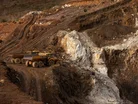
Mining operations are undergoing a major transformation, driven by surging demand for critical minerals and heightened expectations for sustainability.
With this intensified pressure comes a risk of failing to scale responsibly and an inability to keep up with global needs.
Allianz explores how the mining sector is turning toward digital transformation to rebuild its strategy and meet these challenges responsibly.
Rising demand
The global energy system is being redesigned to accommodate electrified end-use, renewable energy, storage solutions, and expanded power grids – all of which fuel new demand for mining. Similarly, the rapid rise of AI continues to push the need for data centres, specialised network equipment and high-performance computing.
These technological and industrial shifts depend on vast quantities of materials, requiring intensive extraction, processing, and refining. As a result, global mineral extraction has risen sharply in the 21st century.

According to the IEA, demand for lithium is projected to increase fivefold by 2040, while graphite and nickel demand will double. Cobalt and rare earth elements are expected to grow by around 60%, with copper demand climbing by 30%. Meeting this challenge requires more than opening new mines – it demands an expansion of processing capacity, transport infrastructure, and skilled labour.
AI expansion alone is placing immense pressure on global infrastructure. The IEA projects that electricity demand from data centres will grow from roughly 415 TWh in 2024 to about 945 TWh by 2030 – an increase reliant on intensive mineral inputs, many of which are also central to the electric vehicle industry.
As renewables proliferate and mineral dependency deepens, mining companies face more demand than ever before. This rapid scale-up heightens risks of bottlenecks, supply delays, and price volatility.
“The green and digital transition won’t fail for lack of ambition – but it could stall for lack of materials,” says Ludovic Subran, Group Chief Investment Officer at Allianz.
“Our latest report, Mining for the future: Addressing liabilities and unlocking sustainable transition opportunities, looks at mining as both a critical enabler and a potential bottleneck.”
Regional dependence
Supply continues to lag behind demand as new projects take years to finance and permit, often facing tighter environmental and social scrutiny. The industry’s growth pace cannot currently match rising consumption, prolonging dependence on fossil fuels and straining existing mines.
Resource depletion is growing globally but is heavily concentrated in certain regions. In resource-rich nations such as the Democratic Republic of Congo, Zambia, and Mali, mining dominates national economies, yet these areas face accelerating depletion. Dependence on a small group of lower-income producers for critical materials risks creating resource traps that undermine long-term sustainability.
If extraction is not managed responsibly, short-term economic benefits could give way to long-term environmental and structural harm. Many of these countries already experience severe ecological impacts, including land degradation, air pollution, and acidification. Rwanda, for example, faces a high environmental cost-to-benefit ratio, driven by informal tantalum mining and minimal local value retention.
Mining contributes 2–4% of global GDP and sustains millions of livelihoods, but its environmental footprint is significant – accounting for 4–7% of global greenhouse gas emissions and driving extensive deforestation. Gold mining represents 41.7% of mining-linked forest loss, followed by coal mining at 26.3%. While the renewable transition is reducing coal-linked deforestation, it has shifted environmental pressures onto mineral-producing regions vital to green supply chains.
Mining diversification
Building supply resilience through the transition requires understanding how geopolitical and sustainability risks align with geological resources. The Geological Service for Europe (GSEU) has mapped hard-rock deposits identified in the EU’s 2023 critical raw materials list, showing that potential supply across Europe is more diverse than previously assumed – creating opportunities for responsible extraction and localised value chains.
The EU is also strengthening its network of strategic raw material partnerships to diversify sources and encourage sustainable mining practices across value chains. But diversification must be managed carefully to avoid overreliance on other vulnerable regions or environmentally harmful operations.
Poor sustainability performance poses major liabilities for mining businesses. Effective operations require careful attention to tailings management, community engagement, land rehabilitation, water treatment, and post-closure monitoring. Though costly, these measures are vital to protect local ecosystems and communities.
By planning upfront and integrating sustainability from the project’s inception, companies can manage costs more efficiently and ensure long-term resilience. Through collaboration with communities, stakeholders, and workers, mining projects can be built with responsibility and longevity in mind – enabling the industry to meet global demand faster, more safely, and more sustainably.


Executives
Ludovic Subran
Chief Investment Officer