
How Retail Giant Amazon is Using EVs & Electrification
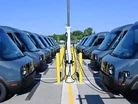
Electric vehicles (EVs) can improve fuel economy, lower fuel costs and reduce emissions according to the US Department of Energy.
Amazon is taking advantage of these benefits and supporting the expansion of EVs and new technologies throughout its operations and supply chain.
The company now has a fleet of more than 30,000 electric vehicles, helping to deliver 1.5 billion packages globally.
How is Amazon utilising EVs?
Amazon says it delivers packages to customers everyday, making the electrification of vehicles a decarbonisation priority.
In 2019 Amazon partnered with EV brand Rivian and now uses tens of thousands of EVs regularly.
The company has a goal to deploy 10,000 electric vehicles in India by 2025 and surpassed this goal early in 2024.
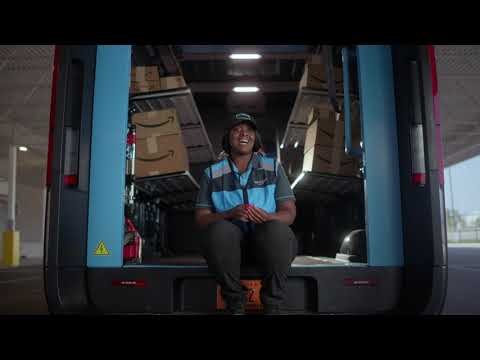
Amazon says that it is continuously aiming to optimise the use of its EVs and at times where it can’t use them, the company uses lower carbon transportation modes, like alternative fuel vehicles.
To support its EV network, Amazon installed 11,770 chargers at 50 delivery stations, creating the largest private charging network in the US.
It also has one of the world's largest fleets of EVs on-site that are used as yard holsters to move trailers around fulfilment sites.
R.J. Scaringe, CEO of Rivian, says: "We are focused on driving efficiency into every aspect of the vehicle design, everything from cabin heating to driver ergonomics to drivetrain design has been optimised for time and energy.
"And then the echo effect of this, of causing other logistics players in this space to also look at how they drive up efficiency within their fleet, will have a very large impact."
Dave Clark, Amazon's Senior Vice President of Worldwide Operations, says: "We created The Climate Pledge and are investing in 100,000 Rivian electric delivery vans to demonstrate that there is a large and growing market for green technologies.
"It's important that large companies like Amazon stimulate investment in the development of low-carbon products and services that will be required to help companies of all sizes decarbonise their operations and support a thriving, low-carbon economy."
Amazon's EV goals
Amazon has a goal to have a minimum of 10,000 electric delivery vans on the road by 2030.
To reach this aim, at the beginning of 2025 it announced the largest order of zero-tailpipe emissions heavy goods vehicles.
This is alongside 200 new Mercedes-Benz eActros 600 trucks which are set to join its European transportation network.
These vehicles are expected to transport up to 338 million packages a year when fully operational.
Amazon currently has a fleet of EV’s called middle miles that move shipments between the Amazon facilities.
These new vehicles are intended to join the fleet throughout the next two years.

The challenges in expanding EVs
Overall, Amazon aims to scale up its use of EVs on a global scale, but says that electrification at that scale is a challenge.
With operations looking very different across the globe, the company sees different vehicle types from different suppliers.
Amazon says it needs vehicles and chargers that meet its operational needs, costs, technical needs and sustainability requirements.
Some of the main challenges are:
- Limited land availability
- Energy dependence
- Trade barriers
- Limited financing
- Power availability at competitive rates
- Unfavourable police environments
However, Amazon says that it is working to remove these barriers through engaging with private and government partners.
Andy Jassy, CEO of Amazon, says: “Our transportation network is one of the most challenging areas of our business to decarbonise and to achieve net-zero carbon will require a substantial and sustained investment.”