Bosch: Closing the Materials Loop in Manufacturing
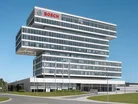
With more than 450 locations globally, Bosch was one of the first companies to achieve carbon neutrality in its Scope 1 and 2 emissions, putting it ahead of other tech giants like Apple and Microsoft.
The German firm is working towards solutions to improve its impact on the environment and reduce material waste across its entire value chain.
Thanks to its sustainability commitments, Sustainability Magazine has ranked Bosch 54th in its Top 250 World’s Most Sustainable Companies 2025.

Progress towards sustainability goals
Bosch achieved carbon neutrality in its Scope 1 and 2 emissions as early as 2020.
That feat came after Bosch made huge efforts to increase its energy efficiency, generate its own energy from renewable sources, purchase electricity from renewable sources and invest in carbon credits to offset residual emissions as a last resort.
Looking forward, the company is aiming to reduce its upstream and downstream Scope 3 emissions by 30% by 2030 compared with the baseline year 2018 irrespective of the company’s growth.
Bosch’s upstream emissions are mostly caused by purchased goods and services and logistics, whereas its downstream emissions are primarily made up of the use of its products.
To cut down on its Scope 3 emissions, Bosch is aiming to improve packaging design, optimise freight use, make agreements with its suppliers and help transform the energy sector.
Dr Thomas Schulte, Head of Sustainability and EHS at Bosch, says: “We leverage the innovation potential of Bosch and our partners to protect the climate, save water – especially where it is scarce – and strengthen the circular economy.”
Reducing waste through circularity
In order to reduce its environmental footprint, Bosch is aiming to enhance the sustainability of its products across their entire lifecycle.
This circular approach starts with the procurement and production of materials and continues to a product's end-of-life phase, where materials are recovered and reused.
Bosch plans to use materials efficiently during the manufacturing process, which helps cut costs while reducing Scope 3 emissions.
The aim is to close both the material and product loops in production, extending product and component lifecycles.
For example, the company is working towards circularity in its sourcing and production of wiper blades. These should be replaced regularly and each wiper blade has a specific adapter to fit it.
Now, workshops have the option of ordering the required adapters separately, which reduces the amount of materials used by Bosch and the amount of waste generated in manufacturing.
This results in 50% less packaging waste in workshops, as well as achieving a higher packing density during transport.
Bosch is also working on ensuring there are established recycling processes for materials such as steel, aluminium and plastics.
Across its product portfolio, the average percentage of recycled steel used in Bosch’s manufacturing is 56% and the average level of recycled aluminium purchased is 35%, which meets the average level in the industry.
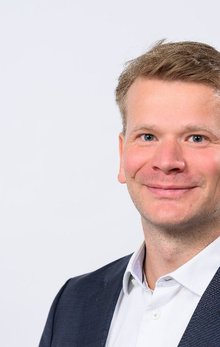
Arne Michel Mittasch, Head of Sustainable Business and Relations Management at Bosch, says: “By consistently implementing the principle of the circular economy, it is possible to combine climate action, resource conservation and greater resilience for companies and their supply chains.”
The path to climate neutrality
Bosch’s climate neutrality strategy relies on optimising its energy use. By 2030, it plans to increase its energy efficiency to achieve potential savings totaling 1.7 TWh.
Bosch says it will invest €1bn (US$1.17bn) in increasing energy efficiency by 2030.
Since 2019, the company has initiated more than 7,000 efficiency projects worldwide, capturing a savings potential of 1,144 GWh which is 67% of its goal.
It also plans to harness new clean power technologies, already using solar power in 139 of its owned sites by the end of 2024.
The company aims to exclusively source green electricity for the whole company by 2030.
In 2024, around 99.5% of Bosch Group’s global electricity demand was covered using green electricity, which was helped by Bosch expanding its purchase volume from existing plants.
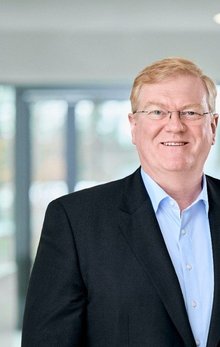
Dr Stefan Hartung, Chairman of the Board of Management at Bosch, says: “Companies shouldn’t have to choose between being profitable and doing what’s best for the planet.
“If the right path is chosen, both aims go hand in hand.”
Company portals

Executives
Arne Michel Mittasch
Head of Sustainable Business and Relations Management
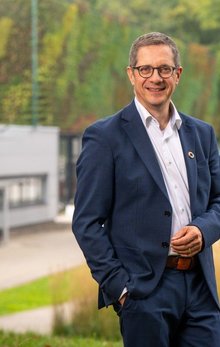
Dr Thomas Schulte
Head of Sustainability and EHS
Stefan Hartung
Chairman of the Board of Management