COP30: The Nations Promising to Quadruple Sustainable Fuel
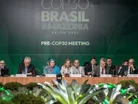
COP30, the 30th United Nations Conference of the Parties, will take place in November 2025 in Belém, Brazil.
COP is made up of 198 participating countries and sees world leaders and experts come together to tackle climate change.
The COP30 Presidency says Belém will adopt sustainable practices including offsetting carbon emissions, using renewable energy in event facilities and promoting a circular economy with a focus on recycling and reusing materials.
Brazil has launched the Belém 4x pledge, which will see countries commit to increasing the use of clean energy sources.

About the Belém Commitment for Sustainable Fuels
On the final day of the Pre-COP event, Brazil’s Ministry of Foreign Affairs launched the Belém Commitment for Sustainable Fuels, also known as Belém 4x.
This is an initiative to support the global goal of quadrupling the production and use of sustainable fuels by 2035, by building political support.
Belém 4x aims to encourage the adoption of clean energy sources including hydrogen, biofuels, biogases and synthetic fuels.
Japan and Italy have joined the commitment and other countries have shown support and are expected to join during COP30.
Countries have previously made bilateral agreements to advance sustainable fuel technologies, such as Japan and India agreeing to a clean energy partnership and Brazil and Indonesia partnering on sustainable biofuel production and land-use practices.
Belém 4x is aiming to use each country’s power to achieve the sustainable fuel target by removing obstacles, increasing incentives and streamlining regulations.
The pledge will be officially presented during the COP30 summit in November where other countries can sign up and show their support.
João Marcos Paes Leme, Director of the Energy Department at Brazil’s Ministry of Foreign Affairs, says: “This initiative seeks the support of as many countries as possible to send a political signal, including to economic stakeholders.
“Many of these technologies are technically viable but are not yet produced at sufficient scale.”
IEA’s Delivering Sustainable Fuels report
Belém 4x is backed by the International Energy Agency’s (IEA) Delivering Sustainable Fuels report.
The report shows it is possible to reach the global 2035 goal by using global pathways to accelerate the deployment of sustainable liquid and gaseous fuels.
The IEA says “policy frameworks need to remain flexible and technology-open to support the market entry of emerging fuels”.
In many countries, the resources needed to produce sustainable fuels - such as crops, organic waste and renewable electricity - are more widely available than fossil fuels.
This can help cut costs and dependence on fuel transport by reducing reliance on fossil fuel imports.
The report says “sustainable liquid and gaseous fuels can provide environmental benefits beyond emissions reductions such as improving soil health, water and air quality, land management and circularity”.
Looking ahead to COP30
COP30 will focus on monitoring progress since COP29 and accelerating future action.
It will follow the overarching goal of limiting the global temperature increase to 1.5°C with discussions around energy, biodiversity, agriculture and social development.
André Corrêa do Lago, COP30 President Ambassador, has said that Brazil will be hosting the “COP of implementation” by helping nations lead with group initiatives.
“Implementation is much more an exercise of cooperation and mutual support,” he says.
“Therefore, it will be very positive to build these groups starting with key countries, and we will see how far we can advance without necessarily needing to reach a full consensus.”