For many people, long weekends spent listening to live music and camping hold some of their dearest memories. Every year, festivals around the world come in all shapes and sizes to welcome people to join a community for a day, a weekend, a week or more.
British summer music festivals have long been centres of culture, drawing thousands to city parks and rural fields for days of entertainment. Festivals bring with them considerable environmental challenges, however – surging energy demand, food miles, abandoned waste, carbon-heavy fan travel and more.
AEG Europe – a global events business that owns and operates renowned venues and festivals – is putting sustainability at the heart of LIDO Festival, a brand new multi-day music event in London's Victoria Park.
"We’re tasked with building a small town in a park in summer with festivals," says Sam Booth, Director of Sustainability at AEG Europe. "Sustainability means rethinking everything – from how we power stages to what food we serve and how our fans arrive."
Festivals, by their very nature, compress the impact of thousands of people into days, creating unique sustainability challenges. “There are so many sustainability challenges at festivals,” Sam says. “Everything from the power, through to the waste, the water, to the food and drink, and how people get to you. Anything you can think of, there is a challenge associated with it."
Sustainability at LIDO Festival
LIDO Festival, located in East London, distils the real-world sustainability efforts of AEG Europe into a concentrated showcase for innovative practice.
The central location takes advantage of London’s robust public transport, while the festival site itself is designed with sustainability in mind. Walking and cycling are actively encouraged, with visible infrastructure supporting greener journeys.
“It's a really difficult thing to tackle, but all we can do in the first instance is position the festivals as well as we can and then start engaging with fans in the best way we can afterwards,” Sam says.
But it's not just theoretical – there's a real benefit to this now, which you can start seeing at LIDO and it's a real tangible endpoint for the people around you.”
The impact of LIDO was felt by the teams working on it, the attendees – and even the performers.
“As artists, we want to be doing this forever,” says Hunny, the performer who opened the main stage at LIDO. “And as customers at the festival, we want to be able to go to festivals forever. So we need to make it sustainable and be resourceful.”
Waste management
For most regular festival-goers, waste is a familiar sight – overflowing bins, abandoned cups, sometimes the infamous sea of discarded tents. But for LIDO, waste management is an integrated process – both visible and invisible to attendees.
“We’ve reduced our waste streams to just two: cans and compostables,” Sam explains. Every food and drink item sold on site is served in fully compostable packaging, from napkins to trays to cutlery. “All food waste and packaging go into one bin and are sent to commercial composters. Cans, meanwhile, can be infinitely recycled.”
Partnerships amplify impact. LIDO works with Every Can Counts, a not-for-profit initiative focused on aluminium can recycling, to educate fans and ensure cans reach the correct destination. “We even have people hand-sorting bins to keep contamination low and recycling rates high,” Sam says.
Another innovation is the baler, a machine that crushes waste into compact cubes, reducing the number of heavy goods vehicles entering the park to collect skips. “If we can send pure blocks of aluminium offsite, we can actually earn money back on our recycling,” Sam notes. “Recycling is my favourite thing!”
Supply chains to menu labels
Food is often overlooked in festival carbon accounting, but AEG Europe is working to change that at LIDO. “Every pint, every burger carries its own carbon tag,” explains Sam. Most traders are local, reducing transport emissions.
LIDO uses its programming to shift behaviours. For the first day, with headline act Massive Attack, the festival was entirely vegetarian and vegan, and AEG worked with all vendors to deliver plant-based menus. “We’re not saying meat eating is bad, but it has a huge carbon footprint,” Sam says.
For other event days, 20% of the traders are vegetarian or vegan – AEG’s highest yet. To educate festival-goers, all menu items are labelled A to E according to their carbon impact. “We want people to be informed, so they know choosing steak over vegetables makes a difference.”
The energy solution
Powering a festival stage requires substantial energy, historically supplied by diesel generators. At LIDO, a multifaceted approach is emerging, with emphasis shifting to electrification.
“Battery units – charged from renewable energy sources – are powering our main stage,” Sam explains. The festival has negotiated contracts with Ecotricity X Grid Faeries, a UK renewable supplier, ensuring that electricity fed into the site, and into batteries, is wind farm-sourced.
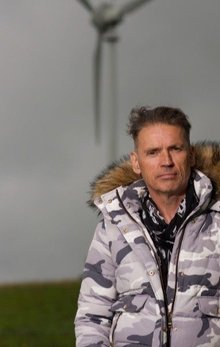
“What we're really here to do is to take the diesel out of festivals, gigs and live sporting events,” says Dale Vince, Founder of Ecotricity and Co-Founder of Grid Faeries. “Anything that's in the live sector is probably running on diesel – we are here to change that.”
“The full site for the Massive Attack show is battery-powered and charged with renewables. That’s a big step forward,” Sam says. “There’s a big shift once people realise the sound quality is better and air is cleaner.”
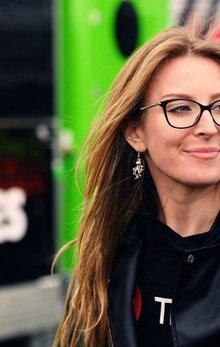
“We've been working with Lido Festival since the beginning, as part of a collaboration with AEG,” says Claire O'Neill, CEO and Co-Founder of A Greener Future and Co-Founder of Grid Faeries. “We work with them on sustainability as a whole and, together with Grid Faeries, we've come in as a green energy partner in order to get diesel out of the event from the get-go.
“We're providing this battery for the main stage connected to the grid. It's a three megawatt hour battery, which in event world terms is the equivalent of two 500 KVA generators. So it covers what the main stage would generally need and then with the connection of the grid, we can keep it charged over the whole five events.”
Elsewhere, LIDO also tested hydrogen as a generator fuel – specifically green hydrogen, created using renewable electricity and emitting only water vapour when burned.
“There’s still a need for some hydrogenated vegetable oil – a form of renewable diesel – to top up certain operations,” Sam acknowledges, “But our focus is on moving to batteries and hydrogen wherever possible.”
Impacting fan behaviour
Audience travel is often the largest single source of a festival’s emissions.
“Fan travel is the biggest issue – around 80% of our carbon footprint,” Sam estimates. Unlike artist transport, which is often in the headlines, the cumulative effect of thousands arriving by car is the real sustainability challenge.
AEG Europe’s strategy leverages LIDO’s city location and works to make public transport, cycling and walking the default choice, and post-show surveys capture arrival methods.
“Our plan is to use that data in future years to start trying to influence how people get to us and hopefully start addressing it through things like carbon removals,” Sam explains.
Visible infrastructure, such as dedicated cycle parks and prominent walking routes, signals the festival’s priorities. Engagement continues after the event, with insights distributed to fans and policy-makers.
Stakeholder engagement
For festivals to drive sustainability, buy-in from all stakeholders is essential.
“Doing new things can be tricky, especially in an industry where things have always been done a certain way,” Sam says. “But sustainability can actually improve the fan experience.”

Complaints usually arise only when visible problems such as overflowing bins or poor air quality impact enjoyment.
“Our aim is to heighten the experience and operate quietly in the background so that the festival feels the same – just better,” Sam says. “There’s more interest from artists now about our carbon footprint and environmental initiatives. We want to be able to go to them with ready-made solutions.”
Suppliers and production managers, the final crucial link, are adapting. Sam admits changing entrenched habits is hard, but seeing tangible benefits – cleaner air, better sound, smoother energy transitions – builds momentum.
“Fans, artists and vendors are all very much involved,” Sam says. “They all have a part to play and are excited by what we’re doing.”
“The buzz is real,” Sam says.
The future of sustainable festivals
Interest in LIDO’s innovations is growing.
“I’ve had conversations with counterparts from other companies who want to know how we do it,” Sam explains. “Sustainability is not a competition, it’s meant to be a collaboration.
“Bringing all these players together and proving something like this can work – and still be a commercial success – is probably the biggest output from this festival.”
Results and findings from LIDO are shared openly, with the underlying aim that these approaches should be replicated elsewhere. “If we can crack it here, and other people can start deploying it, that’s where the real impact is,” Sam says.
“Not only can festivals be sustainable in themselves, but they can help towns and all of life beyond the festival change,” Claire adds. “So not only can they be sustainable, they can be real drivers for change.”
The challenges remain, but the festival’s measures offer hope for what the sector can deliver.
“Festivals change people's perception of life and of what's possible,” Dale says. “When people come to LIDO and see batteries, plant-based food and electric buses, they see a different picture of the future – they see the alternative.”
Company portals

Executives
Claire O'Neill
Co-Founder
Dale Vince
Chairman
Sam Booth
Director of Sustainability