How AWS & Cargill Unlock Sustainability Data for Shipping
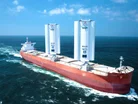
Cargill Ocean Transportation (OT) manages one of the most extensive dry bulk shipping fleets globally, with around 650 chartered vessels.
These vessels complete more than 4,500 journeys annually, visiting more than 700 ports and carrying a wide range of commodities such as iron ore, coal, grain, fertiliser and sugar.
Cargill transports more than 100 different types of dry bulk cargo.
In 2018, Cargill launched a global CO₂ Challenge to address emissions within its shipping business, aiming for net-zero emissions by 2050.
The increasing complexity of regulatory demands rendered Cargill’s manual data processes obsolete.
Existing software-as-a-service solutions failed to manage Cargill’s complex and siloed data effectively, while enterprise resource planning systems were too slow to adapt to new compliance standards.

Seeking a scalable and adaptable solution, Cargill needed a data connection and management strategy that would support regulatory compliance and enhance operational efficiency.
Having collaborated with Amazon Web Services (AWS) on previous large-scale projects, Cargill decided to develop a tailored solution using AWS’s cloud offerings.
In a blog post from AWS, René Greiner, Senior Director of Data, AI & Digital at Cargill Ocean Transportation, and Thomas Burns, Principal Sustainability Strategist and Solutions Architect at AWS, detailed the collaboration's evolution.
Building the OT DataCloud
AWS and Cargill initiated a Data-Driven Everything (D2E) workshop to analyse business needs and data flows.
Seven emissions use cases were considered, with Cargill prioritising two: the Carbon Intensity Indicator (CII) and the Energy Efficiency Operating Indicator (EEOI).
The CII assesses a vessel’s efficiency without considering cargo, rating vessels from A (most efficient) to E (least efficient), and is required by the MARPOL Annex VI and the Act To Prevent Pollution From Ships.
The EEOI evaluates emissions efficiency based on the cargo volume moved per mile and is driven by market requirements.
In developing the OT DataCloud, a central platform for integrating and governing data across Cargill's operations, Cargill laid the groundwork to support more emissions use cases in the future.
Key technical components included AWS services like Amazon S3 for data storage, AWS Glue for extract-transform-load processes, and AWS Lambda for application execution.
Four months later, the CII application was operational, enabling ship classification according to efficiency levels, which facilitated compliance and empowered customers to make sustainability-centric shipping choices.
Decision support tools, running on AWS-powered Snowflake, allow Cargill and its clients to select routes based on emissions and cost comparisons.
The EEOI application soon followed.
Historically taking two weeks to produce a single report manually, the new automated system provides daily updates, saving more than 1,000 staff hours annually.
EEOI data now informs strategic business decisions, like route selection based on emissions impact and cost while underpinning Cargill’s independently audited annual emissions reports.
Scaling up with machine learning and customer access
With the successful deployment of the core platform, Cargill expanded its applications by integrating additional use cases, including machine learning and customer access enhancements.
Amazon Textract facilitated automated document processing for tasks such as charter party contract reviews.
The platform also employs AWS Lambda and AWS Glue for ETL, alongside incorporating new data sources and AI models via Amazon SageMaker, Simple Queue Service and Simple Notification Service.
Clients and internal teams can leverage the platform’s analytical capabilities to monitor carbon trends, benchmark performance and compare shipping alternatives.
With more access to data analytics, traders and operators better understand cost and carbon footprints, aiding both Cargill and its partners in emissions reduction.
Smarter port operations through intelligent document analysis
Cargill's subsequent initiative was to improve port operations efficiency through Intelligent Document Processing (IDP).
It developed a Laytime application to optimise vessel port durations, reducing demurrage (additional charges incurred beyond the allotted docking time).

Through AI and machine learning, Cargill automated the data extraction and analysis from documents such as Statements of Facts and contracts.
This use case builds on the established data foundation, with most services already part of the architecture, requiring only new applications and data sources to enable Laytime functionality.
This enhancement aids Cargill’s clients in managing vessel turnaround times efficiently and avoiding unnecessary port charges.
Port delays not only incur financial losses but also potentially increase emissions, as vessels may accelerate to compensate for lost time, thereby increasing fuel consumption and carbon emissions.