Caterpillar: Sustainability in Mining & Construction Tech
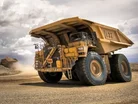
Caterpillar is the world’s leading manufacturer of construction and mining equipment, with 2025 sales and revenues of US$67.6bn.
It has released its 2025 Sustainability Report, which outlines its strategy and progress across environment, people, safety and governance.
This centres around the company’s mission to solve its customers’ toughest challenges and its purpose to build a better, more sustainable world.

Caterpillar’s sustainability strategy
In 2025, Caterpillar introduced a new strategy for profitable growth, organised around pillars of commercial excellence, advanced technology leadership and a transformation of how it works.
It aims to integrate advanced technologies into its solutions, such as connectivity, autonomy and AI-enabled tools.
Caterpillar’s 2025 sustainability highlights include 100% of its new products being more sustainable than previous generations.
It also achieved a 34% absolute reduction in Scope 1 and 2 greenhouse gas emissions compared to 2018.
This is currently surpassing its goal to reduce emissions from its operations by 30% from 2018 to 2030.
Caterpillar has also reduced its landfill intensity by 48% since 2018, almost reaching its 2030 goal of a 50% reduction.
In addition to these environmental factors, Caterpillar has reached US$1bn in global giving through the Caterpillar Foundation since 1952.
Joseph E. Creed, Chairman and CEO of Caterpillar, says: “The world’s demand for infrastructure, energy and critical minerals is accelerating, and our customers are at the centre of meeting it.
“That is a tremendous opportunity for Caterpillar, but it is also a tremendous responsibility. The work our customers do must be done safely, efficiently and sustainably. Our job is to make sure they can.
“The customers we serve face real and growing pressure to reduce emissions, improve energy efficiency, meet regulatory requirements and deliver results their communities can be proud of. Sustainability at Caterpillar starts with helping them do exactly that.”
Environmental stewardship
Caterpillar works to reduce emissions, optimise resource and energy use, and embed sustainability into decision-making.
Its manufacturing facilities are the main driver of its emissions, which provide the greatest opportunity for emissions reductions.
Across its global footprint, Caterpillar is advancing energy-efficiency initiatives and expanding renewable-energy generation.
This includes installing solar panels at its distribution centre in Queensland, Australia, to increase its on-site energy generation and decrease the facility’s electricity consumption from the grid.
Ebban Clause, Chief Sustainability and Strategy Officer at Caterpillar, says: “Across our global footprint, we’re making targeted, site-level investments to reduce greenhouse gas emissions, manage water risks and reduce waste.
“These actions support our 2030 sustainability goals, but they’re also ways to run our business better – by improving efficiency, managing costs and increasing resilience. We are also investing in technology to modernise our facilities, along with efforts to use space more efficiently.
“By doing business more efficiently and sustainably ourselves, we strengthen our ability to deliver the solutions our customers rely on.”
Circularity & remanufacturing
In its efforts to support the transition to a circular economy, Caterpillar focuses on remanufacturing its products.
This involves designing its equipment and components for multiple life cycles, lowering the total cost of ownership while reducing emissions and the need for new raw materials.
It has achieved a 41% increase in sales and revenues from remanufacturing offerings since 2018.
Its Cat Reman process offers customers a portfolio of components, including engines, hydraulics, drivetrains and electronics.
These are a fraction of the cost of new parts, delivering like-new performance and meeting original equipment manufacturer (OEM) quality and performance specifications.
The Cat Reman uses technology to inspect, disassemble, clean and salvage parts before remanufacturing and assembling them to create new Cat products.
Company portals
Executives

Ebban Clause
Chief Sustainability & Strategy Officer
Joe Creed
Chief Executive Officer