CDP: Why Corporates are Failing the Extreme Weather Test
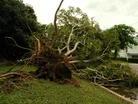
The global economy is facing a systemic reckoning as the disconnect between environmental reality and corporate risk perception reaches a breaking point.
New data released by CDP reveals that while extreme weather is already dismantling financial outcomes, a significant portion of the private sector remains dangerously unprepared for the scale of the coming disruption.
“Extreme weather is already a financial risk. It has a dangerous domino effect, disrupting operations, reducing production and driving losses today, with far greater impacts lying ahead,” says Amir Sokolowski, Global Director of Climate at CDP.
“This is a systemic challenge that no single actor can manage alone. By aligning investment, strengthening shared systems and scaling adaptation — with disclosure as a guide to enable better decisions — businesses and governments can not only reduce risk, but accelerate the transition to an earth-positive, resilient economy.”
The US$901bn perception gap
CDP found that a discrepancy has emerged between those managing territories and those managing balance sheets. Currently, 62% of subnational governments from 80 countries report already experiencing the impacts of extreme weather. In contrast, only 35% of disclosing companies identify these same events as a financially material risk to their operations, CDP says.
This perception gap represents more than just a difference in outlook; it is a miscalculation of financial exposure.
Despite this widespread underreporting, real-world consequences are already visible, with firms recording nearly US$3bn in actual losses within a single reporting year.
When looking further into the future, the figures escalate dramatically. Disclosing companies now project a combined US$901bn in anticipated and realised losses across various time horizons.
The nature of this risk is evolving from isolated physical damage to a systemic threat.
Losses are no longer restricted to specific assets but are instead rippling through shared infrastructure, supply chains and public services.
Because businesses depend on these foundational systems, a failure in public utilities or transport networks creates a domino effect of indirect losses across every industry.

The short-term trap
A common misconception in sustainability planning is treating climate risk as a distant, mid-century problem.
The CDP’s latest findings suggest that extreme weather has arrived within current investment and operational cycles. Nearly half of all disclosed physical risks are expected to materialise, at least in part, within the next two years.
This places extreme weather squarely within the bounds of immediate organisational planning.
The financial impact is often felt through cash flows and business continuity well before it affects the long-term balance sheet.
Current losses are primarily driven by increased direct costs and operational shutdowns, indicating that the ability to remain functional during weather events is the primary hurdle for modern enterprises.
The US$528bn deluge
When examining the specific drivers of this financial volatility, water is the dominant force.
Flooding of all types represents the single largest anticipated financial threat, with companies projecting US$528bn in future impacts from this hazard alone.
The impact of heavy precipitation is already being felt, accounting for US$1.5bn of the losses recorded in the most recent reporting year.
The financial damage from these water-related events is most often realised as lost revenue from reduced production capacity.
In fact, production disruption has become the defining financial exposure for the real economy.
As these hazards intensify in frequency and scale, the ability of a single firm to manage risk in isolation is diminishing.
Corporate resilience is now inextricably linked to the reliability of shared water supply, sewerage and waste management systems.
Without coordinated action to shore up these public foundations, the projected half-trillion-pound cost of flooding may only be the beginning of a much larger economic realignment.