Decarbonisation: Strategies from Global Industry Leaders

As global pressure to meet net zero commitments intensifies, sustainability leaders face mounting challenges around emissions data, supplier engagement and regulatory compliance.
The Global Decarbonisation Strategies panel, in association with EcoVadis, at Sustainability LIVE: The US Summit could offer valuable insights into overcoming these barriers through cross-sector collaboration and proven implementation strategies.
The panel examines pathways across energy, transport, manufacturing and finance, focusing on scaling clean technologies, advancing regulation and enabling cross-sector collaboration. Panellists will discuss how global alignment and decisive action can reduce emissions whilst supporting sustainable growth.
For executives navigating the complexities of decarbonisation, the session brings together leaders from organisations at different stages of their climate journeys, each offering practical perspectives on turning ambition into measurable results.
Operationalising carbon reduction across value chains
Dexter Galvin, SVP Climate at EcoVadis, will be speaking on the panel, delivered in association with EcoVadis.
He brings expertise in addressing the operational challenges many organisations encounter when implementing decarbonisation programmes. According to Dexter, many organisations face barriers including incomplete emissions data, supplier engagement gaps and mounting compliance requirements.
His focus centres on the need to operationalise carbon reduction across value chains with credible insights and scalable systems.
EcoVadis provides tools and intelligence designed to transform decarbonisation ambition into results within the supply chain, helping organisations with science-based targets, regulatory disclosure and measuring carbon footprint.
For sustainability leaders struggling to bridge the gap between commitment and implementation, Dexter's insights could prove particularly relevant.
Infrastructure and policy alignment for net zero
Della Jung, GE Vernova's Decarbonisation Director for the Americas, offers perspectives on setting organisational targets that drive progress and enable transparent reporting.
GE Vernova has established a 2050 Scope 3 net zero ambition for use of sold products, demonstrating long-term commitment across their value chain.
Della acknowledges that technology advances alone cannot achieve net zero without global investment in infrastructure and policies. She identifies hydrogen and carbon capture and storage as the most viable ways to decarbonise gas in the medium term, whilst emphasising that public-private collaborations are instrumental in accelerating progress. Her experience could provide valuable lessons for leaders navigating the intersection of technological innovation and policy frameworks.
Collaborative approaches to logistics emissions
Chelsea Lamar, Vice President of Global Sustainability at AIT Worldwide Logistics, spearheads her company's environmental initiatives, working towards net zero emissions goals through collaborations. With 15 years of experience in climate, energy and sustainability, Chelsea implements logistics solutions including electric semi-tractors, sustainable aviation and marine fuels and route optimisation.
Her collaborative, results-oriented approach aims to deliver both environmental impact and business value.
"At AIT, we believe collaboration across industries is essential to drive meaningful change. By partnering with global networks and sharing best practices, we aim to accelerate progress toward a more sustainable future for all," Chelsea says.
For organisations seeking to decarbonise complex supply chains, her practical implementation experience could offer actionable insights.
Doubling the pace of climate action
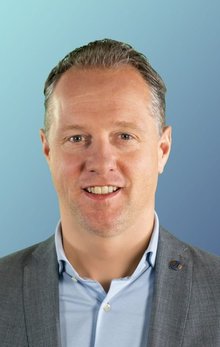
Maurice Loosschilder, Global Head of Sustainability at Signify, brings ambitious targets to the discussion. The company aims to double the pace of the Paris Agreement over its complete value chain, focusing on both operations and enabling customers and suppliers to advance climate impact through energy-efficient and solar products, systems and services.
Signify has set a target of 70% reduction in absolute Scope 1 and 2 greenhouse gas emissions and 30% reduction in absolute Scope 3 by 2030, whilst contributing to UN Sustainable Development Goals 13 and 7.
Maurice's experience scaling climate action across a global value chain could provide valuable lessons for leaders pursuing similarly ambitious goals.
Regional strategies for global impact
Linda Caramichael, Head of Climate Action and Sustainable Operations at Kenvue, explores the connection between human health and planetary health through her company's climate action strategy.
She joins the Decarbonisation Strategies panel at Sustainability LIVE: The US Summit.
Each of the company’s manufacturing sites develops a tailored roadmap addressing unique energy needs, supported by data-driven decision-making and cleaner technologies. This localised approach to driving results could resonate with executives managing geographically diverse operations.
For sustainability leaders seeking practical strategies to implement global commitments across varied regional contexts, Linda's insights could prove particularly valuable.
Company portals





Executives
Chelsea Lamar
Vice President, Global Sustainability
Della Jung
Decarbonization Software Director | Enterprise Software
Dexter Galvin
Climate Ambassador
Linda Caramichael
Head of Sustainability (Climate, Nature & Human Rights)
Maurice Loosschilder
Head of Sustainability