
Discussions, Deals and Determination: LCAW Kicks Off

Anticipation buzzes through London’s Guildhall at the start of London Climate Action Week, with the high-level Climate Innovation Forum.
The theme of this year's LCAW is "Climate cooperation in a fragmented world".
The Forum formally kicks off a week of talks, discussions and exhibitions to highlight the latest updates in sustainability and climate at the midpoint of the year, between COP discussions.
As a reminder of the importance of the climate agenda, London Climate Action Week is taking place during the city’s second heatwave of the summer.

The UK’s ambitious energy transition targets and investments focus on reducing emissions by 81% by 2035 to help secure energy independence, backed by over US$132bn in foreign investment since July 2024.
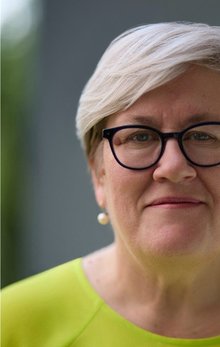
Dr Rachel Kyte, the UK Government’s Special Representative for Climate, launched the event, providing the context for the week’s discussions and showcasing the opportunities of the energy transition.
“We must move away from an energy era based on concentrated resources, production, cartels and geographic choke points, and instead see the greater security and economic opportunities offered by clean energy, offered by renewable energy,” says Rachel.
“Because renewable energy cannot be held hostage and it cannot get stuck in the Strait of Hormuz. This lesson is not new. This is the third energy crisis in a decade.
“But it comes just as the new technologies are revolutionising the efficiency and access of energy for millions around the world. And they are revolutionising our individual relationship to the energy system.
“When you can generate electricity from your own car back up into the grid, it is a profoundly democratising act.
“From solar with storage to wind to geothermal to hyper efficiency. Remember, efficiency is our first fuel.
“Electro technologies have plunged in price and transformed in potential. Embracing this potential is a pathway to energy security.”
Global action on climate change
London Climate Action Week is an opportunity for the global community to maintain the momentum behind climate action.
Rachel places a spotlight on how countries worldwide are tackling climate change with local solutions and explains why developed nations should lead the way.
“We collectively, as a community, we as the United Kingdom government, we as part of the G7, as the G20, are required to respond at [the] pace and scale necessary to confront the true nature of the crisis as it has arrived today," Rachel adds.
“Whether that is to regenerate and protect tropical forests, where Brazil has shown such innovation and leadership; whether it is to invest in the sources of our insecurity and to double down on resiliencel; whether it is to drive the energy transition itself from interconnections to transmission to transformers; whether it is to allow the opportunity of the electric vehicle revolution to take place in even more countries where Ethiopia has been such at the forefront; whether it is to double down on the adjacent problems of waste, where Turkey has shown such incredible international leadership; whether it is to make carbon markets truly work for those countries that need them to work now.
“All of this is our work and all of this needs to be at speed and scale.”
““The cost of capital is the missing ingredient. Our financial system rewards wealth, rather than opportunity.” ”
Clean finance to unlock private funding
A major focus of discussions throughout London Climate Action Week is the role of international finance in the climate debate.
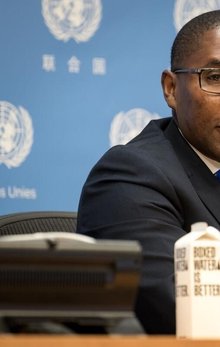
In the session immediately after Rachel’s speech, Selwind Hart, Assistant Secretary General and Special Advisor to the UN's Secretary General on Climate Action and Just Transition at the United Nations, told delegates: “The cost of capital is the missing ingredient. Our financial system rewards wealth, rather than opportunity.”
In her speech, Rachel also addressed the enormity of the challenge of international collaboration and finance in funding climate mitigation and adaptation:
“The challenge of climate change goes far beyond individual countries in partnership. It is a test of our multilateral collaboration and the responsiveness of our global financial architecture, which is in urgent need of speeded reform. We must ensure it goes further to meet countries' needs for faster access to finance, especially at a time of crisis.
“It must be able to support them at lower cost and at greater scale. And it must be in support of countries' own priorities.
“The World Bank's International Development Association is the biggest source of adaptation finance for these developed countries.
“This is why we increased our contribution by 40%. As each pound we invest unlocks at least £4 (US$5.30) of additional finance, it is significantly important that the World Bank Group can continue to drive forward its work.
“The UK also hosted the replenishment of the Africa Development Fund in December of last year, backing a fund that invests more than half its resources in climate resilience and climate action, because that's what African countries are asking the international system to do.
“Our £650m (US$860m) contribution helps leverage up to £1.6bn (US$2bn) in additional grants and concessional loans, including to support climate resilience and adaptation in some of the most vulnerable countries. We are the first African Development Bank shareholder to invest in hybrid capital, helping to unlock another £250m (US$330m) of additional lending to African governments.
"Is it enough? No. But is it the beginning? Yes.
"And if we back the President of the African Development backing his vision of how to mobilise domestic financial markets, regional development banks, national development banks and then the African Development Bank, we have an opportunity to support African countries which are not recipients of aid, but African countries who have a vision around green industrialisation, have a vision around manufacturing on the continent because they have access to extraordinary amounts of clean energy and the minerals and metals that are needed for a renewable energy revolution.
"It is a completely different relationship which we are welcoming and which we want to be part of a reset around.
"So we have to support innovative ways of multiplying the impact of the systems that we already have, making them react with more urgency, protecting their mandates and protecting their ability to support the Paris Climate Agreement's mandate."
“"Is it enough? No. But is it the beginning? Yes. ”
Community of change
At the end of her address, Rachel issued a call to action to delegates to take on the climate challenge.
“Don't be daunted by the magnitude of this challenge. Just look around the room, take comfort and strength from the assembled insights and the commitment that everybody here represents.
"It's going to be a long week, a hot week, full of discussions, full of deals, full of determination.
"But I left Climate Week last year feeling that I had rarely been in a place where the right people were talking about the right things in the right place."
Company portals


Executives
Dr Rachel Kyte
Special Representative for Climate
Selwin Hart
Assistant Secretary General and Special Advisor