
Elisabeth Pipic Returns to the WEF as Transformation Lead
The World Economic Forum (WEF) is a unique platform where global leaders from various sectors can collaborate, addressing critical global challenges.
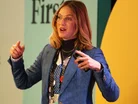
Elisabeth Pipic has returned as the New World Economic Forum (WEF) Transformation lead.
Elisabeth Pipic announced in a Linkedin post: “Sometimes things come full circle and I am thrilled to return to the World Economic Forum as Global Industry Transformation Lead.
“I’m rejoining WEF with gratitude for the colleagues and mentors I've been lucky enough to meet along the way.
“As part of the Global Industries team, I'll be working in a strategy role for our 22 industry communities and supporting the value they deliver to our partners in a rapidly changing global context.
More about Elisabeth
Elisabeth previously worked at the WEF as the Diversity, Equity and Inclusion Specialist where she focused on scaling multistakeholder partnerships embedding her specialities into organisations and society.
Her new role focuses on driving and facilitating significant changes at WEF on a global scale, adapting to industry shifts and achieving strategic goals.
She has a Bachelor's degree in History and Political Science from Trinity College Dublin and a Master’s in International Immigration and Public Policy from LSE.
She was previously employed by the World Business Council for Sustainability Development as Manager of Inclusive Energy Transition Strategies.

What is WEF?
The organisation was founded in the early 1970s and promoted the idea that companies have a responsibility towards society and nature.
The WEF says that its mission is to bring together government, businesses and civil society to improve the state of the world.
It provides a not-for-profit platform that provides impartial and meaningful connections between stakeholders to establish trust and build initiatives for cooperation and progress.
As well as producing its own research, conducted by global experts, writing more than 100 reports and white papers that provide input into policy discussions.
Børge Brende, CEO, WEF said on Linkedin: “At the Forum, we are committed to supporting the next generation of changemakers.
“In an increasingly fragmented and polarised world, we must find new ways to work together—because the challenges ahead are shared, and so must be the solutions.
“My message to the next generation of leaders: Stay united. Be bold. And never underestimate your ability to shape a better future.”
What WEF contributes to sustainability goals
WEF takes a holistic approach recognising the importance of implementing practices that benefit both human and natural systems.
The forum says that it makes sustainability the core element of every process, which encourages broader industry adoption and advances global effort to tackle pressing challenges, like climate change and resource depletion.
The WEF says it wasn't to ensure that the future generations inherit a healthier, more stable planet.
It is committed to using 100% renewable energy, using solar panels and heat pumps, and actively promoting the global transition to net zero emissions by 2050.
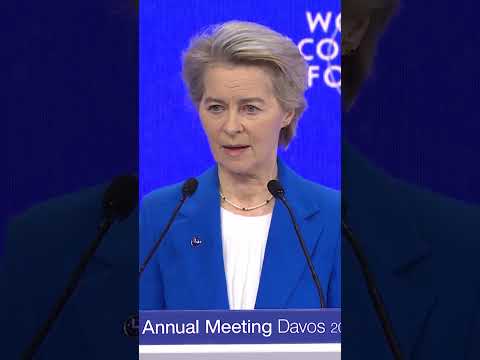
Recently the WEF launched a multistakeholder leadership group for a European Growth and Competitiveness conference with the mission of growing geo-economic competition, focusing on the competitiveness across the clean industry infrastructure, energy markets, research and development.
Børge said on Linkedin: “Over 70 leaders from across sectors came together around a common goal: to strengthen Europe’s economic performance through targeted reforms.
“From technology and clean energy to finance and strategic alliances, the initiative focuses on the key enablers of long-term resilience and competitiveness.
“The road ahead is complex, but through close cooperation and shared purpose, we can build the conditions for sustainable growth and innovation across Europe."