EVs, Supply Chains & SAF: How UPS Approaches Sustainability
UPS is a global leader in transportation and logistics, delivering approximately 5.7 billion packages in 2024.
It has plans to reach carbon neutrality by 2050 by decarbonising its operations and broader supply chains.
Scott Childress, Chief Sustainability Officer at UPS, says: “We believe that sustainability and operational efficiency go hand in hand.
“We make smart decisions and invest in innovative technologies and alternative fuels that reduce emissions for our business and our customers.
Renewable energy and fuels at UPS
UPS has a goal to achieve 25% of renewable energy use in facilities worldwide and 40% alternative fuel use by 2025.
By 2035, it aims to increase its renewable energy use to 100%.
UPS is also aiming to change its fuel usage for its ground operations including on-highway and facility-based vehicles.
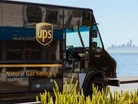
These alternative fuels include renewable natural gas (RNG) made from methane.
“It is a winning solution, RNG is moving our vehicles and making the planet better,” Scott says.
“While electrification will play a big role in decarbonising our fleet, RNG is today’s solution.”
In 2024, UPS purchased 177 million gallons of alternative fuel which was 30.6% of its total ground fuel usage.
The company is also supporting research on Sustainable Aviation Fuel (SAF) in collaboration with the Georgia Institute of Technology, fuel suppliers, government agencies and research institutions.
Through these efforts, it aims to support the production of SAF at scale and advocate for public policy measures to develop this.

About The UPS Foundation
The UPS Foundation (TUPSF) was founded in 1951 and aims to provide financial and humanitarian support around the world.
The foundation utilises UPS’ global network and logistics capabilities to help build resilience in communities.
It provides health and humanitarian relief efforts by bridging gaps in access to healthcare, optimising transportation of essential medical supplies and using technology to enhance disaster relief and recovery efforts.
It also involves sustainable commitments to plant 50 million trees by 2030 and investments in environmental research.
Inside UPS’ supply chain
UPS says it aims to prioritise sustainability throughout its supply chain.
It offers its customers sustainable solutions to help reduce their environmental impacts.
Its services include allowing customers to view their emissions data and offering consultative services so customers can identify opportunities to improve their efficiency.
UPS’ Smart Pickup service lets customers schedule pickups only when needed, avoiding unnecessary trips and emissions.
It also contributes to a circular economy by providing convenient and efficient ways to return goods and offering no-box returns which lowers packaging waste.
Scott shared on LinkedIn: “We recently introduced UPS SmartEnergy Solutions – our latest customer offering for sustainable logistics designed to reduce CO₂ emissions of UPS shipments.
“This service marks a departure from traditional offsetting methods, focusing instead on meaningful impact through UPS’s investments in alternative fuel vehicles, electric vehicles and energy-efficient facilities.”
UPS has been utilising EVs in Europe, starting in Paris, France and being rolled out across the continent. The EVs produce zero tailpipe emissions meaning they are able to operate in zero emission zones.
The rollout of EVs in Paris aims to support the city’s goal to reduce its carbon footprint by 80% by 2050.
Around the world, UPS has more than 1,000 electric and plug-in hybrid electric vehicles on the road.