FIA: How DHL Supports Sustainability for Formula 1
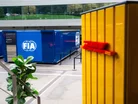
Formula 1 has perhaps the world’s most well-travelled garages.
Motorsport series travelling the world means that fans get to see an exciting selection of tracks and engage a range of audiences and communities.
However, picking up and moving cars, teams and all the infrastructure required is no small job and contributes significantly to the sport’s environmental impact.
DHL is now the Global Logistics Partner of the FIA, motorsports’ governing body, and is set to use lower-carbon fuels for this task.
FIA Chief Commercial Officer, Craig Edmondson, says: “This partnership with DHL is a great opportunity to collaborate not only on the vital behind-the-scenes work that goes on at any track event, but also to drive sustainable practices across our industry.
“Pushing for greater sustainability across both motor sport and mobility is a priority for the FIA and we are constantly seeking to embed this ethos into our ways of working, including our relationships with commercial partners.”
DHL’s partnership with the FIA
As part of this collaboration, DHL will provide infrastructure and installations needed for racing events in Formula 1, Formula 2 and Formula 3.
This includes the transportation, set up and maintenance of the FIA’s mobile office units, garages and racetrack signalling equipment.
DHL will use seven trucks powered by hydrotreated vegetable oil (HVO) in Europe which can cut emissions by up to 83% compared to conventional fuels.
Paul Fowler, Head of Global Motorsports Logistics at DHL, says: “The FIA is a long-standing pillar of the motor sport community, so taking on the role as its Global Logistics Partner is a great match for us.
“Our connection extends beyond the track. We share essential values such as safety, quality, speed and precision, and we are both deeply committed to sustainability.
“Together, we champion alternative power sources and groundbreaking drive technologies that help reduce emissions along with regionalisation of racing calendars.”
The FIA’s emissions
The FIA’s last Sustainability and D&I Report, published in 2024, showed a rise in emissions in 2023 compared to the previous year and its 2019 baseline.
This, the report says, is due to a rising level of activity including an increased number of championships and employees.

Almost all of these emissions were attributed to business travels and freight transports, responsible for 72.18% and 24.72% respectively.
The FIA’s partnership with DHL is part of the FIA’s broader strategic transformation, including its goal of halving greenhouse gas emissions by 2030 and becoming net zero through removing residual emissions.
Sustainability at DHL
As a logistics and shipping company, logistics emissions also account for a significant portion of DHL’s emissions.
The company aims to cut its greenhouse gas emissions from logistics to net zero by 2050 alongside growing its business.
“Today, we already go further than any other logistics company in helping customers to decarbonise their supply chains, future-proofing their businesses in the process,” said Tobias Meyer, CEO at DHL Group, in its 2024 Annual Report.
“We firmly believe that low-emission logistics will become an important competitive factor.
“After all, if we want to preserve a livable planet for everyone, there is no getting away from curbing climate change.”