FIA, McLaren & Deloitte: Are Recycled Cars the Future of F1?

After every Formula 1 race, hundreds of parts are removed from the cars and checked to see if they can be used again.
Some parts, like tyres and brake disks, are replaced after each race weekend.
This, alongside constant car development and rule changes, can leave old parts without a use.
It is hoped that the F1 Constructors’ Circularity Handbook will change this.
The circularity story so far
Circularity isn’t an entirely new concept to F1. Across the grid, teams have started to implement more sustainable practices, but a lack of data has been holding progress back.
“There is also a challenge when it comes to performance,” says Nikolas Tombazis, Single Seater Director at the FIA.
“A lot of the specialised materials used within our ecosystem are non-recyclable – and their sustainable counterparts simply cannot achieve the same safety, weight and performance standards."
The manufacturing of F1 cars is one of the largest contributing factors to the overall carbon footprint of teams, so making cars more sustainable has potential for a lot of impact.
In 2023, McLaren trialled recycled carbon fibre at the US Grand Prix and introduced bio-based flax fibre as a substitute for carbon fibre in car seats in 2020.
“The challenge of implementing circularity can sometimes be daunting – you need to transform your product, supply chain, business model and digital ecosystem,” says David Rakowski, Partner and Circularity Lead at Deloitte UK. “But once you put the organisation infrastructure in place to do this, it is very feasible.”
Why does it matter?
“Sustainable design has a number of benefits – including reducing weight, improving efficiency and driving innovation – and we will continue to work with our teams, suppliers and Power Unit manufacturers to highlight these opportunities,” Nikolas says.
In the past, innovations in motorsport have made an impact far past the track. Helmets, seatbelts and electrical safety are just some of the day-to-day developments that have, in part, been influenced by the FIA’s role in motorsport and wider mobility.
Nikolas explains: “By pushing suppliers and partners to adopt circular practices, we can collectively influence the entire automotive supply chain – ensuring that circularity becomes a normalised, accessible and affordable practice at every level.”
Kim Wilson, Director of Sustainability at McLaren Racing, feels that F1 allows for ideas and solutions to be accelerated due to the sport’s pace of change.
“We are an entertainment business and a sport with fans, so we have this incredible platform where we can raise awareness and spread the word,” she says.
Inside the handbook
Commissioned by the FIA, the F1 Constructors’ Circularity Handbook has been put together by McLaren Racing and Deloitte.
David explains: “We have drawn on our experience of helping clients around the world to model, pilot and scale the circular economy, including our work in developing the Global Circularity Protocol for Business, to create this first important step on the journey - the handbook.”
This first edition of the handbook is designed to help measure the circularity of an F1 chassis.
“What gets measured gets managed,” Kim says.
She explains that the handbook “gives us a percentage on how circular our total materials are, and then we can use that as a way of demonstrating what we can do to move the dial towards 100%.
“At the moment, we are feeling quite confident that quite a significant proportion of what goes out of our factory is being recycled.
“We are sharing the handbook with the rest of the teams so that everyone can measure circularity and understand the impact and how circular the materials we use are across the season.”
Nikolas says: “Our goal is to expand it to include additional F1 components, such as the power unit and tyres, before making it applicable for wider use across other motorsport series and the broader automotive industry.”




Executives
David Rakowski
Partner and Circularity Lead
Kim Wilson
Director, Sustainability
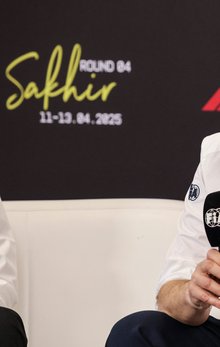
Nikolas Tombazis
Single Seater Director