Q&A: FIA Secretary General on Motorsport and Sustainability

The FIA, motorsport’s global governing body, has influence on global mobility beyond elite sports like Formula 1.
It is working to integrate sustainability within championships, but its 2024 sustainability report shows a 9% absolute emissions increase.
The FIA also reports a decrease in carbon intensity by 7% year-on-year alongside an increase in activities, revenue and headcount.
Mohammed Ben Sulayem, President of the FIA, says: “Five years into the FIA’s ambitious strategy, it is clear there is more to do.
“As we look to the future, I am confident the FIA will continue to play a leading role in facing the challenges ahead, which are significant.”
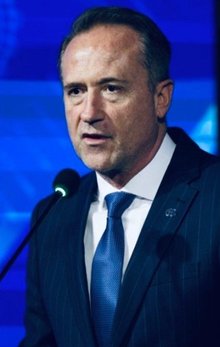
Willem Groenewald is the FIA’s Secretary General for Automobile Mobility and Sustainability.
He leads the FIA’s mobility and sustainability mission, working with 245 Member Clubs in 149 countries to advance its objectives across sport and mobility.
Willem spoke to Sustainability Magazine about the FIA’s 2024 Sustainability and Diversity & Inclusion report.
What are some of the highlights from this report?
We were pleased to see a 45% increase in uptake for our Environmental Accreditation Programme, which provides our member clubs, championships, promoters, teams, suppliers, circuits and with a clear framework against which to accredit their activities. The scheme has three levels on a star-rated basis, ranging from basic to best practice, and is designed to support our entire ecosystem across sport and mobility, encouraging a gradual progression through the levels. This was our strongest yearly growth to date, showing real momentum.
We also invested for the first time in Sustainable Aviation Fuel (SAF), which reduced our footprint by an estimated 388 tCO₂e in 2024 and about 8% of freight-related emissions when compared with 2023. SAF can cut lifecycle GHGs by up to 80% vs conventional jet fuel, and we have committed to further increase our investment in SAF in 2025.

Another highlight was the launch of our Sustainable Fuel Certification Programme. From 2026, Formula 1 will mandate sustainable fuel made from Advanced Sustainable Components. To ensure compliance, we launched a scheme with Zemo Partnership which verifies each fuel’s origin, composition and greenhouse gas performance. The Programme aims to go beyond sport, laying the foundation for broader adoption of these fuels across everyday mobility. Future partnerships with fuel providers will support this transition, helping to reduce transport emissions at scale.
How have you found the split of the sustainability and D&I function?
We have sharpened our focus for the respective functions while keeping the two areas connected where it matters. Under the new structure, sustainability is within my remit while D&I reports to Alessandra Malhamé, Senior HR Director at the FIA. This allows us to build out our capabilities in these functions and align them with other areas of the FIA, most notably our member clubs.
Sustainability and D&I are embedded in FIA governance through our Sustainability & D&I Committee and specialist Commissions, allowing us to drive deep technical progress on climate and environmental management, while ensuring our inclusion programmes generate positive impact inside and outside of the FIA.
What progress are you most proud of?
The growth of our Environmental Accreditations Programme shows that organisations across sport and mobility are moving from intention to implementation, raising the bar across the ecosystem. We have 190 organisations signed up and will keep evolving and expanding the programme.
We were also really proud to be recognised by the British Standards Institution (BSI) as an example of how sports governance can integrate structured climate transition planning.
We are the first to acknowledge that there is more to do and that we have an important role in driving further action in bettering sustainable practices across the industries we operate in.
What’s working and what will you focus on next?
While absolute emissions increased overall in 2024, a year of strong activity growth, carbon intensity, which is defined as each tCO₂e emitted for each € of general revenue, fell ~7% against revenue, showing that our efficiency measures are working. With 99% of our footprint in Scope 3 - the hardest emissions to abate across all industries - our early use of Sustainable Aviation Fuel helped limit the increase and underlines the potential of these biofuels to reduce future impacts. We will continue to push stricter travel policies, event optimisation and stronger sustainable procurement. We are targeting Net Zero by 2040 and remain committed to halving absolute emissions by 2030 against a 2022 baseline.
What goes into creating this report?
As for any organisation, it is a very comprehensive process and in recent years we have made a concerted effort to ensure our data is collected consistently, accurately and in line with recognised standards. This has formed part of the wider transformation of processes and internal controls within the FIA.
We report to GRI Standards (2024 period). We have calculated our carbon footprint since 2019 in line with the GHG Protocol, covering all three scopes across our headquarters, events, championships and financed supplier activities. In 2024 we ensured our footprint was reviewed under ISO 14064-3 by Global Climate Initiatives. We track energy, water, waste, supplier screening and a detailed Scope 1–3 inventory (including business travel, freight and purchased goods). We also restated prior years to reflect updated emission factors and a new 2022 baseline for accuracy.
We will continue to expand data collection and research, building a stronger evidence base to guide our strategy and track our impact effectively.
How is this data used to assess and continue making progress?
In short, to drive action and continuously push for better outcomes across sustainability and D&I.
The data feeds into our ISO 14001 standard to set targets, run audits and course-correct (e.g., travel policies, remote ops, office solar, procurement criteria). It will also underpin our strategy refresh, now that we are almost five years into the plan set out in 2020.
Insights from our data can shape grants and other resource allocation for our member clubs and wider set of stakeholders.
We are more focused than ever on measurable outcomes, collaborative partnerships and continuous learning as we look ahead to the next chapter. Our vision is to help build a more sustainable, impactful and inclusive motor sport and mobility landscape for all.
Company portals

Executives
Willem Groenewald
Secretary General for Automobile Mobility and Sustainability