Google: Replenishing More Water than Data Centres Consume

Google has pledged to replenish more water than its data centres consume by 2030 as part of a major sustainability push.
The technology giant revealed a series of new water stewardship initiatives alongside a US$17m funding package aimed at protecting local watersheds.
Data centres serve as the control rooms of the digital world, powering search tools, mapping services, online banking and healthcare networks.
However, the servers and chips inside these facilities generate substantial heat. To maintain efficiency, data centres frequently rely on water cooling, which can cut energy consumption by approximately 10% compared to traditional air cooling.
Though their aggregate water footprint is small – under 1% of the volume Americans pour onto lawns annually – the company is focusing on safeguarding local resources where it builds and operates.
The new strategy aims to minimise local ecological impacts to prevent digital growth from straining municipal resources.
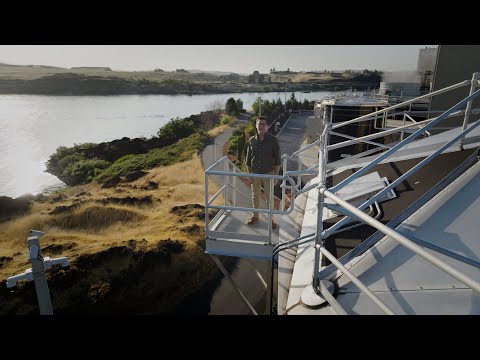
Framework for infrastructure and supply risks
At the heart of the announcement is a five-part framework designed to manage vital water resources responsibly. One of these targets is the 2030 net-positive replenishment goal.
In 2025, Google successfully returned more than seven billion gallons of water to local supplies, a volume roughly equal to the annual consumption of 70,000 average US households.
The firm currently backs 165 projects across 97 watersheds. Once fully implemented, this network is projected to replenish more than 19 billion gallons annually by 2030.
This is more than double Google's 2024 consumption level and provides enough water to sustain the entire city of Los Angeles for more than 40 days, while also tackling broader watershed health challenges such as water quality.
The strategy also allocates more than US$500m to date for developing public water, wastewater and water reuse infrastructure, aiding underfunded municipal utilities with tasks ranging from supply enhancement to leak detection.
A data-driven framework evaluates watershed health before construction. If a local source is deemed at high risk, Google will choose air cooling or recycled water.
This is paired with transparent annual water reporting and a push for alternative solutions, such as a partnership in Douglas County, Georgia, to reuse treated wastewater for cooling.
Funding to back seven US states
To accelerate these immediate stewardship ambitions, Google is distributing US$17m across seven US states to fund targeted ecological and infrastructure projects.
In Georgia, funding will help Ducks Unlimited enhance wetlands within the Flint River Wildlife Management Area. Meanwhile, in Iowa, a partnership with the Great Outdoors Foundation and the state's agriculture department will support local farmers in converting 5,000 acres into perennial hay and pasture systems to reduce fertiliser use and boost water quality.
Similar environmental interventions are planned for Michigan and Minnesota. The Huron River Watershed Council will expand its green infrastructure programme, whilst the Trust for Public Land will restore 84 acres of floodplain forest along the Zumbro River. In Missouri, a 98-acre wetland restoration near the Blue River alongside Bridging the Gap and the Heartland Conservation Alliance will boost water quality.
Finally, infrastructure efficiency is being targeted in Nebraska through an Omaha water line leak detection scheme, while the Texas Water Impact Fund will receive backing to secure community water access and infrastructure.
Kate Brandt, Chief Sustainability Officer at Google, writes on LinkedIn: “As we expand the digital infrastructure powering everything from online banking to healthcare systems, how we build is just as important as what we build.
“Water is a critical component of data centre development and operations. Because data centres generate heat from the servers and chips that power the digital world, they often rely on water to cut back on energy use for cooling.
“We hear the public's concerns around environmental impacts and affordability. Through our water stewardship commitments, we will continue to be responsible and transparent in our water use and minimise our local impacts to protect the long-term health of the watersheds in communities we call home.”
Sustainability leaders won’t want to miss Sustainability LIVE: The Leadership Summit at London Climate Action Week, taking place at Code Node on 25 June 2026.
Register now for this exclusive invite-only event.
Future project pipeline
Looking ahead, Google is evaluating more than 700 proposals submitted through its recent Water Replenishment Projects Request for Information (RFI).
This pipeline includes engineered efficiency systems, nature-based solutions to aid the natural hydrologic cycle and farm-level practices designed to lower agricultural water demand whilst boosting soil health.
Further updates will follow in the coming months as the rollout begins, framing the measures as a long-term commitment to watershed health.
Company portals

Executives
Kate Brandt
Member Board of Trustees