How Kimberly-Clark is Using Green Hydrogen to Make Andrex
Kimberly-Clark, the manufacturer behind brands like Andrex and Kleenex, has reached a green hydrogen agreement in the UK worth a combined £125m (US$169m).
This deal is one of the UK’s first long term offtake agreements for green hydrogen in consumer goods manufacturing.
The new projects are expected to halve natural gas consumption in the firm’s UK operations and reduce associated greenhouse gas emissions from 2027.
Dan Howell, Vice President and Managing Director at Kimberly-Clark UK & Ireland, says: “This is a significant investment into a green hydrogen solution, and alongside other investments that support our ambition to move our UK manufacturing operations to 100% renewable energy by 2030.
“Now is the right time for us to tap into hydrogen’s significant potential, improving energy supply and our decarbonisation needs.
“We are delighted to be the first UK consumer goods manufacturer to really embrace green hydrogen, showing that an energy intensive industry can take the lead and overcome the technical challenge and adopt green hydrogen at scale.
“This initiative builds on the investments and progress we’ve already made with innovative technologies for our business, our consumers and our customers.”
What is green hydrogen?
Green hydrogen is produced via electrolysis powered by renewable energy, such as wind or solar.
This process splits water into hydrogen and oxygen without emitting greenhouse gases, making it distinct from grey or blue hydrogen, which rely on fossil fuels.
In industrial applications – particularly those requiring high temperatures or presenting electrification challenges – green hydrogen presents an alternative to natural gas, directly replacing it as a source for generating steam and heat.
“Green hydrogen, created using British low carbon energy, will revolutionise how we power industry, helping the UK to build a globally competitive, zero carbon economy in the process,” says Lucy Whitford, Managing Director UK&I at RES.
“We are proud of the success of HYRO's Northfleet project and this latest backing for the plans by Kimberly-Clark shows how we can make green hydrogen a reality.”
The UK Government’s strategy supports large-scale deployment through incentives like the Hydrogen Production Business Model and Net Zero Hydrogen Fund, designed to secure private investment and encourage industrial uptake.
By 2030, the government aims to enable more than 10 GW of low-carbon hydrogen production capacity.
UK Minister for Industry, Sarah Jones, says: “This government is rolling out hydrogen out at scale for the first time, with ten of the first projects now shovel-ready to start powering businesses with clean, homegrown energy from Teesside to Devon.
“Hydrogen will help us cut industrial emissions and support Britain’s industrial renewal by creating thousands of jobs in our industrial heartlands as part of the Plan for Change.”
Inside Kimberly-Clark’s hydrogen deal
The hydrogen deal involves Kimberly-Clark, Carlton Power and HYRO, a joint venture between Octopus Energy Generation and RES.
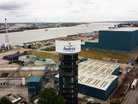
With UK government support through the Hydrogen Production Business Model and Net Zero Hydrogen Fund, the combined investment will see the construction of green hydrogen facilities at Kimberly-Clark’s sites in Barrow-in-Furness, Cumbria and Northfleet, Kent.
“Kimberly-Clark’s commitment to using green hydrogen in its operations is a significant move and shows great ambition and leadership,” says Keith Clarke, Founder and Chief Executive of Carlton Power.
“Our Barrow Green Hydrogen facility will be the first in a series of projects that we will bring into commercial operation over the next 2-4 years to support UK industry make the transition to using green hydrogen and away from fossil fuels.”

Kimberly-Clark’s two UK plants are responsible for nearly a billion Andrex toilet rolls and more than 150 million Kleenex tissue boxes annually.
The Barrow plant’s hydrogen production is expected to reach 100 GWh per year and the Northfleet facility will add 47 GWh per year.
Collectively, this is set to cut 28,500 tonnes of carbon dioxide emissions each year.
Once operational in 2027, these projects will displace 50% of natural gas usage against 2024 levels.
This will support Kimberly-Clark’s goal of reducing absolute Scope 1 and 2 greenhouse emissions by 50% between 2015 and 2030.
Alex Brierley, Co-Head of Octopus Energy Generation’s Fund Management Team, says: “This is an exciting milestone for HYRO and for green hydrogen in the UK’s industrial sector.
“HYRO’s project with Kimberly-Clark at their Northfleet paper mill has progressed well, with government funding contracts in place and planning permission approved too.
“Green hydrogen will play a significant role in decarbonising hard-to-electrify industries – and Kimberly-Clark has been a pioneer in this space.
“This scheme will help produce household products using renewables and flush away fossil fuels for good.”