Green Mountain Data Centre: Circular Energy for Trout Farms
A Norwegian data centre operator and trout farming business has established a joint heat-reuse operation in Rjukan, Norway, creating what could be a model for circular energy collaboration between digital infrastructure and aquaculture.
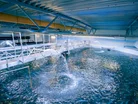
Green Mountain and Hima Seafood's system channels surplus thermal output from server operations to warm tanks at the fish farm, with the cooled water then feeding back into the data centre's climate control infrastructure.
Karianne Oldernes Tung, Norwegian Minister of Digitalisation and Public Governance, attended the official launch, describing the partnership as evidence of how sustainable industrial cooperation could function in practice.

Hima Seafood draws excess thermal energy from Green Mountain's facility to regulate temperatures in its aquaculture systems.
Once the water has passed through the trout farm, it returns at a lower temperature to the data centre, where it re-enters the cooling cycle.
This arrangement creates a closed-loop that could reduce power consumption and environmental burden for both operators, illustrating how industrial heat that might otherwise be released can be captured and applied locally.
Circular heat exchange in operation
Construction concluded and the system went live in October 2025.
The initial phase is testing the heat-reuse infrastructure at up to 1.75 MW capacity, with both companies running a joint feasibility study to gather operational data.
Results from this stage will shape plans for a second phase intended to expand the system to 8 MW.
"Waste heat is only waste heat if it goes to waste," says Annar Bøhn, CEO of Hima Seafood.
"By utilising excess heat from Green Mountain, we reduce our energy consumption, minimise our environmental footprint and strengthen the robustness of our operations. This is a clear win-win solution."
Redirecting data centre heat into fish farming offers a route to lower operational energy costs whilst supporting sustainable production methods.
By repurposing energy that would typically be vented, both businesses avoid generating additional carbon emissions and make more efficient use of resources available in the region.
Strengthening rural industrial networks
Torkild Follaug, Sustainability Director at Green Mountain, says: "The collaboration between Green Mountain and Hima Seafood demonstrates how data centre and aquaculture industries can create tangible circular-economy benefits, reduce their climate footprint and drive new value creation in rural regions – with Rjukan as an international showcase."
The data centre generates consistent heat throughout the year, which helps maintain stable water temperatures for the trout farm.
In exchange, the farm's cooled water decreases the energy the data centre needs for its chillers, establishing a two-way energy transfer.
An arrangement of this type could provide a template for other locations where data centres operate alongside industrial or agricultural sites.
By demonstrating a functional approach to thermal reuse, the project positions Rjukan as a reference point for sustainable operations that link digital infrastructure with local enterprise.
Support from government officials
The launch took place at Hima Seafood's site and drew attendance from Minister Karianne Oldernes Tung, Mayor of Tinn Municipality Kathrine Haatvedt and County Mayor of Telemark Sven Tore Løkslid.
"Norway relies on a secure and robust digital infrastructure and data centres are a critical part of that foundation," says Minister Karianne Oldernes Tung.
"That is why the Government wants data centres located in Norway, but we also expect the industry to contribute to a greener future.
"Here in Rjukan, we see a strong collaboration between Green Mountain and Hima Seafood. This is a perfect symbiosis between data centres and new industry and exactly the kind of partnership we want to see in more data centres."
Minister Tung presented the initiative as a potential model for sustainable data centre development, noting that industrial partnerships could amplify climate advantages and bolster regional economies.
Local authorities back the project because it combines digital infrastructure investment with employment opportunities and innovative energy stewardship.
By converting surplus heat into an asset rather than a waste stream, the Rjukan project shows how circular energy systems could extend the utility of digital infrastructure beyond computing operations.
It provides a functioning example of sustainable practice for the global data centre industry and demonstrates how rural areas can accommodate advanced facilities that deliver local industrial value.
Company portals


Executives
Annar Bøhn
CEO

Karianne Oldernes Tung
Minister of Digitalisation and Public Governance
Torkild Follaug
Sustainability Director