
Schneider Electric: Energy, Grid Upgrades & Digitalisation

Electrification is the key driver of the energy transition for most economies. With that comes a complex and multidimensional power system that requires management, particularly at times of peak load.
Traditional grid expansion to help manage growing demand is often costly and time-consuming, but utilising advanced digital data architecture and smart grids can help to shift demand and flatten the peaks.

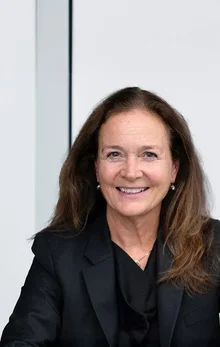
In a panel discussion on electrification at the Climate Innovation Forum as part of London Climate Action Week, Esther Finidori, Chief Sustainability Officer at Schneider Electric, told delegates to prioritise expansion of data and energy infrastructure.
“When you think about it, the energy system and the data and telecommunication system are the two things you need that are the backbone of your economy,” says Esther.
“Without electric, energy without data and communications, you have no economy. You will run and operate nothing; from hospitals, schools to businesses. We need to start thinking ahead about the energy system as being the critical backbone for the economy and treat it as such.”
Electricity demand growth is a good thing
Energy efficiency is a key lever of the energy transition. Cutting demand can help increase the share of low-carbon generation on grids.
The introduction of power-hungry data centres, however, has added to the scrutiny around their efficiency and where the energy is coming from.
But, as Esther explains, increasing demand for electricity can also be seen as a vital tool in unlocking investment opportunities.
“We need to consider anything that is an increase of electric demand as good news,” Esther says.
“All the tensions arising now on the demand that will be generated by AI factories. Is this a conflict of uptake?
“We should see this as a major opportunity to finally have demand growth that unlocks the investments we need in terms of supply, in terms of grid upgrades, so that we can electrify our energy system.
“We need to anticipate a future where there will be abundant electric and that electric needs to be affordable. If each time we hit a demand-supply crisis, prices hike, we will have a negative loop in the electrification momentum. So we need to start planning now for affordable and available electric as a fuel for the economy.”
“We need to start planning for a grid that can adapt and evolve fast. And the key to that is digitalisation. ”
Digitisation to unlock flexibility
To foster widespread electrification, Esther champions the swift digitisation of the energy sector, confident it will deliver essential flexibility and infrastructure enhancements needed to effectively manage peak power loads.
“What we see as well… is that demand will increase faster than our ability to commission new supply and our ability to retrofit,” says Esther.
“We need to start planning for a grid that can adapt and evolve fast. And the key to that is digitalisation. We need to modernise the grid so that with the data it becomes much easier and being managed.
“The issue is not the total of electricity available; it's the peak, it's the maximum load at a point in time. And that's very easy to move provided that you have the right data architecture to manage the grid and control your peak.
“Massive and rapid digitisation is the way forward so that we can go with the right speed to evolve the grid. Scale and speed are the two answers that we need to anticipate and plan for.”
Strengthening the grid for electrification
To harness large-scale electrification, the panellists agreed that Europe, in particular, needs substantial investment.
“[It] is going to take approximately, for Europe, €5 trillion of investments prior to 2050,” says Hilda Toone, Chair of ARUP, who was also part of the panel.
“[That’s] €210 billion yearly from now on and onwards. However, that number is less than what the EU is paying today on imports of fossil fuel.”
As well as grids, Hilde also emphasised the need to continue investments in generation capacity to increase energy security.
“We have to think homegrown. It starts there. It starts with wind, solar and other renewables that can be close to us, that we can steer ourselves, in order to have that security, that resilience and that basis for electrification we talk about."
Company portals


Executives

Esther Finidori
Chief Sustainability Officer
Hilde Tonne
Chair